All posts by Editor@afrikatimes.com

Africa Times: delivers unique, authoritative and independent reporting from the frontlines of crises to inspire and produce a more effective humanitarian response Most of the stories you read on this site come from newspapers, news agencies and publications all over the African continent.

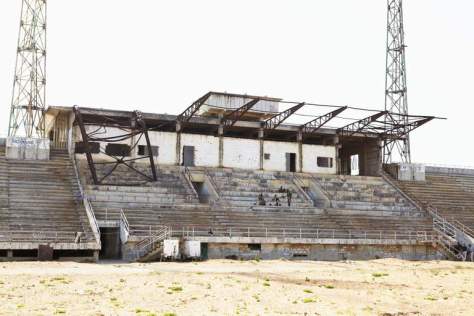
The killing field: Extraordinary images of Al-Shabaab’s Somali stadium of death

5651968.jpg
The gunmen were determined to drain every last drop of blood for the land they were being forced to cede in the heart of Somalia’s capital, Mogadishu.

There had already been months of fighting in the surrounding streets as African Union (AU) troops, deployed to bring peace to this most blighted of cities, advanced street by street.

Gunfights at the time had raged for days across narrow alleyways. On one side were soldiers from the Ugandan army, sent as the main component of the AU force. On the other, followers of al-Shabaab, the extremist al-Qa’ida-linked body that had sought to enforce its hard-line interpretation of Islamic law on the city.

ADVERTISING

inRead invented by Teads

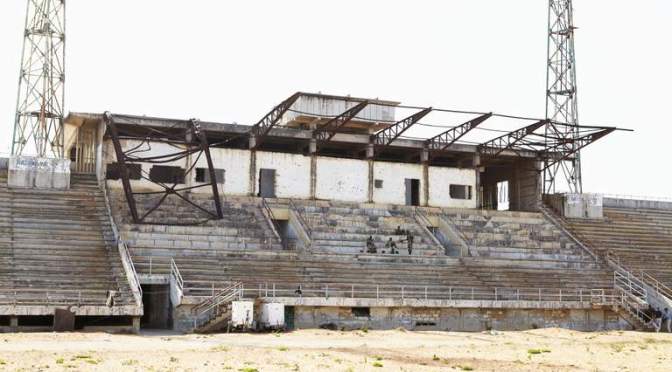
One of their final bastions was Mogadishu stadium, once the centre for Somalia’s national football team. Even when all the surrounding streets in the district had been cleared, the militiamen holed up there refused to surrender – requiring the soldiers to clear it one corridor and one stand at a time.

The devastation this battle caused can be seen in every bullet hole that peppers the structure. At its entrance way, gaping holes mark where shells had struck.

Even after the stadium was cleared, there had been one last shocking surprise. As African Union troops celebrated their victory and wandered inside, there was a gunshot and a soldier fell, shot between the eyes. An al-Shabaab fighter had hidden in a ventilation shaft to secure one last victim.

Qatari Tribes writes to Human Rights Commissioner on Violation of Human Rights

Qatar-emir-770x433.jpg

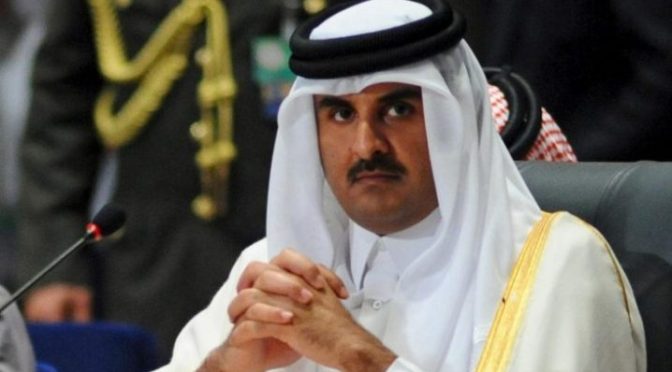
Qatar comes under scrutiny when the United Nations High Commissioner of Human Rights received a letter on Monday regarding discrimination from the Qatari Regime. The tribe is not just a small group but rather a well known, powerful and large tribe residing in Qatar.

The Al Ghurfan tribe filed an official complaint to the Arab Federation For Human Rights and requested the federation to refer the complaint to UN Human Rights council about the violations committed by the Qatar regime against its very own members.

The tribe then approached the UN to charge the Qatari Authorities with Human Rights violation because they have been subject to torture, racial discrimination, treated as prisoners, put to death and even denied of their rights to Qatari citizenship and denied to return their homeland when they travelled outside.

The tribe ( Al Ghurfan clan ) have substantial proof of such arbitrary acts to more than 54 members of their tribes. The members of the clan claimed they started facing such treatment ever since they opposed the Qatari regime’s destabilising policies and in relation to the dispute between Qatar’s neighbouring states. They estimate this behaviour from the Qatari authorities to

Qatari authorities had revoked citizenship of another tribe called the Al Murrah tribe, while 6000 members of Al Ghurfan were forcibly displaced, confiscated properties, called for systematic persecution against all clans that belonged to larger tribes such as senior members of the Shaml al-Hawajer tribe and famous poet Mohammed al-Marri belonging to the al-Murrah tribe, majority of the members were deprived of national rights.

The delegation that is representing the tribe has said “Through your unique mandate to promote and protect human rights, we ask your esteemed commission to see and stand up to the suffering of our citizens who have been deprived of their citizenship in Qatar and to the crimes committed against them and to alleviate the conditions and suffering of our displaced people in the villages and deserts of border areas in neighboring countries”

Support from neighbours

Hearing the case of the Al Ghorfan Clan, EOHR also known as the Egyptian Organization for Human Rights announced solidarity in regards to their case and said that the Al Ghorfan tribe makes up about 40 percent of the people of Qatar and are indigenous to the country.

EOHR stated that they believe in universality of human rights principles and need to establish and maintain those rights in the Arab region. With the country’s support they addressed the letter to United Nations High Commissioner the President of the Arab Federation informed the commission to protect the members of the tribes and pursued to restore their lost rights and punish the Qatari regime for the misconduct with their own citizens.

The Tribe received support from the World Aid Organization in New York when they adopted their case and declared their solidarity with the tribe;s case.

The World Aid Organization collectively sought to raise the awareness of the international community and shoulder the tribe with humanitarian support and that it will follow up with them on the status .

The Head of the Egyptian Organization for Human Rights, Hafez Abu Seada “The Egyptian Organization calls upon the High Commissioner for Human Rights, her excellency Mrs. Michel Bachelet, to open an extensive investigation into this tragedy. EOHR also calls upon Mrs. Bachelet to assist it in its efforts to restore the rights of the clan of Al Ghofran as indigenous inhabitants who have been robbed of their nationalities and forcefully displaced enmasse for political reasons, in violation of all international human rights instruments. Finally EOHR expresses its readiness to provide any documents or evidence that the honorable Commission may need in any of the efforts we hope it will take to stop the suffering of the people of forgiveness.”

Dating back to 2017…

The matter on deprivation of unfair detention and unscrupulous behaviours towards tribes was the agenda of the conference held by Qataris that were exiled in London, September. At that time the tribe called on the United Nations Commissioner’s Office and tried to regain their rights.

The tribe described their ordeals to the High Commission and requested them to stand up against the suffering of the citizens who were denied the right to their own homeland and that they would alleviate the conditions of suffering and help them regain their displaced villages.

The requested the council to not only resolve the matter at hand but also create a path where people of the clan did not fear the government and tolerate oppression in silence to protect their parents, relatives back home in Qatar.

The tribe at that time also said the National Human Rights Commission of Qatar was doing more harm then good and becoming an obstacle in receiving justice as the commission of Qatar mostly covers up evidence and spreads false information

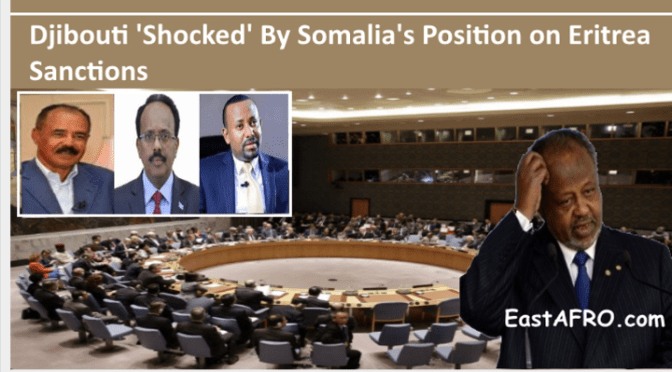
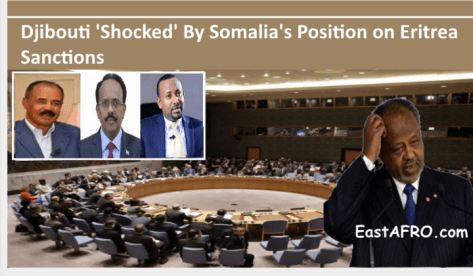
Djibouti ‘Shocked’ By Somalia’s Position on Eritrea Sanctions

Djibouti ‘Shocked’ By Somalia’s Position on Eritrea Sanctions
Screenshot_2018-08-02-03-57-26-1

africatimes| August 1, 2018

Djibouti has formally responded to a recent call by Somalia that United Nations Security Council (UNSC) sanctions on Eritrea be lifted. According to Djibouti it was ‘deeply shocked’ by that position.

Somali president Mohamed Abdullahi Mohamed on a three-day official visit to Asmara said the sanctions imposed since 2009 had to be lifted given the current political and diplomatic developments in the Horn of Africa region.

But in a statement in reaction to the Somali president’s view, the Djiboutian Embassy in Somalia wrote in an August 1, 2018 statement:

… it is unacceptable to see our brotherly Somalia supporting Eritrea which is occupying part of our territory and still denying having Djiboutian prisonsers.

“As a sovereign state, there is no doubt that Somalia has the right to establish diplomatic relations with the countries of the region, however, it is unacceptable to see our brotherly Somalia supporting Eritrea which is occupying part of our territory and still denying having Djiboutian prisonsers.”

It continued that the wiser line of action would have been for President Mohamed to call for peaceful resolution of the border crisis that has strained relations between the two neighbours.

The statement accused Somalia of historic less support of Djibouti which it said had led to blinded supported for Eritrea plus an advocacy that Eritrea be free despite its stubborn nature.

“We will not tolerate with ruthless talks while our young men and women are yet here defending Somalia’s peace and stability,” the statement concluded.

Eritrea’s 2009 UN sanctions, Gulf crisis and Doumeira impasse

An arms embargo imposed on Eritrea since 2009 was chiefly to do with its alleged support for Somali insurgent group Al-Shabaab but also because of its agression against Djibouti and refusal to enter any form of mediation over the disputed regions.

The disputed land in question is the Dumeira mountain and Dumeira island which Djibouti claims is being illegally occupied by Eritrea. The issue of Eritrea’s continued holding of Djiboutian prisoners has also been central to the dispute.

The last time tensions between the two came to the fore was in June 2017 when Qatar withdrew its peacekeeping force in the area at the height of the Gulf Crisis. Djibouti at the time accused Asmara of deploying soldiers to the disputed areas.

Djibouti ‘shocked’ by Somalia’s position on Eritrea sanctions

Eritrea has been in the news recently over the peace deal it entered into with neighbouring Ethiopia after two decades of severed ties and hostility over a border ruling. Addis Ababa through PM Abiy accepted to respect the 2002 border ruling and by that agreed to restore all ties with Eritrea.

Abiy signed a five-point end of war agreement with Eritrean leader Isaias Afwerki during a historic visit to Asmara. Afwerki reciprocated the gesture with a three-day visit to Addis Ababa.

Source: http://www.africanews.com/2018/08/01/djibouti-shocked-by-somalia-s-position-on-eritrea-sanctions/

La Russie «pour établir la base de Somaliland» comme Poutine complote la suprématie navale

La Russie «pour établir la base de Somaliland» comme Poutine complote la suprématie navale

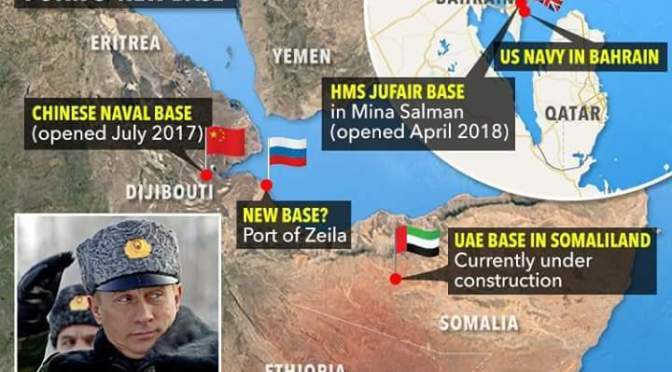
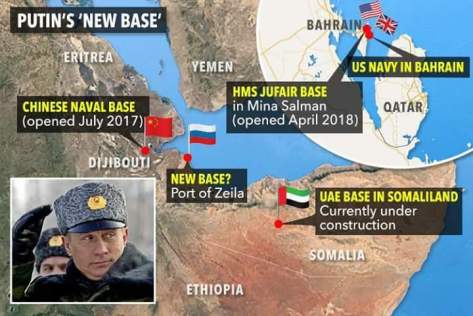
sa carte montre où la Russie veut localiser sa base navale dans une région de plus en plus militarisée par les puissances régionales et mondiales
La base de la base se trouve dans la corne de l’Afrique stratégiquement importante et offrirait la possibilité de projeter de l’énergie à travers le Moyen-Orient et des voies de navigation vers et depuis le canal de Suez.

La RUSSIE prépare une base navale en pleine mutation dans un Etat d’Afrique de l’est en voie d’expansion afin d’étendre considérablement sa puissance militaire au Moyen-Orient, selon des rapports.

Des pourparlers sont en cours entre Moscou et les dirigeants du Somaliland pour une base de 1 500 hommes afin d’aider ses navires de guerre et ses sous-marins chasseurs-chasseurs à opérer dans cette région instable et ses voies maritimes achalandées transportant la plupart des marchandises européennes.

L’emplacement supposé de la base est en dehors de la ville de Zeila, dans la république autoproclamée du Somaliland.

Il est également à la frontière avec Djibouti – à proximité de l’emplacement de la première base à l’étranger de la Chine dans les temps modernes qui a ouvert l’année dernière.

Les Émirats arabes unis construisent également une base militaire à Berbera dans ce qui est – et a toujours été – une position clé pour projeter le pouvoir dans une région instable.

“Les Etats-Unis et la Chine ont tous les deux des installations militaires à Djibouti, et il ne serait pas surprenant que la Russie veuille aussi des installations là-bas.

“La Russie a récemment prolongé son bail sur son installation navale à Tartous en Syrie et le développement d’une installation au Somaliland pourrait être vu comme une tentative de construire une marine d’eau bleue.

“Au cours de la dernière décennie, l’activité navale russe a augmenté dans les océans Atlantique, Méditerranéen et Indien, et ailleurs.”

Dr Foxall a déclaré que la doctrine navale russe, adoptée en 2017, promeut une vision de la marine russe en tant que force mondiale qui restera la deuxième plus puissante marine au monde, après les États-Unis, au cours de la prochaine décennie.

La Russie commande déjà une force navale puissante positionnée dans la mer Baltique
Selon les médias somaliens, Qarannews , la Russie propose un accord où elle reconnaîtra la république sécessionniste du Somaliland en échange d’être autorisée à établir la base.

La base navale compterait 1 500 personnes, des destroyers de service, des frégates et des sous-marins.

Au cours des dix dernières années, la Russie a étendu la portée de sa flotte de la mer Noire.

Dans ce cadre, elle a sécurisé sa base en Crimée en annexant la région à l’Ukraine en 2014 et rétabli une base dans le port syrien de Tartous – grâce au soutien de Poutine au dictateur Bachar al-Assad.

Tout vient au milieu des tensions croissantes avec les puissances occidentales.

Le ministre des Affaires étrangères de Poutine, Sergueï Lavrov, a comparé aujourd’hui le climat politique actuel à la guerre froide.

Les commentaires effrayants sont venus après que les Etats – Unis, la France et le Royaume-Uni ont lancé des frappes sur des sites en Syrie qui auraient été liés aux attaques meurtrières de guerre chimique contre Douma.

Image satellite montrant la base navale syrienne russe dans le port de Tartus la semaine dernière.
@IMAGESATINT

Au cours de l’attaque samedi matin, les forces russes basées en Syrie se sont abstenues d’abattre des missiles de croisière avec leurs redoutables unités de défense antiaérienne S-400 qui sont situées à sa base.

En décembre de l’année dernière, Poutine a signé une loi ratifiant un accord permettant à la Russie d’étendre ses opérations à son installation portuaire de Tartus, qui est la seule base navale de Moscou en Méditerranée.

Les travaux de dragage et les nouveaux piliers permettront de loger jusqu’à 11 navires de guerre, ainsi que le plus grand croiseur de cuir russe, le Pyotr Velikiy.

Un navire Alligator-atterrissage a été repéré dans le Bosphore dimanche, alors qu’il était censé se rendre à la base syrienne dimanche.

La semaine dernière, avant l’attaque des missiles, un sous-marin britannique a été pris au piège dans une poursuite tendue de “chat et souris” par les sous-marins russes chasseurs furtifs qui seraient basés à Tartous.

Deux frégates russes et un avion anti-sous-marin auraient été à la recherche du HMS Astute alors qu’il manoeuvrait pour placer ses missiles de croisière Tomahawk à portée des sites chimiques d’Assad.

Plus tôt ce mois-ci, la Royal Navy a ouvert une base, le HMS Jufair, dans le pays du Moyen-Orient de Bahreïn, le premier nouveau port d’outre-mer de Grande-Bretagne depuis un demi-siècle.

SOURCE: Shakir Essa senior journalist Ex-UN news Agency’sFB_IMG_1524107074948

The United Arab Emirates (UAE) is ending a military training programme in Somalia and also sanctioned all government authorities, in response to the seizure of millions of dollars …

UAE terminates programme to train Somalia’s military

#somalia

Somalia’s relations with UAE are strained by dispute between Qatar and Saudi as Mogadishu has refused to take sides

Ugandan forces at African Union Mission in Somalia base outside Mogadishu last week (

The United Arab Emirates is ending a military training programme in Somalia in response to the seizure of millions of dollars and the temporary holding of a UAE plane by Somali security forces last week.

Tensions between Mogadishu and Abu Dhabi have been on the rise since the Somali government condemned Emirati plans to build a military base in the semi-autonomous region of Somaliland.

The UAE has trained hundreds of troops since 2014 as part of an effort boosted by an African Union mission to defeat a militant campaign by al-Shabaab and secure the country for the government backed by Western nations, Turkey and the United Nations.

Somalia had announced disbanding the programme from its side a few days earlier.

The government will take over paying and training the soldiers in the programme, Defence Minister Mohamed Mursal Abdirahman told Somalia’s state news agency SONNA on Wednesday.

Analysts say Somalia’s relations with UAE are strained by a dispute between Qatar and Saudi because Mogadishu has refused to take sides.

Arab states have strong trading links with and influence in Somalia, but that is offset by the sway of Qatar and its ally Turkey, one of Somalia’s biggest foreign investors.

“The UAE has decided to disband its military training programme in Somalia which started in 2014 to build the capabilities of the Somali army,” said the statement on the UAE’s state news agency WAM.

About $9.6m in cash was taken from the UAE plane on 8 April, Somali police and government sources had said. The UAE said the money was to pay for salaries for Somali soldiers as part of an agreement between the two countries.

The UAE statement said the seizure incident contravened agreements signed by both countries.

WAM said the UAE has been paying the wages of 2,407 soldiers in addition to building training centres and a hospital. It also said the UAE was supervising a counter-piracy maritime police force in Somalia’s semi-autonomous region of Puntland.

READ MORE►

Turkey’s rivalry with the UAE in Somalia is raising tensions in the Red Sea

Still, the UAE is building a military base in Somaliland and Mogadishu has objected to the project. Last month, the Somali government complained to the UN that the UAE’s military base is a “clear violation of international law”.

“The Federal Government of Somalia strongly condemns these blatant violations, and reaffirms that it will take the necessary measures deriving from its primary responsibility to defend the inviolability of the sovereignty and the unity of Somalia,” Somalia’s Ambassador to the UN Abukar Osman told the Security Council in March.

Reporter: Shakir Essa

Happening Now Arab league: UAE launches legal action against #Somalia

SAUDI ARABIA
Riyadh aims to pressure Iran at Arab summit
Syria, Palestine to also figure prominently; Qatar crisis will not be discussed

Agencies
16:17 April 15, 2018
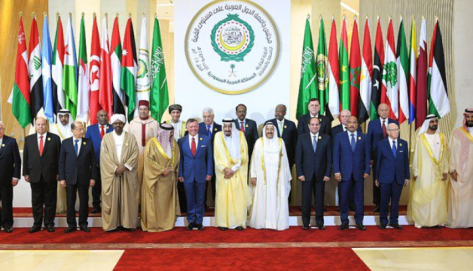
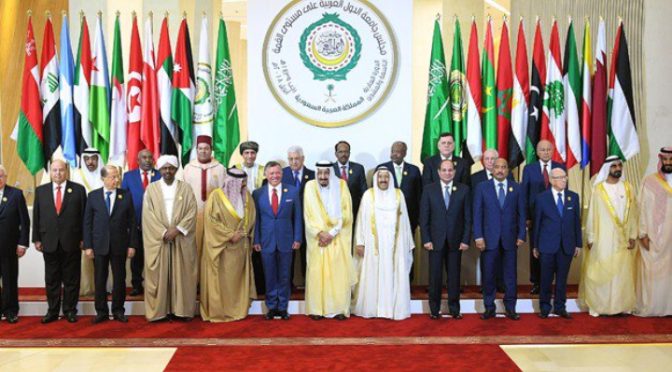
Riyadh: Saudi Arabia’s push for a tough stand against its arch-rival Iran is expected to dominate an Arab League summit on Sunday as regional tensions grow over the wars in Syria and Yemen.

The fate of occupied Jerusalem will also be on the summit’s agenda, as the United States prepares to move its embassy from Tel Aviv to the occupied city after declaring it the capital of Israel.

Saudi Arabia, which is hosting the yearly summit in the Eastern Province city of Dhahran, is likely to seek Arab support to pile the pressure on Iran, analysts say. “The Saudis are going to push for a much harsher stance on Iran — not necessarily on the nuclear dossier per se, but on Iranian influence in the Arab countries, particularly Iraq, Syria, Lebanon and Yemen,” said Karim Bitar of the Paris-based Institute of International and Strategic Affairs.

The Saudis are going to push for a much harsher stance on Iran — not necessarily on the nuclear dossier per se, but on Iranian influence in the Arab countries, particularly Iraq, Syria, Lebanon and Yemen.

Iran’s influence is wielded through a land route of armed parties in the Middle East — the so-called “Shiite crescent” that cuts across the Arab world.

Iran has long been a supporter of Bashar Al Assad and backs Lebanon’s Hezbollah movement, whose fighters are deployed in Syria alongside regime forces.

Iran also openly supports the Al Houthi militia in Yemen in their war against the Saudi-backed government.

And in Shiite-dominated Iraq, the Islamic republic backs armed groups and supports the government.

“Saudi Arabia has also reached out to Iraq to try and build ties and tackle militias there,” said Andreas Krieg, assistant professor of defence studies at King’s College London told AFP. “It’s definitely safe to say that Iran is the centrepiece of this summit.”

Syria

The summit will be attended by delegations from 21 of the Arab League’s 22-member states. Syria has been suspended from the organisation for seven years over Al Assad’s crackdown on protesters.

It comes as Saudi Arabia on Saturday expressed its full support for US-led strikes on Syrian regime military installations, saying they were a response to “regime crimes” against civilians.

“Saudi Arabia fully supports the strikes launched by the United States, France and Britain against Syria because they represent a response to the regime’s crimes,” a foreign ministry statement said.

Saudi Arabia and other Gulf states have been key backers of Syrian opposition groups fighting Al Assad.

The summit is expected to release a statement on the suspected toxic gas attack, but it remains to be seen whether the Arab League will take any action as well.

Syria serves today as a major pivot between Saudi Arabia and its allies on the one hand, and Iran and Hezbollah on the other.

Each party in the conflict backs opposing sides but all agree that the country’s future cannot be decided solely by the Al Assad regime, whose troops have regained territory with Russia’s support.

“Certain regional powers previously determined to bring down the Syrian regime — particularly Saudi Arabia and Turkey — have now accepted the status quo, that Al Assad is staying,” Bitar said.

“Bashar’s Iranian patrons are also very well aware that their protege cannot run the show on his own and they are starting to accept the premise that they will have to negotiate spheres of influence in Syria territories”.

Qatar

Not on the table at the summit, according to Krieg, is Qatar, cut off from its Gulf allies over accusations of ties to Iran and support for Islamist extremists. On the eve of the summit, Saudi Foreign Minister Adel Al Jubeir confirmed as much, saying a solution for Qatar would be found within the six-state Gulf Cooperation Council.

Palestine

The summit also comes after 33 Palestinians were killed and hundreds wounded at the hands of Israeli occupation forces in mass protests along the Gaza border in recent weeks.

The protests are to continue until mid-May, around the time Washington is to move its embassy to occupied Jerusalem, which both Palestinians and Israelis claim as their capital.

Senior Palestinian official Hanan Ashrawi has said she hopes the summit will lead to a resolution, and concrete action, supporting the Palestinian position on occupied Jerusalem.

Author source: Shakir Essa

A Senior Journalist and writer, Ex- UN news agency in #Africa, all views are my own. The Voice of voiceless
@spotify
(link: http://facebook.com/shaakir70/) facebook.com/shaakir70/

Why recognition is so important of Somaliland?

Recognition of Somaliland – claiming our rightful place within the community of nations.
We are confident we will achieve our goal and we will never relinquish our rightful demand for international recognition. The sooner that aspiration is fulfilled, the better it will be for everybody in the region and the world at large

Author sources:Shakir Essa
SeniorJournalist and writer, Ex- UN news agency in #Africa, all views are my own. The Voice of voiceless

US, cuts aid for somalia goverment again due to high corruption

The United States is suspending aid for much of Somalia’s again  over corruption concerns, U.S. officials confirmed to VOA on Sunday.

The suspension reflects the Somalia government repeated inability to account for aid items such as food, fuel and weapons, and also high corruption

A State Department official said the “pause” in aid is being made “to ensure that U.S. assistance is being used effectively and for its intended purpose.”

Somali security force members who are actively fighting al-Shabab and receiving some form of mentorship from either the U.S. or a third party will continue to receive appropriate assistance, the official said.

She added that the Somali prime minster has agreed to develop new accountability criteria that meet American standards, in order for other Somali units to receive U.S. assistance in a way that “builds greater transparency.”

“We don’t want to give away support that isn’t working and isn’t helping the counterterror fight,” another official said

According to documents obtained by the Reuters news agency, the Somali military has been unable to properly feed, pay or equip its soldiers, despite hundreds of millions of dollars of American support.

‘Big setback

Plans to suspend the support will be a “big setback” to the effort by Somali security forces to fight against Al-Shabab, warns the former Somali defense minister, General Abdulkadir Ali Dini.

General Dini, who worked closely with American officials in Somalia for many years…first as chief of the Somali national army and later on as defense minister, says the decision did not come at the right time.

“If the United States suspends food, fuel and stipends, that will hamper the war and work against the enemy and terrorists,” he said. “It does not help these operations and it damages morale.”

General Dini says “mistakes” were made by successive administrations but that the fighting against terrorism is taking longer at a time when the Somali government does not have the capacity to build its own army.

“Mistakes happened but it should not be suspended,” he said, without elaborating further.

Freelance journalist

Shakir Essa


Khayre must be impeached, Here is why? and how?

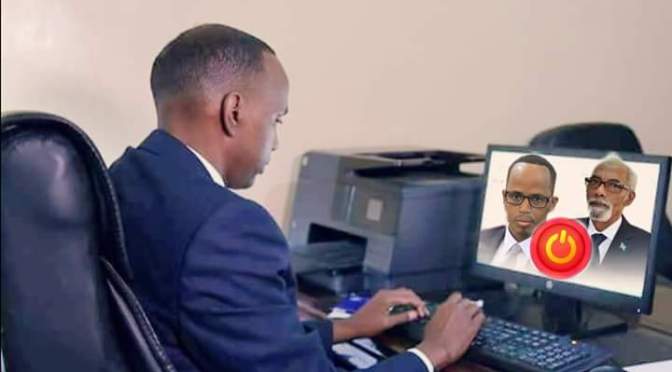
The time has come for Somali parliament to launch an impeachment investigation of president

#farmaajo and his prime minister khayre for obstruction of justice, this case was linked with dp world, and Qatar

FB_IMG_1523001906092

“Whether it is devotion to principle or hunger for political survival that puts the prospect of impeachment and removal on the table, the crucial thing is that the prospect now be taken seriously.”

Now the country is faced with a President and his prime minister whose conduct strongly suggests that they poses a danger to national treason of government and also a dangerous political system.

.

Even without getting to the bottom of what the PM khayre dismissed as “this is ties with UAE and dp world ” impeachable offenses could theoretically have been charged from the outset of this presidency. One important example is khayre”s brazen defiance of the foreign emoluments clause, which is designed to prevent foreign powers from pressuring somalia. officials to stray from undivided loyalty to the Somalia. Political reality made impeachment and removal on that and other grounds seem premature.

No longer. To wait for the results of the multiple investigations underway is to risk tying somalia nation’s fate to the whims of an authoritarian leader.

Jawaari summary resignation will not stop the inquiry, yet it represented an obvious effort to interfere with a probe involving somali government matters vastly more serious than the “khayre met dp world manager in dubai”

Even Qatar is a dangerous that controled all terrorist activities in Somalia

.

#Farmaajo and khayre accompanied that confession with self-serving — and manifestly false — assertions about having been assured by jawaari that khayre  himself was not under investigation. By farmaajo’s own account, he asked jawaari about thier investigative status (dp world) even as he was conducting the equivalent  in which jawaari sought to retain his position as parliament speaker.

Further reporting suggests that the encounter was even more sinister, with khayre insisting that jawaari pledge “loyalty” to him in order to retain his job. Khayre was met with dp world manager in Dubai, the president turned to the media with a none-too-subtle threat that jawaari would regret any decision to disseminate his version of his conversations with khayre — something that jawaari has every right, and indeed a civic duty, to do.

It will require serious commitment to constitutional principle, and courageous willingness to put devotion to the somali government interest above self-interest and party loyalty, for a parliament of the president’s own parliament members to initiate an impeachment inquiry. It would be a terrible shame if only the speaker of house ( jawari) resigned

Farmaajo and khayre they must go

Shakir Essa –The voice of the voiceless community

Somali security officials said they have seized a large cache of money that arrived Sunday at Mogadishu airport from Abu Dhabi

Somali security officials said they have seized a large cache of money that arrived Sunday at Mogadishu airport from Abu Dhabi, United Arab Emirates.

Two senior security officials told VOA Somali three suitcases containing $9.6 million have been put In storage in the central bank of Somalia pending an investigation.

Another security official said Ambassador Mohammed Ahmed Othman Al Hammadi, UAE envoy to Mogadishu, was at the airport to receive the money.

The official said Al Hammadi’s entourage tried to take the money out of the airport but were instructed by security forces to have the bags scanned.

“The ambassador refused, walked back to the plane with three bags, and counterterrorism units confiscated the three bags,” said the officer who requested anonymity.

The Royal Jet plane has since been released.

Al Hammadi told VOA Somali the money was not intended for the UAE embassy. “The money is for the ministry of defense. It’s for the salary of the Somali soldiers,” he told VOA.

He said the government knew in advance that the money was coming for the troops. The UAE has been training Somali soldiers in Mogadishu, as well as about 1,000 maritime police in the Puntland region.

Somali officials argue the money was not intended for the Somali army. “The salary for the army is less than $1 million. This is almost $10 million,” the official said.

“I’m certain that they have been informed not to bring money. The onus is on us to respond,” the official said. He added that an investigation will determine whether the money was brought in to “destabilize” the country.

Relations between Somalia and the UAE have been frosty since last year when the government of Mohamed Abdullahi Mohamed resisted pressure to cut ties with Qatar and took a neutral position on a dispute between Saudi Arabia and Qatar.

Last month, the Somali government rejected an agreement between the UAE’s Dubai World, Somaliland and Ethiopia over Berbera port, saying the deal violates the territorial integrity of Somalia.”

Somali officials said a foreign country believed to be Saudi Arabia has agreed to mediate between Somalia and UAE. It is unclear if there were direct talks between the two countries.

my video
According to Somali diplomatic sources, late last month the Somali Ministry of Foreign Affairs summoned Al Hammadi and explained its position on the port agreement, as well as a separate military agreement between Somaliland and UAE to build a military base in Berbera.

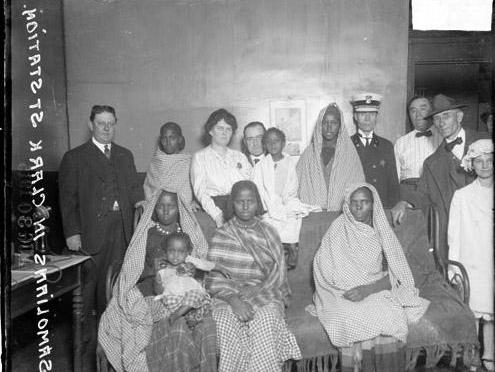
First Somali ever in america on the history

  • COLLECTION IDDN-0065091
  • CREATOR NAMESChicago Daily News, Inc., photographer.
  • TITLE[Group of Somali women and girls at the Clark Street police station] [graphic].
  • DATESca. 1915 Aug. 30.
  • PHYSICAL DESCRIPTION1 negative : b&w, glass ; 4 x 5 in.
  • ACCESS AND USAGE RESTRICTIONSRestriction: Original negatives are fragile and not available to researchers. Please consult the on-line image instead.
  • COLLECTION SUMMARYGroup portrait of Somali women and girls and a white woman, girl, and men sitting on and standing near a couch at the Clark Street Police Station in Chicago, Illinois.
  • TERMS GOVERNING USE AND REPRODUCTIONThe online images are supplied for reference purposes only. All other uses are restricted. To acquire copies, including improved copies, or permission for use, please contact Chicago History Museum, Rights and Reproductions Dept., 1601 N. Clark Street, Chicago, IL 60614.
  • NAMES
    • Clark Street Police Station (Chicago, Ill.)
    • Chicago (Ill.). Police Department Officials and employees.
  • SUBJECTS
    • Somalis Illinois Chicago 1910-1919. lctgm
    • Women Illinois Chicago 1910-1919. lctgm
    • Girls Illinois Chicago 1910-1919. lctgm
    • Police Illinois Chicago 1910-1919. lctgm
  • GEOGRAPHIC COVERAGEChicago (Ill.) 1910-1919.
  • GENRE
    • Group portraits. gmgpc
    • Dry plate negatives. gmgpc
    • Gelatin dry plate negatives. aat
  • GEOGRAPHIC NAMEUnited States Illinois Cook County Chicago.

Ethiopia’s state of emergency could destabilise the Horn of Africa

Former Ethiopian Prime Minister Hailemariam Desalegn sent shock waves through the region when he abruptly tendered his resignation.

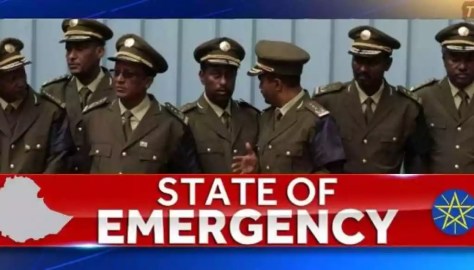
Desalegn said that he had made the decision to facilitate efforts towards political reforms which started with the release of political prisoners. But rather than pursue a reform agenda, the Ethiopian government followed his announcement by declaring a state of emergency. This not only jeopardises the regime’s apparent intent to institute democratic reforms, it also pits citizens against the security forces. And it’s already led to more violence, not stability.

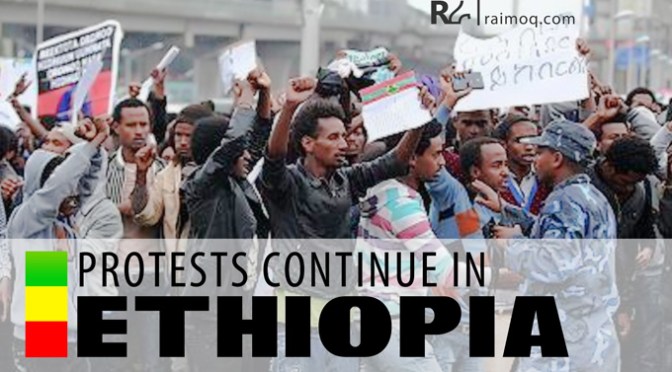
The state of emergency is being defied in a number of regions. Citizens have protested in Gondar, which is in the opposition Amhara region, as well as the opposition stronghold of Nekemte which is in Oromia. Much of the Oromia region is also defying the emergency measures.

As a result, the regime has targeted the Oromia region, and its protesting youths who are collectively known as Qeerro in the Oromo language.

Despite the release of thousands of political prisoners and talk of reforms, the political climate remains more uncertain than ever. It’s now feared that any government measures to suppress ensuing chaos could result in more violence, and deaths.

Instability in Ethiopia could have repercussions across the region. Unrest in the country could have a domino effect in what is an already volatile part of the continent. It could also affect regional peace efforts because instability in one corner of the Horn of Africa could spread and destabilise the entire region. This is especially the case because Ethiopia is home to so many cross border communities.

Implications for the region
Ethiopia is influential in the region and across the continent. It is the second most populous country in Africa and one of the fastest growing economies in the world. It also hosts the African Union’s headquarters in its capital, Addis Ababa.

But its standing has been diminished by the political turmoil of the last few years when two of its largest ethnic groups, the Oromo and Amhara both started demanding political and economic equality. The ruling coalition’s responses to these demands has highlighted the fact that it isn’t committed to democratisation.

The risks for the region are significant. Unless the regime acts on political reforms to entrench democracy, equal distribution of resources and freedom of the press, Ethiopia – with more than 100 million citizens – could emerge as the largest politically unstable nation in an already volatile region.

An unstable Ethiopia could also affect peace efforts in neighbouring countries. For example, it’s role as a long standing mediator in the South Sudanese peace talks could suffer a setback.

And its army is also the only peacekeeping force in Abiye, an oil rich region that has been at the centre of the conflict between Sudan and South Sudan since 2011.

In addition, Ethiopia is second only to Bangladesh in the number of its troops involved in international peacekeeping. Across its South Eastern borders, it also maintains thousands of troops inside Somalia.

And although its role in Somalia has drawn criticism Ethiopia remains a critical ally to the US’s counter terrorism strategy in the region. Instability could also create a power vacuum that could affect the US-led anti-terror strategy.

Ultimately, an internal crisis in Ethiopia will affect the power balance with its arch rival Eritrea. After the Ethiopia-Eritrea war which ended in 2000, the two countries have remained engaged in a proxy war by supporting each others’ political opposition groups.

Cross-border communities
Most African states share cross-border societies. The Horn of Africa is no different. The Oromo for instance are a majority ethnic group in Ethiopia and also a minority in Kenya. The Nuer are South Sudan’s second largest ethnic group and also a minority in Ethiopia’s western Gambella region.

There are also Somalis in Ethiopia. They m