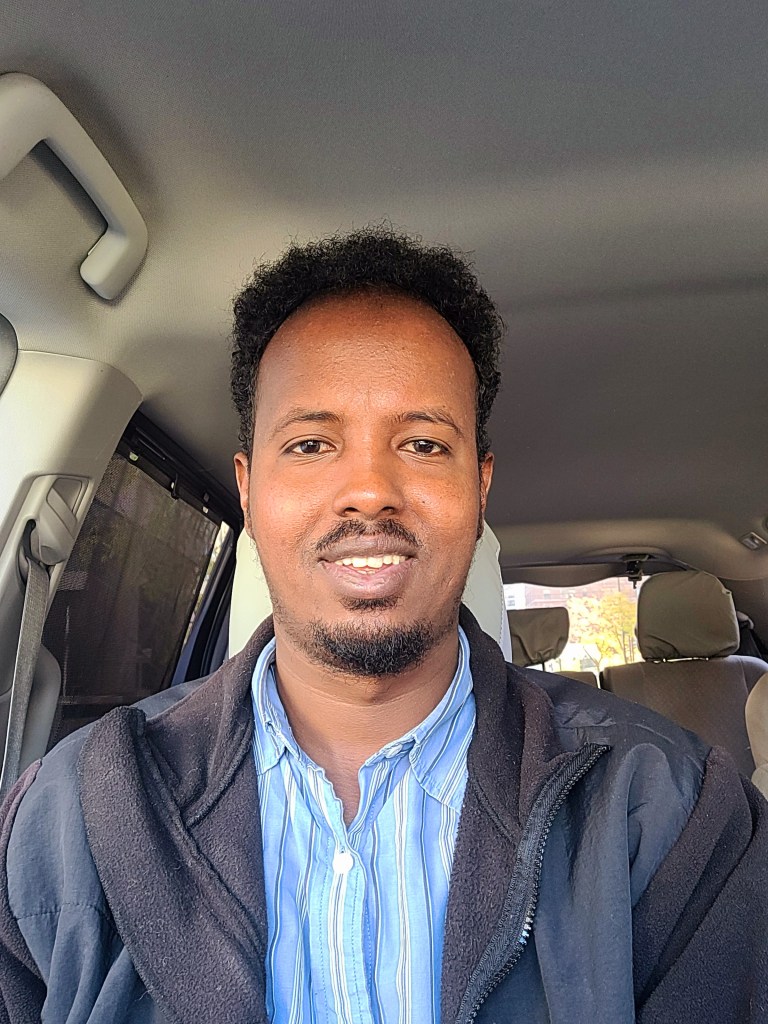
Is a prominent social media influencer and community organizer from Somalia.
Known for contributions to Somali media and the volunteer work in Somali Media Influences.
Shakir has a diverse educational background,
having studied information technology at the University of Malaysia Technology and pursued advanced degree in Cybersecurity at the University of Cincinnati.
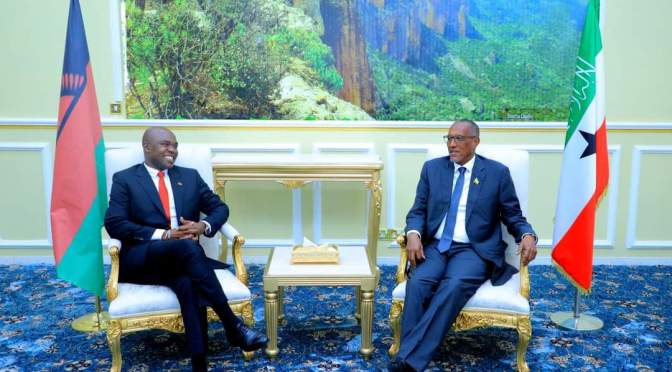
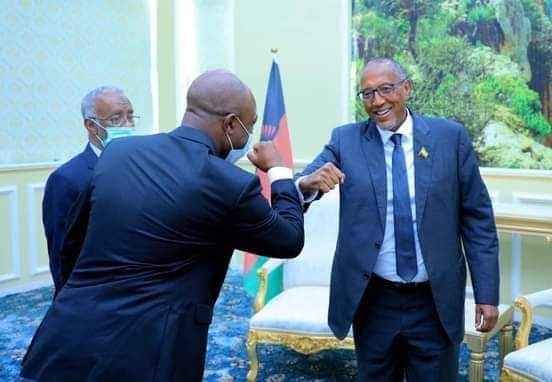
A high-Level delegation from Malawi led by Foreign Minister of Eisenhower Mkaka arrives in Hargeisa, the capital city of Somaliland for an official state visit.
Malawi delegation arrives in Somaliland for high level talks
The delegation will meet Somaliland President Muse Bihi Abdi to discuss aspects on how to strengthen bilateral relations.
The trip by the Malawian government delegation comes just days after Somaliland president Muse Bihi visited Kenya.
Kenya and Somaliland on Tuesday reached a deal for direct Kenya Airways flights to Hargeisa in Somaliland, in what will be the first destination for the national carrier into a Somali region. Kenya also agreed to set up a consulate in Hargeisa by the first quarter of 2021, joining Ethiopia and Djibouti and Turkey which have diplomatic outposts in the Somaliland capital.
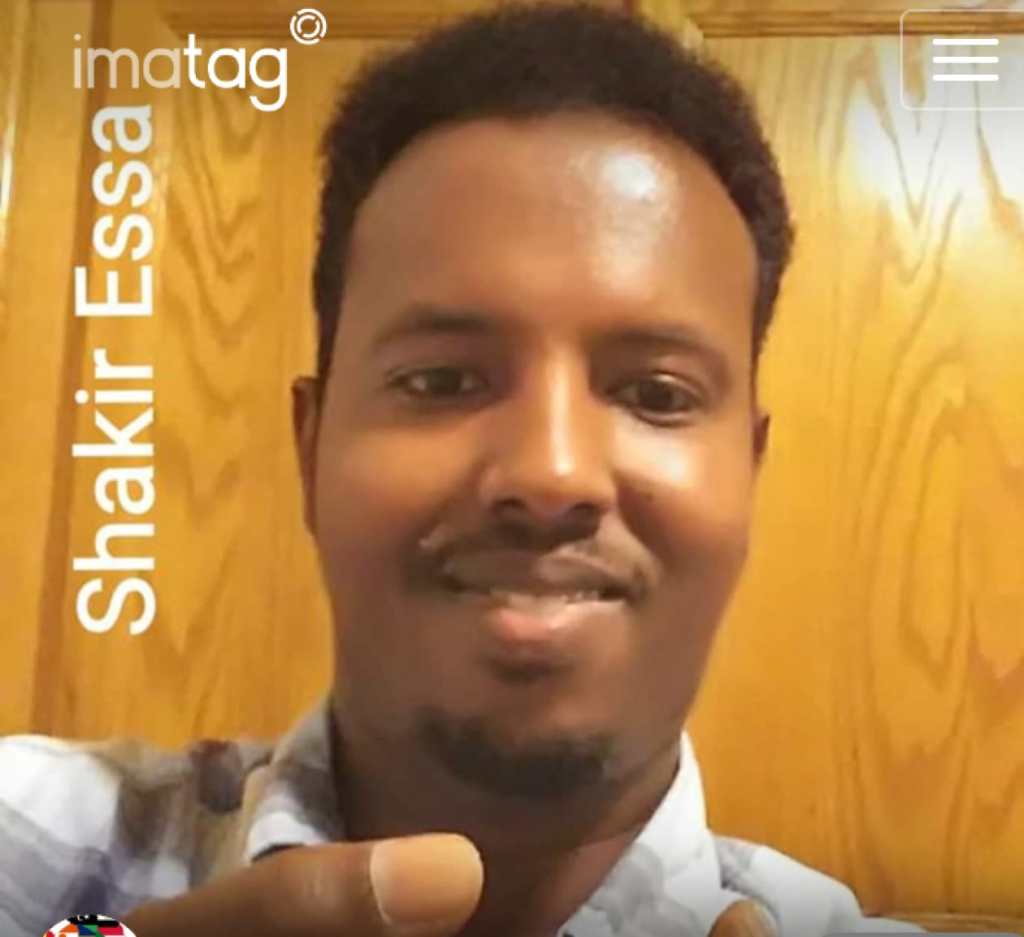
shakir essa
Shakir Essa
served as manager at National Union of Somali Journalists (NUSOJ) And Somali News Tv reporter | news publisher at allafricas.com
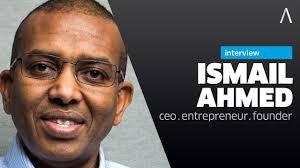
As a youth, Ismail Ahmed was forced by the outbreak of civil war to escape his homeland – Somaliland – and take refuge in the UK. Today, the company he founded is one of the most successful money transfer companies in the world. Profile
At the end of August this year, WorldRemit, one of the leading players in the world of international money transfers, put in a reported $500m bid for the takeover of the US app-based remittance company Sendwave. Not bad going for a company that was founded only 10 years ago by a Somali entrepreneur, Ismail Ahmed.
Remittances today account for more than FDI or overseas development aid. The global market is estimated at $700bn a year. Nigeria alone received an estimated $24bn in remittances in 2018, up from $4bn in 2013.
Photo: The founder of worldremit ismail ahmed
Many economists predicted that the economic meltdown caused by Covid-19 would lead to a massive drop in remittances and as a result, adversely impact emerging markets. The World Bank, at the start of the pandemic in April, estimated a 20% fall in remittances, anticipating catastrophic consequences.
However, these predictions were confounded when some countries, such as Kenya, posted growing year-on-year remittance numbers as at August. Ahmed is not surprised by this. He says he couldn’t fathom the World Bank estimates as experience had shown him that remittances were generally countercyclical.
The rise in remittances, for example in countries like Kenya, has been attributed to a number of factors. One is that many of the people sending money back home are actually those ‘essential workers’ who have kept health facilities going, and provided the services that have kept the economies of the West afloat.
In addition, government stimuli had cushioned the economic blow and the different economic mitigation schemes have meant that in some countries, such as the US, disposable income at the end of the month has at times actually been higher than what many workers were earning before the pandemic.
Ahmed says that the figures for WorldRemit, as at October, were quite strong for the year. “The only region where there was a noticeable fall are the Gulf countries, especially with Indian workers sending money back home.”
Recalling his life story, he says it seems that he was destined to work in money transfer services. He was born and raised in what is now Somaliland and he reflects that his family often received monies from a relative working in the Gulf.
With an excellent head for figures, he was awarded a World Bank scholarship to study economics at the University of London in the UK. But before he could take up the offer, the Somali Civil War intervened.
In the chaos that followed, he managed to escape and thanks to the money sent to him by his brother working in Saudi Arabia, he was able to purchase an air ticket out of Djibouti to the UK.
Expertise in the world of remittances
Fascinated by the world of remittances, he wrote a research paper on the subject at Sussex University; and whilst at the London Business School, as part of a case study project, he put together a model of a remittance business. This was to become the blueprint for what is today WorldRemit.
Before setting up WorldRemit, Ismail worked at the UN to advise on the system of remittances after 9/11.
While working on a UN Development Programme for Somalia, out of Nairobi, he noticed fraud involving senior colleagues. He blew the whistle and, for this, was dismissed.
He fought his corner, alleging unfair dismissal. He won his case and substantial compensation. This was the seed money he used to launch WorldRemit together with Catherine Wines, who also had extensive experience in money transfers, having herself restructured a remittance business that was subsequently sold to Travelex.
He says the scope of their ambition right from the get-go was big – hence the name of the company. As a student, he had experienced the frustrations and high charges involved in sending money back home. Working at the UN, he had realised that the process could be expensive as well as far from frictionless.
Right from the outset, he says, he knew that using rapidly improving IT technology was going to be the ace in their pack. Properly deployed, it could challenge the two giants in the field – Western Union and Moneygram.
He sees WorldRemit as an aspect of the increasingly important fintech sphere. The runaway success of M-Pesa and mobile money in Kenya underscored to him, in the early 2000s, the enormous potential of digital.
However, breaking into the market wasn’t plain sailing. The dominant players had, in many cases, struck exclusivity deals with banks or agents and seemed unassailable.
Given the very tight space left in the market, WorldRemit started with a single agent in both Uganda and Kenya. But the company still managed to get considerable business. This proved to them that their business was viable and also that the market was growing apace.
It was not long before WorldRemit became a substantial global player. Today the company operates in over 6,500 money transfer corridors worldwide and sends money from 50 countries to more than 150 nations.
The acquisition of Sendwave will make it a company that generates over $200m in revenue and manages more than $7.5bn of remittance flows.
The deal will strengthen the company’s position in the US, the world’s biggest source of outward remittances. “You can’t be big in money transfers if you’re not big in the US,” says Ahmed.
Industry more streamlined
The remittance industry has definitely benefited from having more players in the market: costs have been drastically reduced and the spread on exchange rates has also fallen considerably. However, some analysts warn that it is becoming an increasingly difficult area in which to make money as competition is eroding margins and the marketing costs to acquire new customers are greater than the gains.
Ahmed doesn’t agree; he counters that the industry will not only grow but will evolve. One factor behind the resilience of remittances has been the digitisation of payments. “Somaliland is pretty much a cashless society today. In Kenya, 90% of remittances are non-cash based, with the majority going to mobile money. In Nigeria 90% of international money transfers will end up in a bank account. So even during lockdowns, remittance flows still take place.”
He believes that the digitisation of remittances will also enable countries and analysts to better understand and make use of data that is now more readily available.
He also anticipates that the infrastructure backbone of remittances, which is ultimately about matching and settling trades, can help play a greater role in business transactions such as purchasing machinery or goods from abroad, as well as in intra-African trade, where too often buyers need to access dollars or euros to settle a payment within Africa.
Remittances have often been overlooked as a development tool, he says, but today they are a key indicator from a macro-economic perspective. Nonetheless they have been criticised for being ‘unproductive’ capital in that they are used in the ‘receiving’ country to make basic purchases.
Ahmed refutes this and says that as well as covering expenses such as school fees, food or medical bills, a big chunk of remittance payments goes to starting new businesses, investing in land and property.
shakiressa.com
2
(Shakiressa.com) photo: shakir essa digital marketing
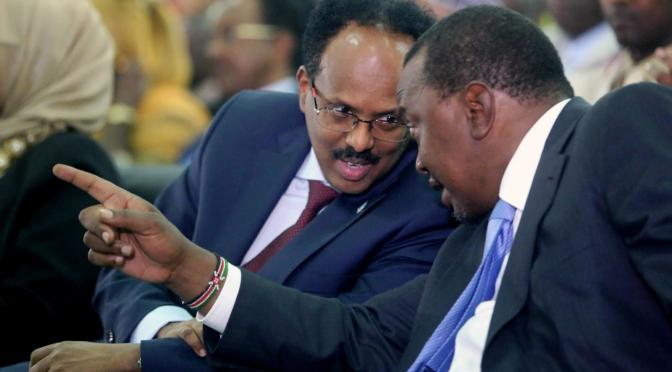
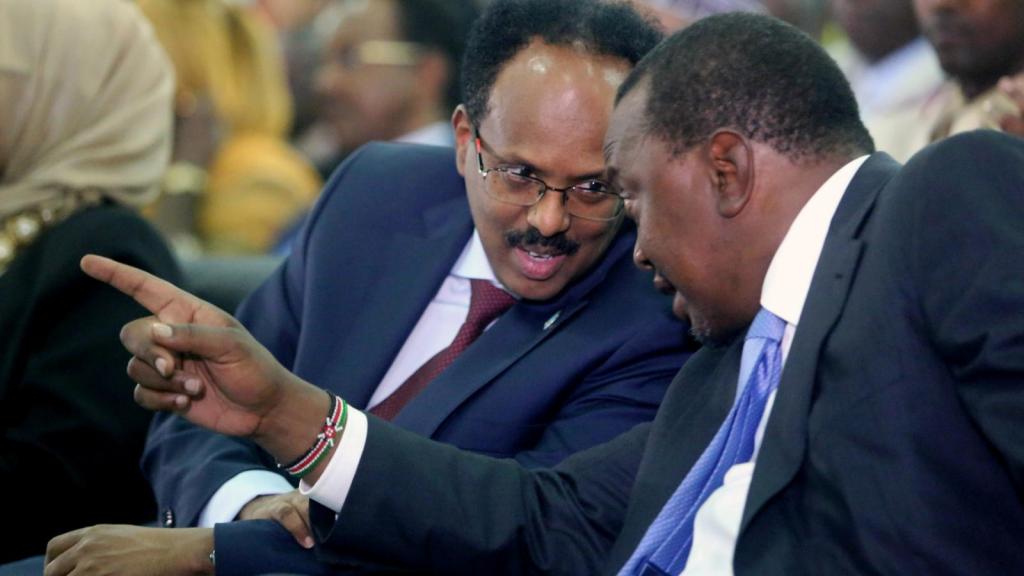
Photo: kenyan president uhuru kenyatta and somaliasomaliaSomalia president mohamed abdilahi farmajo, somalia cuts diplomatic ties with Kenya over Somaliland,
Somalia on Tuesday morning announced it is cutting diplomatic ties with Kenya, in the latest escalation of a spat between the two, and following the invitation of Somaliland leader Muse Bihi to Nairobi.
Somalia cuts diplomatic ties with Kenya over Somaliland
Osman Dubbe, the Somali Minister for Information declared the news on national TV a few minutes to 2am in the morning, breaking tradition of countries making such pronouncements during the day.
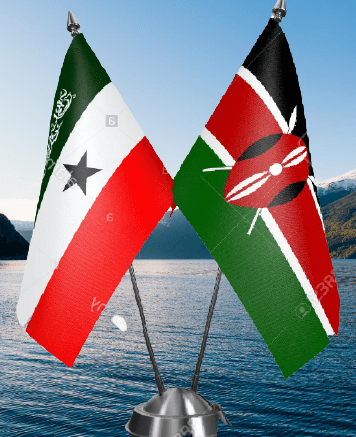
Photo: somaliland and kenyan flag, Somalia cuts diplomatic ties with Kenya over Somaliland,
Dubbe said Kenya had “constantly interfered” with Somalia’s internal affairs and that Nairobi was violating Somalia’s sovereignty.
He said Kenyan diplomats in Mogadishu will have seven days to leave the country. But this came just a week after Mogadishu actually expelled the Kenyan ambassador to Somalia, Lucas Tumbo, and recalled theirs to Nairobi, Mohamud Ahmed Tarzan, following a similar complaint of interference.
Somalia had also submitted a complaint to regional bloc, the Intergovernmental Authority on Development (IGAD), to include the spat with Kenya during the upcoming virtual summit on Dec 20 on Tigray.
Kenya though, became the second country in a year after Guinea, with which Somalia has cut ties over the Somaliland issue.
Bilateral talks between Kenyan and Somaliland delegations
Kenya hosts Bihi
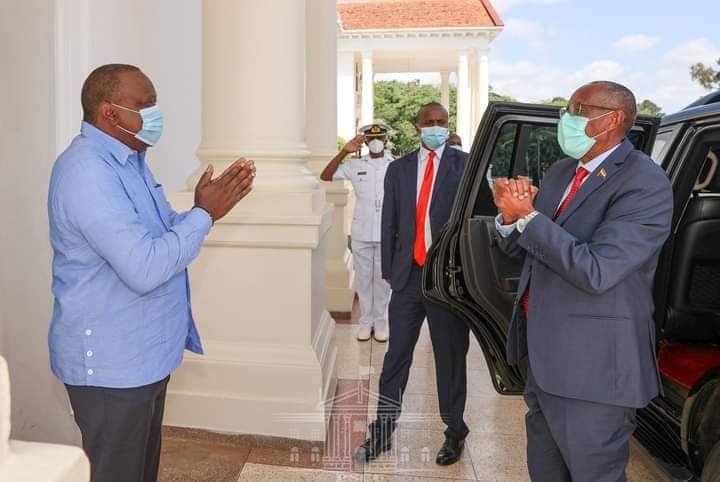
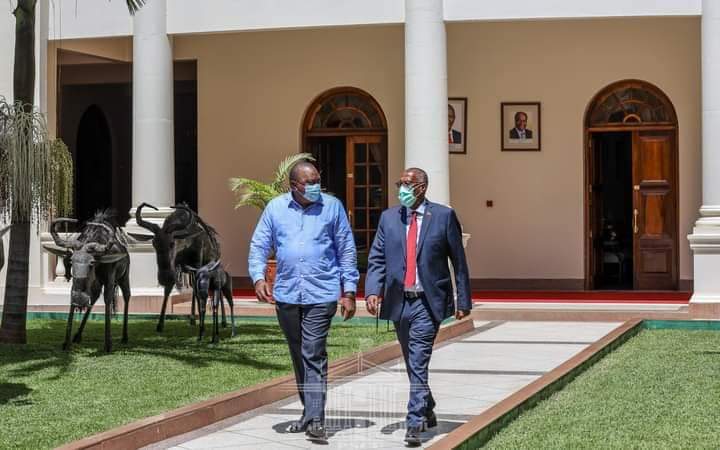
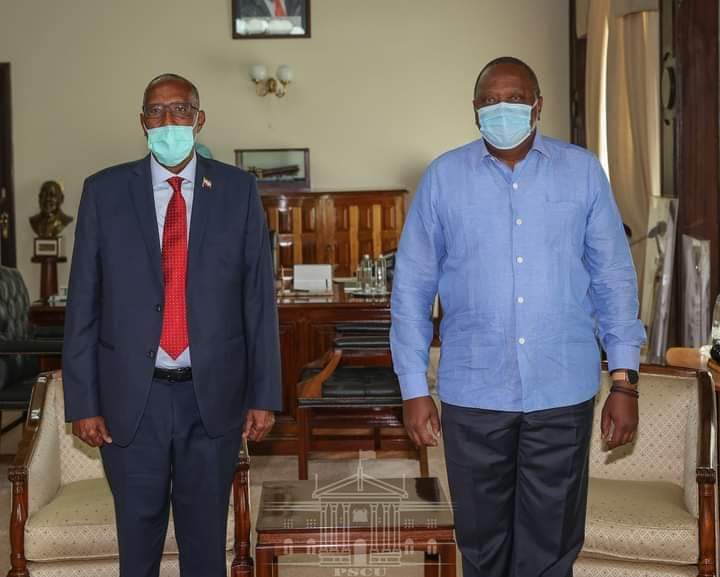
But as Mogadishu moved in the night, Nairobi was hosting Bihi for bilateral talks with President Uhuru Kenyatta. Both sides on Monday said they had agreed on a number of issues and would continue discussions on Tuesday on business and security cooperation.
With the cutting of diplomatic ties, it means the Kenyan embassy in Mogadishu and Somalia’s mission in Nairobi will be shut and their officials sent back home. But both countries, based on Vienna Convention on Consular Relations, will remain obligated to offer visa and other travel and immigration services to nationals of each other.Advertisement
In fact, each country will remain obligated to protect premises owned by either side on their host territories.
However, despite having legal obligations to protect citizens of each other, the actual protection of each other’s nationals may be granted to a third acceptable state.
It was unclear by Tuesday morning what will happen to military cooperation between Somalia and Kenya which has sent troops to the country under the African Union Mission in Somalia (Amisom). Legally, it is Amisom to make a decision about troop movements, but in consultation with the UN and troop contributing countries.
About 350,000 Somali refugees also live in Kenya, most of them in camps in Dadaab and Kakuma. Kenya will have to continue protecting them, under the international humanitarian law.
What may be exposed, however, are the properties owned by Somalia businesses and politicians in Nairobi.
Officials in the Kenyan capital said on Tuesday morning they had not yet received any formal communication from Mogadishu on the severing of ties.
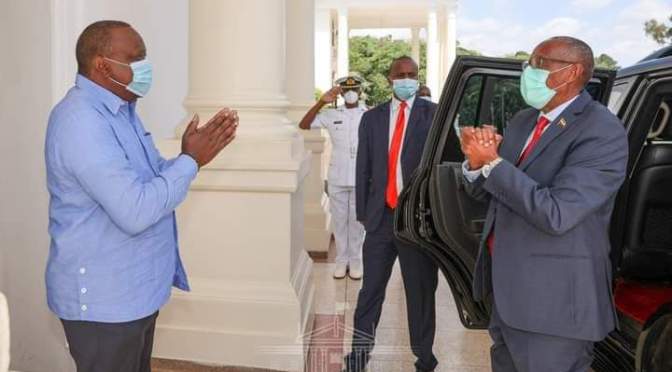
Somalia had accused Somaliland of undermining its sovereignty after a delegation led by President Muse Bihi was hosted by President Uhuru Kenyatta at Nairobi’s Statehouse
• But Somaliland through its Foreign Affairs responded by saying such an irrelevant statement Somalia shows nothing but only failure and irresponsibility.
KENYA MAINTAINED ITS RECOGNITION OF SOMALILAND AS NEWEST COUNTRY IN AFRICA
(Afrika-times.com- Somalia and Somaliland on Monday engaged in a war of words on Twitter following the latter’s delegation visit to Nairobi.
Somalia had accused Somaliland of undermining its sovereignty after a delegation led by President Muse Bihi was hosted by President Uhuru Kenyatta at Nairobi’s Statehouse.
Through its Foreign Affairs, Somalia said Bihi’s visit must be treated with all contempt it deserved.
The ministry later deleted the tweet.
“Somaliland is the federal Member State of Somalia. It, therefore, has no legitimacy to directly deal with Kenya especially now that we have severed our diplomatic ties,” part of the tweet read.
It also read, “Muse Bihi’s visit to Nairobi undermines the sovereignty of Somalia and must be treated with the contempt it deserves”.
But Somaliland through its Foreign Affairs responded by saying such an irrelevant statement Somalia shows nothing but only failure and irresponsibility.
Somaliland said as an independent country it has a right to make a decision to strengthen its mutual relationship with Kenya which is also an independent country.
“The irrelevant statement from the failed administration of Somalia shows nothing but only failure and irresponsibility. The Republic of Somaliland and The Republic of Kenya are two independent countries which has (sic) the rightful decision to strengthen their mutual relationship, ” the tweet read.
President Uhuru Kenyatta hosted bilateral talks between Kenya and Somaliland delegation led by President Musa Bihi Abdi at State House on Monday.
President Abdi arrived in the country on Sunday for a three-day official visit.
During the meeting, the two leaders initiated discussions on a number of subjects of mutual interest between Kenya and Somaliland.
The two delegations are set to meet again on Tuesday to finalise the talks.
Kenya has no diplomatic presence in Somaliland but takes cognizance of the political and economic stability of the region.
The country is keen to enhance and broaden trade in goods and services, as well as an investment as the cornerstone for long-term development cooperation with the region.
There has been a looming diplomatic spat between Nairobi and Mogadishu after Farmnajo expelled Kenya’s ambassador to Mogadishu Ambassador Lucas Tumbo.
Mogadishu cited what it termed as the Kenyan government’s interference in its internal and political affairs.
“The federal government f Somalia expresses it regret in the government of Kenya’s overt and blatant interferences in the internal and political affairs of Somalia which has the potential to be a hindrance to stability,” a statement from Somalia’s foreign ministry said.
But Kenya in its response dismissed the claims terming them unsubstantiated allegations.
Nairobi said it had not received any Note Verbale or any other official communication from Mogadishu requesting Kenya’s ambassador to leave for Nairobi for consultations.
“However, the Ministry of Foreign Affairs’ attention has been drawn to a press statement purportedly released by the Ministry of Foreign Affairs of the Federal Republic of Somalia,” a statement from the ministry said.
“This action is reportedly based on unsubstantiated allegations, namely, “continued interference in the internal affairs of Somalia”. The Government of Kenya respects and upholds the cardinal international principles of self-determination, sovereignty, political independence, and territorial integrity of all countries, and in particular those in Africa,” Nairobi said.
President Uhuru Kenyatta is hosting his Somaliland counterpart Muse Bihi Abdi amidst worsening relations with Somalia.
Kenya maintained to its recognition of somaliland as the newest country in africa, uhuru kenyatta meets with somaliland president muse bihi abdi
KENYA 🇰🇪 MAINTAINED ITS RECOGNITION OF SOMALILAND AS NEWEST COUNTRY IN AFRICA
The visit by the leader of the self-declared country seeks to give Kenya a platform through which Nairobi can have presence in Hargeisa, as it has no diplomatic presence in Somaliland
President Abdi jetted into the country for a three-day state visit yesterday and was received. Official invitation from uhuru kenyatta
This visit comes after Somalia President Mohamed Abdullahi Mohamed, also known as Farmaajo, imposed restrictions on Kenyans hoping to travel to the country. At the same time, there has been a maritime dispute that saw Somalia file a case against Kenta at the International Court of Justice in 2014.
Mogadishu has accused Nairobi of meddling in its upcoming elections by allegedly putting pressure on the leader of Jubaland region, Ahmed Mohamed Islaam Madobe, to pull out of poll agreement brokered two months ago.
Mogadishu expelled Kenya’s diplomat to Somalia Maj Gen (rtd) Lucas Tambo and recalled its ambassador to Kenya, Mohamud Ahmed Nur ‘Tarzan’, over claims of Nairobi’s continuous interference in its internal affairs.
“President Kenyatta, on Monday, is scheduled to host President of Somaliland for talks on mutual interests and discuss diaspora issues as they seek to deepen trade ties,” reads a press release by the Foreign Affairs ministry.
Uhuru, according to the ministry’s brief, will be seeking stronger relations between the two countries to bolster security, economic and social
“Somaliland is an important partner in the Horn of Africa region in the fight against terrorism and particularly Al-Shabaab,” the statement read.
This file photo taken on May 18, 2016 shows a woman holding a flag as soldiers and other military personnel of Somalia’s breakaway territory of Somaliland march past during an Independence day celebration parade in the capital, Hargeisa. [AFP]
“ takes cognizance of the political and economic stability of the region and is keen to enhance and broaden trade in goods and services, as well as investment as the cornerstone for long-term development cooperation with the region.”
The ministry also disclosed that Uhuru would be seeking intensified cooperation in banking and financial sector to accelerate investment opportunities for both parties. Kenya Airways flights connecting Nairobi and Hargeisa to enhance trade and movement is carefully being explored, the statement said.
Other issues on the table include information sharing on security, particularly in countering terrorism in the Horn of Africa. “Kenya and Somaliland will work together to actualise these aspirations,” the statement read.
This is the first official visit to Nairobi by President Abdi since he took over Somaliland in 2017, and the second by a Somaliland leader following a similar one by President Kahin Riyale Kahin in 2009.
Such differences are not new to Kenya. Tanzania cancelled landing rights for three Kenyan airlines — Kenya Airways, Fly540 and Safarilink Aviation — after Kenya insisted Tanzanians arriving in the country had to be quarantined for 14 days.
The actions by the two countries have recently stalled business ventures for Kenyans over ‘bad’ policies by Nairobi.
While receiving President Abdi together with his delegation, which includes uhuru kenyatta and the members of the Cabinet, Munya said today’s talks between the two leaders would be of mutual interest.
Somaliland’s Ministry of Foreign Affairs said President Abdi left Hargeisa on Sunday and would meet Kenyan officials for bilateral talks.
Somalia has had issues with Kenya over miraa (khat) export. The country has since banned Kenyan miraa from its market.
The matter resurfaced last week after a delegation of farmers’ representatives travelled to seek audience with Somalia officials. However, they were met with a list of demands, including a tax charge of $4 per kilo.
The farmers were also told to report to the Kenyan authorities that they would only be allowed to sell miraa in Somalia if flights from Mogadishu are not forced to stop in Wajir for security checks.
Somalia officials say Kenya should treat their country as an equal partner.
In 2016, Mr Munya, then Meru Governor, caused a diplomatic storm after he ‘offered recognition’ of Somaliland if they were assured a steady miraa market.
KENYA MAINTAINED ITS RECOGNITION OF SOMALILAND AS NEWEST COUNTRY IN AFRICA
Ethiopia is teetering on the brink of civil war as fighting intensifies in the north of the country, sparking fears that its economic transformation could be stymied by protracted conflict.
Federal government forces loyal to Prime Minister Abiy Ahmed are making advances in the semi-autonomous northern Tigray region, which is currently controlled by the Tigray People’s Liberation Front (TPLF). The TPLF led a coalition which ruled Ethiopia for almost three decades prior to Abiy taking office in 2018.
On Friday, Human Rights Watch called on Tigray’s regional authorities and the national government to protect civilians and property amid reports of mounting casualties.
Abiy, who last year won a Nobel Peace Prize for his efforts to resolve a long-standing border conflict with neighboring Eritrea, tweeted on Sunday that the military campaign in the region to “uphold the rule of law” was “progressing well.”
“By advancing rule of law and holding accountable those that have been looting, destabilizing Ethiopia, we will lay the foundation for lasting peace & harmony,” Abiy said.
The prospect of a bloody and protracted conflict could dent Abiy’s recent push to transform the country’s economy.
Africa’s second-most populous nation has been one of the fastest growing economies in the world so far this century, consistently posting double-digit percentage annual growth in GDP (gross domestic product). However, in the wake of the coronavirus pandemic, the IMF has slashed Ethiopia’s 2020 growth forecast to 1.9% from 6.2% — and this was before the unfolding events in Tigray.
Risk consultancy EXX Africa has highlighted that the government’s Tigrayan offensive and its “perceived authoritarianism” was jeopardizing the country’s relations with key economic partners.
“Growing domestic and international criticism of the government’s crackdown on political opponents, journalists, activists, and business leaders is attracting the attention of some of Ethiopia’s key partners, such as the World Bank and International Monetary Fund (IMF), which is assisting the country in its response to the coronavirus and slowing economy,” EXX Africa Executive Director Robert Besseling said in a report last week.
“Foreign investors seeking to participate in Ethiopia’s privatization and liberalization drive will also be cautious of such human rights abuses and unilateral state actions, such as the suspension of internet service and closure of media networks.”Amhara militia men, in combat alongside federal and regional forces against the northern region of Tigray, receive training in the outskirts of the village of Addis Zemen, north of Bahir Dar, Ethiopia, on November 10, 2020.EDUARDO SOTERAS/AFP via Getty Images
In addition, a growing focus from investors on ESG — or environmental, social and corporate governance — could mean additional overseas investment courted by the government remains on the sidelines, as reports of civilian casualties emerge from a region in which outside access and communication is mostly blocked.
“Human rights abuses will deter ESG-conscious investors at a time when Abiy is looking to attract foreign investment to drive his Homegrown Economic Reform agenda which aims to transform Ethiopia from an agrarian to an industrialized economy by 2030,” said Verisk Maplecroft Senior Africa Analyst Ed Hobey-Hamsher in a comment last week.
“The conflict will prove an expensive distraction from government efforts to address systemic poverty and food insecurity, exacerbated this year by the disruption that travel restrictions imposed in the wake of Covid-19 has had on agricultural production and markets.”
Both sides have sought to assert the moral high ground under international scrutiny since the government began military operations on Nov. 4, in what Abiy said was a response to an attack on a federal military base by the TPLF.
Reuters reported on Monday, citing military and diplomatic sources, that government forces had dropped bombs on the Tigrayan capital Mekelle.
It comes after Amnesty International said last week that “scores, likely hundreds” of civilians had been killed in the western part of Tigray, likely by TPLF personnel following defeat to government forces.
Each side has denied responsibility for various air and ground attacks, and accused the other of trying to destabilize the country.Eritrea’s President Isaias Afwerki (second right) is received by Ethiopia’s Prime Minister Abiy Ahmed (third right) as he arrives at Bole International airport in Addis Ababa on July 14, 2018.Stringer | AFP | Getty Images
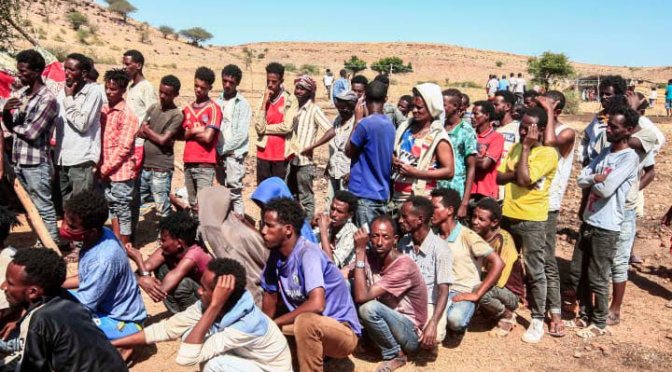
Communications have been interrupted in the region since Nov. 4 as Abiy declared a six-month state of emergency, and access is blocked by road and air, making reports difficult to verify by international agencies. However, the UN Refugee Agency (UNHCR) now estimates that more than 25,000 displaced Ethiopians have arrived in neighboring Sudan.
“Tight restrictions on access for aid agencies and communications mean that millions of people in Tigray affected by the fighting may be at grave risk,” said Laetitia Bader, Horn of Africa director at Human Rights Watch.
Abiy has appeared to suggest in tweets that a swift resolution to the conflict could be possible. However, his resistance to ceasefire calls from the UN and various international powers have raised fears of a protracted conflict with a knock-on effect for the region.
“At this stage the prospect of a negotiated settlement or ceasefire does not appear promising, and the reported atrocities being committed in Tigray will only intensify the conflict – so will moves by the federal government to establish a parallel government for Tigray to replace the current TPLF-led administration,” said Louw Nel, political analyst at NKC African Economics.
“Concerns over neighboring Eritrea being drawn into the conflict are not unfounded; however, the governments of Ethiopia and Eritrea have been projecting an image of solidarity and commitment to the peace agreement concluded in 2018.”
Somaliland: East Africa’s largest conduit for illicit cheetah trafficking to the Gulf
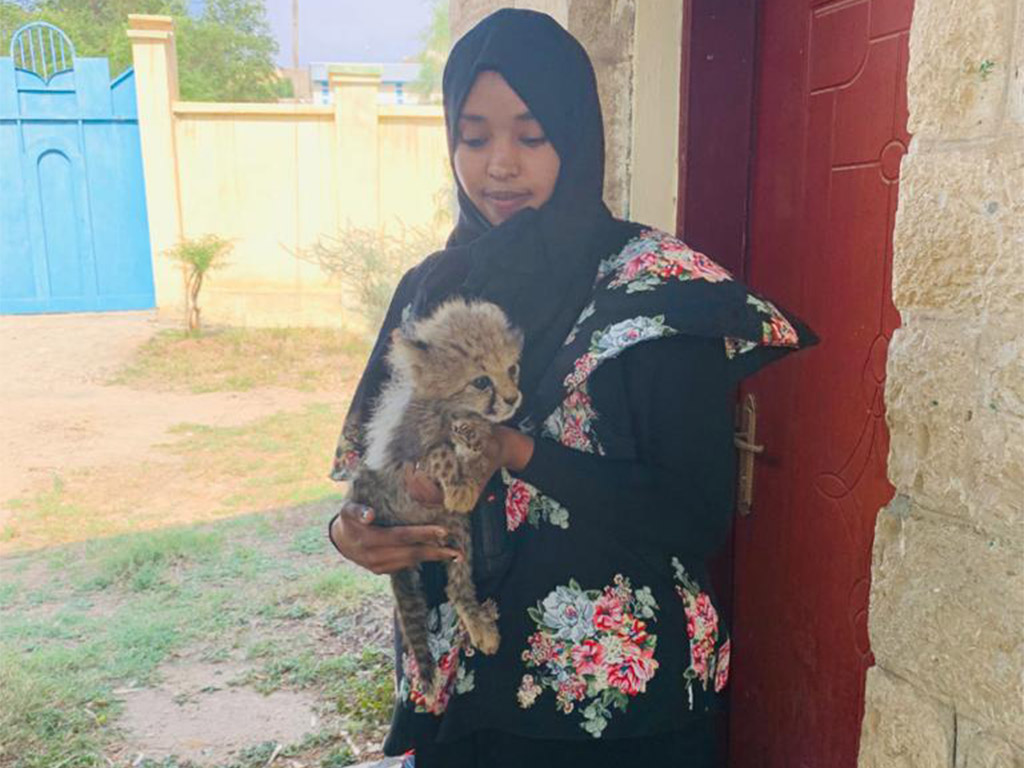
A cheetah cub receives care from representatives of Somaliland’s Ministry of Environment and Rural Development, in a village near Erigavo, Sanaag, in August 2020.
According to reports, the cubs were being held by local farmers who surrendered them to the authorities, as the result of conflict with the mother cheetah near their livestock. (Photo: Twitter / Ministry of Environment and Rural Development)
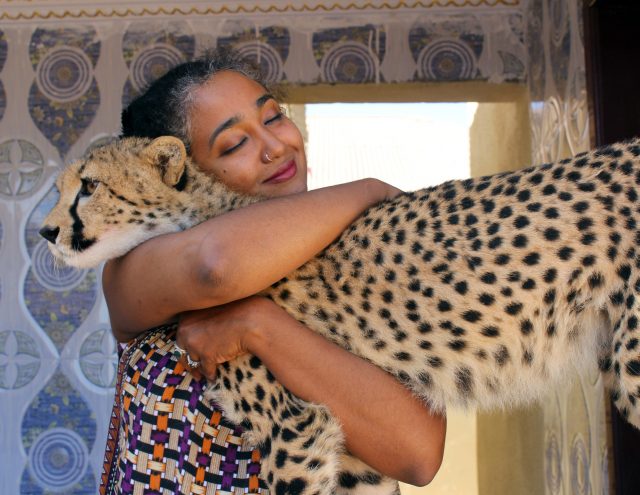
A recent spate of cheetahs being seized in Somaliland has shown that the illicit demand for these animals remains strong. Cheetahs are highly prized as exotic pets in the Gulf states, and in supplying this market, traffickers have heavily impacted local cheetah populations in Africa, a situation compounded by the fact that many animals die en route.
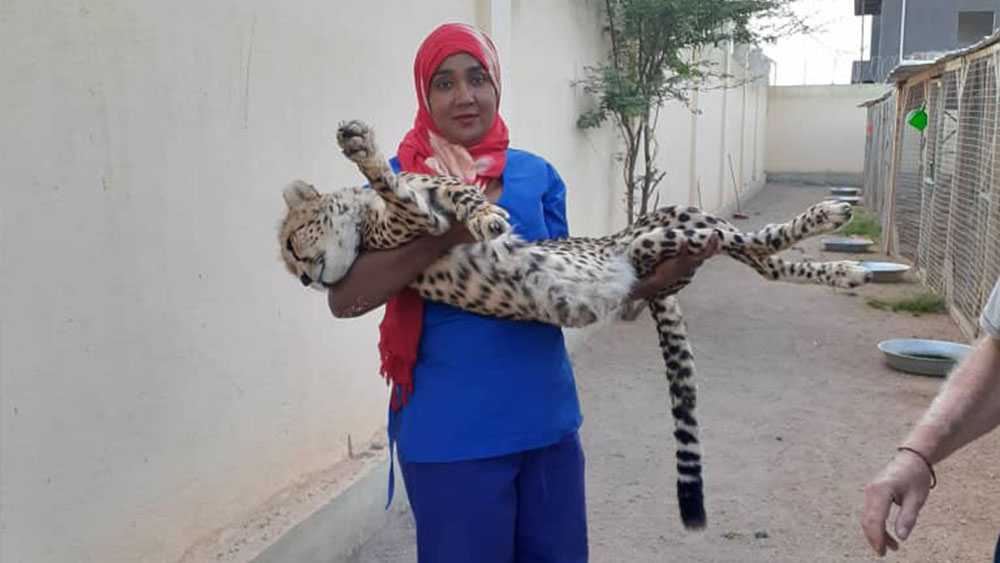
In late July, two cheetah cubs were rescued from a 25-day ordeal at the hands of wildlife traffickers by the Awdal region police in Borama, a city in Somaliland not far from the Ethiopian border. Members of the local community helped look after the dehydrated and underweight cubs until the rescue team arrived. The cubs were then given care by Cheetah Conservation Fund (CCF) staff before being transported to a CCF safe house.
Two cubs rescued near Borama, 24 July 2020. The cubs had reportedly been in the hands of traffickers for 25 days before their rescue. (Photo: CCF)
These cubs were part of a series of recent seizures of cheetahs in Somaliland. Through July and August, 20 cheetah cubs were rescued over five missions jointly conducted by the ministry of environment and rural development, the Selel regional administration and the Somaliland police, with support from the CCF and Torrid Analytics.
On 14 September, two cheetah cubs were seized in the Sool region in the south-east: the youngest was only two weeks old. In total, 25 cubs have been reported as seized or rescued in Somaliland so far this year.
A six-month-old cheetah cub, in the care of Somaliland’s Ministry of Environment and Rural Development and the Cheetah Conservation Fund, en route to Hargeisa, 29 July 2020. The cub was one of eight rescued over three missions in Somaliland in late July. (Photo: Cheetah Conservation Fund)
Cheetah trafficking in Somaliland is not a new issue. Since 2010, when reporting became more consistent, there have been 193 rescued or surrendered cheetahs. Nearly a third of these occurred after the country ratified its Forestry and Wildlife Conservation Law in August 2018, which has reportedly led to increased awareness and better coordination between wildlife officials, police and the army.
Many of the cheetahs seized in Somaliland are believed to originate in Ethiopia, which shares an 800km border with the self-declared state. At least 25% of seized cheetahs in Somaliland have been found at or near the Ethiopian border – the two cubs intercepted near Borama in August, for example, were less than 15km from the border.
As known cheetah populations in Ethiopia total no more than 300 adolescent and adult specimens, it is clear that the trafficking of cubs is taking a significant toll on cheetah populations. Ethiopia and South Sudan, along with Somalia/Somaliland where cheetah populations are unknown, are also the last remaining stronghold of the North East African cheetah subspecies, Acinonyx jubatus soemmeringii.
Cheetah cubs are mostly taken from the wild when the mother hides them to go hunting, either opportunistically by nomadic herders or by poachers. A cub can sell for between $200 and $300 in Somaliland, although prices vary greatly: an unhealthy cub can be bought for as little as $80, while a healthy, older cub can cost up to $1,000. The same cheetah can be sold for up to $15,000 in the Gulf states.
Mortality is high, as most cubs are removed from the wild at only two to eight weeks from birth and are subjected to maltreatment and poor nutrition in the hands of poachers and dealers, compounded with the rigours of the trip across the Gulf of Aden. While difficult to estimate, it is thought that more than 60% of cheetah cubs die before they reach the market to be sold.
Somaliland is vulnerable as a conduit for the illegal wildlife trade not only due to its proximity to the Arabian Peninsula’s wealthy consumer markets for exotic wildlife, but also due to the country’s rampant poverty, weak legal frameworks and a lack of environmental awareness.
Corruption also drives the cheetah trade. There are instances of illegally obtained cheetah cubs being sold back to smugglers by corrupt officials after a confiscation has been reported. That being said, Somaliland’s cheetah trade has been more extensively researched than other countries and regions of Somalia. Its relative importance as the main cheetah trafficking route into the Middle East might be in part connected to underreporting from other countries.
Across the Gulf of Aden
From Somaliland, cheetahs are transported by boat – hidden in hampers, crates or cardboard boxes – from the northern coastline across the Gulf of Aden to Yemen at an estimated rate of 300 cubs per year. The 140 nautical miles between the ports of Berbera in Somaliland and Aden in Yemen can be covered in just over seven hours at a dhow’s average speed of 20 knots.
Once in Yemen, cheetahs are reportedly transported by boat or road across the Saudi border to animal markets such as Al-Jazan or Al-Khouba, or delivered to Saudi traders, who will then offer them throughout the Gulf states to known buyers on ecommerce and social media platforms such as Instagram and Snapchat, or, more recently, through private chat groups.
Research carried out by CCF researchers found that at least 2,000 cheetahs had been advertised online between 2010 and 2019. Most were found on Instagram, with sellers offering cheetahs in Saudi Arabia, the UAE and Kuwait.
“It is enough to mention that they are ‘cats’ on the box and to pay certain people I know. It is easy for me because I work there and I know who will take the money. I give them between KWD500 and KWD1000 ($1,600–$3,200 to allow illegal animals (through the country).”
There have also been isolated reports of cheetahs arriving in Oman from Yemen, as well as being transported from Oman into the UAE via the Hatta border crossing.
An illegal status symbol
Cheetahs have long been popular household pets or hunting companions in the Gulf states, where they are viewed as status symbols. This popularity has been boosted in recent years by wealthy or famous individuals posing with their exotic pets on social media.
However, few cheetah owners know how to provide the proper care for these animals, with some social media posts advertising cheetahs that have been declawed – an extremely painful process for the animals.
Many pet cheetahs in the Gulf states do not live beyond the first year, and few live longer than five years, according to information collected by CCF.
Trade in wild cheetahs for commercial purposes is illegal in all the Gulf states, either through the states being party to the Convention on International Trade in Endangered Species (CITES) or through domestic legislation.
In December 2016, the UAE enacted a law banning the private possession of exotic and dangerous pets, although only one seizure (of four cheetahs) has been made since 2015, suggesting that the ban is seldom enforced.
Under CITES regulations, however, captive-bred cheetahs can be traded commercially by registered facilities. The CITES trade database reports that 16 “captive-bred” cheetahs were exported into Armenia from Bahrain and the UAE between 2009 and 2015.
However, the probability that cheetahs in the Gulf (both those kept as pets and those exported) are truly bred in captivity or traded in compliance with national laws or CITES regulations is low.
First, only two such registered breeding facilities exist worldwide – both are in South Africa.
Second, cheetahs do not breed well in captivity. Based on information from the International Cheetah Studbook, a voluntary register of captive cheetahs worldwide, the first report of captive-bred cheetahs in the Gulf states was in 1994. Since then, six facilities have reported a total of 304 cheetah births in captivity, with a 31% mortality rate for cubs under six months.
It is therefore more likely that purportedly “captive-bred” cheetahs in the Gulf come from elsewhere, as suggested by the “captive-bred” cheetahs exported from Bahrain to Armenia. There are no known cheetah breeding facilities in Bahrain, suggesting that the cheetahs’ real origins were masked.
A contentious issue
The issue of the illegal cheetah trade has been on the CITES agenda since 2013, when it commissioned a study that led to decisions and recommendations aimed at reducing demand and encouraging international collaboration. However, the 18th Conference of the Parties (CoP), held in August 2019, voted to delete these decisions based on a report from the standing committee to the secretariat.
The report concluded that the illegal cheetah trade was limited, based on official seizure reports from nine countries that cited 32 specimens (13 live, 19 parts or products) between 2015 and mid-2018. Based on this, the CoP agreed that matters related to the illegal cheetah trade could be addressed by a Big Cat Task Force, jointly run by CITES and the Convention for Migratory Species, which is currently in the process of being implemented.
However, Kenya and Ethiopia – two cheetah-range countries – argued that the numbers reported by CITES “underestimate the full extent of the trade, since they only include confiscated animals appearing in official records and omit data from many countries, including key primary source countries for trafficked cheetah”. They cited information showing 393 cheetah specimens (274 live animals and 119 parts), including the 32 seized specimens reported to CITES, during the same period.
The countries’ joint statement – submitted to the CITES CoP – went on to add: “Given the perilous state of [East African] cheetah populations that are the source of illegal trade, any ongoing trade in wild cheetah is alarming.”
The recent spate of seizures in Somaliland seems to confirm those fears. The illegal trade in wild cheetahs appears to be continuing apace, with potentially grave consequences for East African cheetah populations. DM
This article appears in the Global Initiative Against Transnational Organised Crime’s monthly East and Southern Africa Risk Bulletin. The Global Initiative is a network of more than 500 experts on organised crime drawn from law enforcement, academia, conservation, technology, media, the private sector and development agencies. It publishes research and analysis on emerging criminal threats and works to develop innovative strategies to counter organised crime globally. To receive monthly Risk Bulletin updates, please sign uphere.
Shakir Essa
Shakir Essa served as manager at Somali Journalist Association and PR consultant at allafrica.com
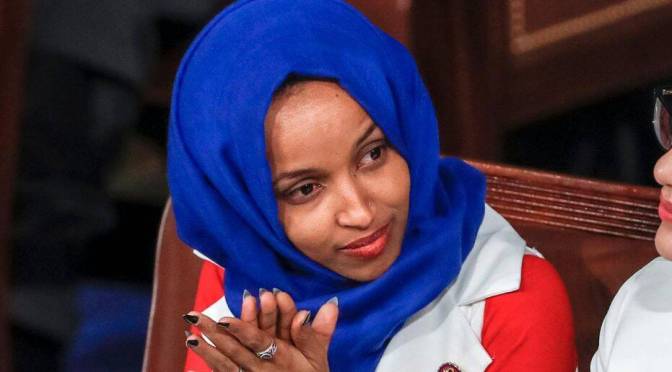
A ballot-harvesting racket in Democratic Rep. Ilhan Omar’s Minneapolis district — where paid workers illegally gather absentee ballots from elderly Somali immigrants — appears to have been busted by undercover news organization Project Veritas.
One alleged ballot harvester, Liban Mohamed, the brother of Minneapolis city council member Jamal Osman, is shown in a bombshell Snapchat video rifling through piles of ballots strewn across his dashboard.
“Just today we got 300 for Jamal Osman,” says Mohamed, aka KingLiban1, in the video. “I have 300 ballots in my car right now . . .
“Numbers don’t lie. You can see my car is full. All these here are absentee ballots. . . . Look, all these are for Jamal Osman,” he says, displaying the white envelopes.
The video, posted on July 1, was obtained by Project Veritas and included in a 17-minute video expose released Sunday night.
Under Minnesota law no individual can be the “designated agent” for more than three absentee voters.
The allegations come just five weeks before a presidential election plagued with predictions of voter fraud. Both President Trump and Attorney General Bill Barr have warned that the increased use of mail-in ballots, due to COVID-19 concerns about in-person voting, are vulnerable to fraud, especially when unsolicited ballots are mailed to all voters in certain states.
Project Veritas’ investigation in Minneapolis will pour gasoline on the fire, only 48 hours before Trump debates Joe Biden in the first presidential debate Tuesday, addressing topics including election security.
“Our investigation into this ballot harvesting ring demonstrates clearly how these unscrupulous operators exploit the elderly and immigrant communities” said James O’Keefe, founder and CEO of Project Veritas.
The alleged involvement of Ilhan Omar, a controversial member of the Squad, and frequent Trump target, is claimed on camera by two people in Veritas’ investigation, including whistleblower Omar Jamal, a Minneapolis community leader and chair of the city’s Somali Watchdog Group.
He claims Mohamed is “one of” Ilhan Omar’s “many people.”
“It’s an open secret. She will do anything that she can do to get elected and she has hundreds of people on the streets doing that,” he told Veritas in an on-camera interview last Tuesday.
“It’s not only her. It’s all this DFL [Democratic-Farmers-Labor] machine [that’s] in . . . the state of Minnesota . . .
Also implicating Ilhan Omar’s campaign in the scheme is an anonymous Minneapolis-based former political worker, who told Project Veritas that, before Minnesota’s primary elections, August 8, ballot harvesters “took every single ballot” from elderly people in a Minneapolis public housing complex — the Charles Horn Towers.
“Knock on the door and say, ‘your ballots come? Give it to me.’ ”
She alleges Ilhan Omar’s long-serving staffer, campaign deputy district director Ali (Isse) Gainey, was “coordinating everything.”
Gainey, “who is working in Ilhan’s campaign, is the one who is managing the voting place. They bring them. They line them. They put the open ballots in there and then they take them in and say, ‘Here,’ and the people mark [the ballots] . . .
“They have perfected this system,” she said. “They will tell you we are applying for your ballot. They take a picture of your social security and your driver’s license. They have a database. When the ballot comes, they track it. Sometimes, they make fake emails. They track the ballot. Then they come and pick up the ballot, unopened . . . https://921f541719f74a54745c2cf505972067.safeframe.googlesyndication.com/safeframe/1-0-37/html/container.html?n=0
“They don’t give a s–t about any Somali . . . The DFL wants to win this state at all costs . . . and the victims is the Somali people.”
She also alleged that young people and women were paid for their ballots before last month’s Minnesota primary.
“Cash, cash, cash. They were carrying bags of money. . . . When you vote and they mark you off, then you get in the van, they give you the cash.”
Federal laws forbid paying someone to vote or register to vote, or intimidating voters.
Jamal, who has worked with Minnesota’s Ramsey County Sherriff’s Office on deradicalization education, helped Project Veritas investigators unveil what he calls “ongoing election fraud” which victimizes his community. He secretly recorded conversations with alleged ballot harvester Mohamed and a member of the DFL, Minnesota’s version of the Democratic party.
In one call, Mohamed allegedly explains ballot harvesting: “You request for the ballot. It will be sent to your house. You will fill it out and then send it.”
Omar asks: “So they request for the elderly?”
Mohamed says: “Yes, they request for them.”
Omar: “And it is taken away from them?”
Mohamed: “Yes, it is taken away from them.”
In another call, Mohamed says: “I’m working for Jamal Osman [who is] running for city council in Minneapolis. That’s my young brother.”
Osman, a member of the DFL, won the Ward 6 race for Minneapolis City Council in August.
Another grab from Mohamed’s Snapchat with the time stamp 1:59 am, July 2, shows a man brandishing a wad of about 30 ballots with the words “OFFICIAL ABSENTEE BALLOT” on the front of envelopes. “Two in the morning, still hustling,” he says.
Project Veritas’ investigation raises serious concerns about the security of mail-in ballots, and intimidation of vulnerable voters.
While FBI Director Christopher Wray told the Senate last week, “we have not seen, historically, any kind of coordinated national voter fraud effort in a major election,” troubling examples have arisen in recent months.
In Paterson, New Jersey, two officials were charged with election fraud last month after hundreds of mail-in-ballots were discarded. In Pennsylvania, nine military ballots from the 2016 election, most for Trump, were found in a dumpster, it was revealed last week.
A ‘Supreme’ marriage
There is much to admire about Amy Coney Barrett. But let’s start with her marriage.
In her speech in the Rose Garden Saturday to accept the president’s nomination to the Supreme Court, the 48-year-old mother of seven paid tribute to her husband of 21 years, Jesse Barrett.
“At the start of our marriage, I imagined that we would run our household as partners.
“As it has turned out, Jesse does far more than his share of the work. To my chagrin, I learned at dinner recently that my children consider him to be the better cook!
“For 21 years, Jesse has asked me every single morning what he can do for me that day. And though I almost always say, ‘Nothing,’ he still finds ways to take things off my plate.
“And that’s not because he has a lot of free time. He has a busy law practice. It is because he is a superb and generous husband, and I am very fortunate”.
It must be disappointing for leftists that this is not the “Handmaid’s Tale” nightmare they like to paint of faithful Christian marriages, but a respectful partnership, with mutual generosity and love, between a woman who does not deny her femininity and a man who has not sacrificed his masculinity.
Successful marriages are not celebrated enough, and yet they are everything to a healthy society.
ILHAN OMAR’S MINNEAPOLIS DISTRICT — WHERE PAID WORKERS ILLEGALLY GATHER ABSENTEE BALLOTS FROM ELDERLY SOMALI IMMIGRANTS
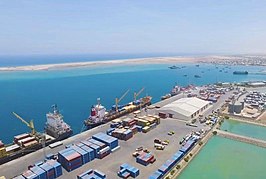
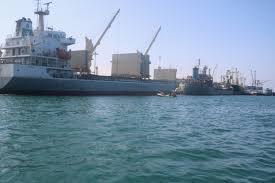
Berbera and Zeila, two of the Horn of Africa’s ancient trading cities, have long attracted the interest of global powers because of their strategic location near the Bab el-Mandeb Strait connecting the Gulf of Aden and the Red Sea. This location makes Somaliland’s coastal ports among the region’s most valuable real estate and an alternative to Djibouti as a key player in terms of trade, development, energy, and water security for the Red Sea and Horn of Africa.
Richard Burton, the British explorer, recognized the importance of Berbera port back in 1896, writing:
In the first place, Berbera is the true key of the Red Sea, the centre of East African traffic, and the only safe place for shipping upon the western Eritrean shore, from Suez to Guardafui. Backed by lands capable of cultivation, and by hills covered with pine and other valuable trees, enjoying a comparatively temperate climate, with a regular although thin monsoon, this harbour has been coveted by many a foreign conqueror. Circumstances have thrown it as it were into our arms, and, if we refuse the chance, another and a rival nation will not be so blind.
A new geopolitical rivalry in the Red Sea
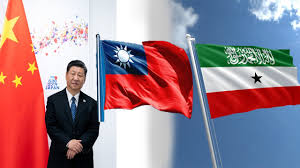
Somaliland’s ports still remain the object of international interest and rivalry today, although the foreign powers involved have changed. On July 1, according to an official statement, Taiwanese Foreign Minister Joseph Wu said Taiwan had agreed to establish ties with Somaliland based on “friendship and a shared commitment to common values of freedom, democracy, justice, and the rule of law.”
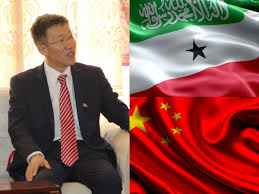
Less than a week later, however, Somalia’s federal government, led by President Mohamed Abdullahi Mohamed, aligned itself with China to prevent a Taiwanese-Somaliland nexus that would have clear geopolitical ramifications for the Horn of Africa.
While China and Somalia rebuffed and condemned the new strategic bilateral ties between Somaliland and Taiwan, the U.S. National Security Council has blessed Taiwan’s venture into East Africa, sending a clear message to China that the U.S. stands with Taiwan. This is a significant blow to the Chinese government, which has used its international influence and “development-trap diplomacy” in recent decades to rally support among African and Middle Eastern states for its efforts to suppress Taiwan’s presence in the international sphere.
Egypt, Ethiopia, and Somaliland
On July 12, a high-level delegation from Egypt traveled to Somaliland. Although an Egyptian delegation had visited in 2019, angering Somalia, this year’s trip comes at a critical time as Ethiopia and Egypt have locked horns in their dispute over the Grand Ethiopian Renaissance Dam (GERD). The Egyptian delegation’s visit prompted protests from the Ethiopian government, and Egypt’s growing bilateral ties and cooperation with Somaliland are giving Ethiopia GERD problems of its own — as in gastroesophageal reflux disease.
It is important to note that Ethiopia has a 19 percent stake in the port of Berbera, which is managed by the UAE’s DP World with a 51 percent stake, while Somaliland holds 30 percent. In May 2019, Ethiopia signed its first military cooperation agreement with France, which covers joint air cooperation and includes assistance for Ethiopia’s efforts to build up its naval forces — although where the landlocked country plans to dock these naval forces remains unclear. Joking aside, Ethiopia’s naval endeavors are driven by two main factors: first, concerns over the future of Djibouti’s port, which the IMF categorizes as at a “high risk of debt distress,” comparable to the Sri Lankan port of Hambantota, which was built with Chinese financing and which Beijing took control of after Colombo failed to meet its debt obligations; and second, to protect 11 state-owned commercial vessels managed by the Ethiopian Shipping & Logistics Services Enterprise (ESLSE).
Scramble for fragile Somaliland
Although Somaliland is relatively peaceful compared to Somalia, its lack of international recognition makes it fragile and susceptible to being drawn into regional disputes as it seeks allies, bilateral ties, and eventual recognition. This has been the case with the Gulf states, where it has sided with the UAE and Saudi Arabia. In part as a result of this fragility and desire to secure more allies and improve bilateral ties, Somaliland now finds itself in the middle of multiple disputes among other states, including Ethiopia and Egypt and China and Taiwan.
Taken together, the current domestic instability in Ethiopia and its tensions with Egypt over the GERD, combined with the global superpower competition in the Horn of Africa and Red Sea, are a recipe for conflict that could trigger the largest refugee influx in African history. This could destabilize Somaliland and with it key international maritime trade routes, making it vulnerable to insecurity and terrorism that directly affects both Ethiopia and Djibouti, with which it shares its western border.
To reduce future geopolitical uncertainty and security risk in the Horn of Africa and the Red Sea, it’s in the best interest of the international community to take the following steps:
Consider recognizing Somaliland;
Praise Taiwan-Somaliland relations instead of giving in to Chinese pressure and potentially keeping at bay Russia, which also has a keen interest in establishing a military base at Berbera port; and
Include Somaliland in the Red Sea Council and help it develop its own navy.
Egypt fears the $4bn project could lead to water shortages upstream, while Sudan is concerned about dam’s safety.
05 Aug 2020 GMT+3
Egypt has decided to withdraw from the latest round of tripartite negotiations over Ethiopia’s multibillion-dollar dam on the Blue Nile for internal consultations after Addis Ababa proposed a new draft of filling guidelines.
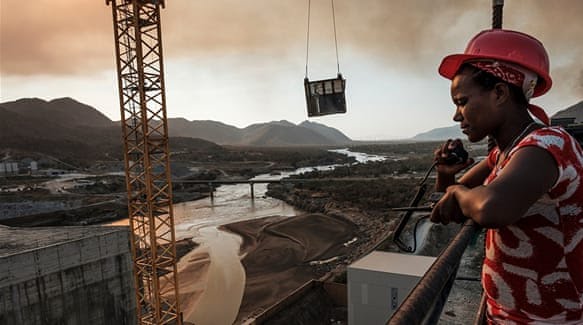
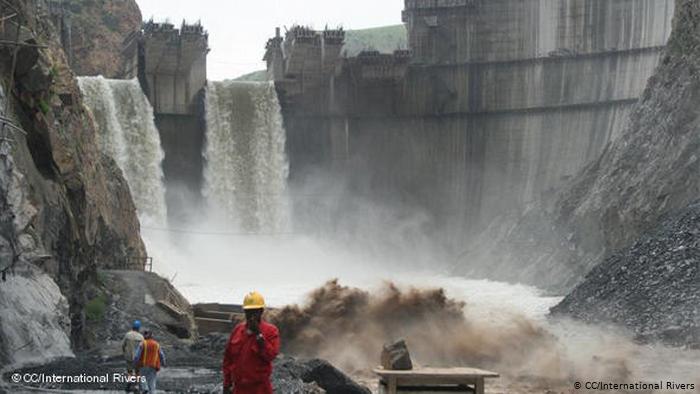
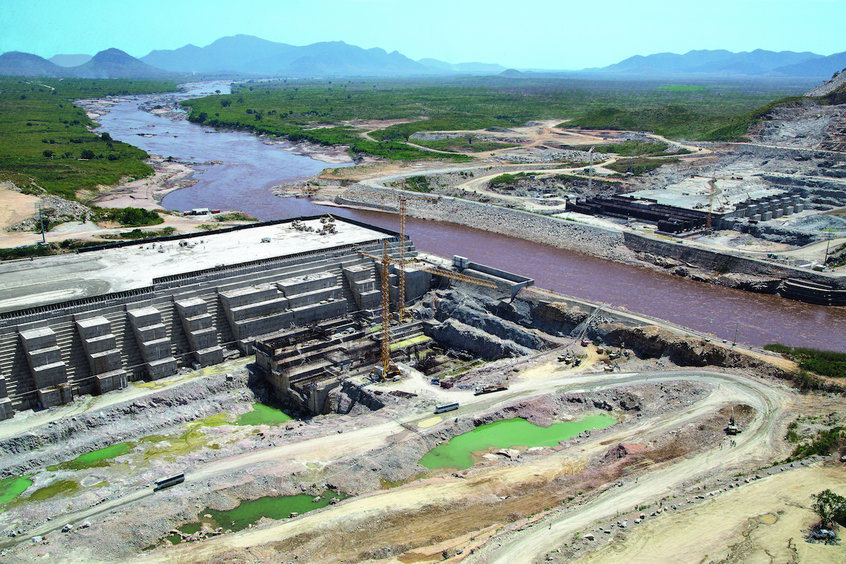
The Grand Ethiopian Renaissance Dam (GERD), which is being built about 15km (nine miles) from the Ethiopian border with Sudan on the Blue Nile, has become a major sticking point between the three countries.
Egypt fears the $4bn project could lead to water shortages upstream, while Sudan said it is concerned about the dam’s safety.
The Egyptian water ministry, in a statement on Tuesday, said Ethiopia put forward a draft proposal that lacked regulations on the operation of the dam or any legal obligations.
Addis Ababa’s draft also lacked a legal mechanism for settling disputes, according to the Egyptian ministry.
“Egypt and Sudan demanded meetings be suspended for internal consultations on the Ethiopian proposal, which contravenes what was agreed upon during the African Union summit,” it said.
The Blue Nile is a tributary of the Nile river, from which Egypt’s 100 million people get 90 percent of their fresh water.
Ethiopia dam dispute: Concerns in Sudan’s Blue Nile state (2:55)
Sudan’s safety concerns
Meanwhile, Sudan’s irrigation ministry said the latest Ethiopian position presented in talks on Tuesday raised new fears over the track the negotiations had been on.
Khartoum also threatened to withdraw from the talks, saying Ethiopia insisted on linking them to renegotiating a deal on sharing the waters of the Blue Nile.
Sudan’s water and irrigation minister, Yasser Abbas, said he received a letter from his Ethiopian counterpart who proposed “the deal under discussion be limited to filling up the dam and any deal concerning its management be linked to the question of sharing Blue Nile waters”.
Egypt and Sudan invoke a “historic right” over the river guaranteed by treaties concluded in 1929 and 1959.
But Ethiopia uses a treaty signed in 2010 by six riverside countries and boycotted by Egypt and Sudan authorising irrigation projects and dams on the river.
“This new Ethiopian position threatens the negotiations under the aegis of the African Union, and Sudan will not participate in negotiations which include the subject of sharing Blue Nile waters,” Abbas said.
“Sudan will not allow the lives of 20 million citizens who live along the Blue Nile to be tied to an agreement on sharing the water of this river.”
The call came after a meeting of technical and legal committees from the three countries aimed at pushing for a deal on the filling and operation of the GERD.
The meeting was also attended by observers from the United States and the European Union as well as experts from the Africa
CAPE TOWN, Aug 5 (Reuters) – Somalia expects to announce the winners of its first oil and gas licensing round early next year, as the country seeks petro dollars to help rebuild its struggling economy, a senior government oil official said on Wednesday.
Battered by violence and an Islamist insurgency since clan warlords overthrew a dictator in 1991, Somalia is offering seven deep water offshore blocks in its maiden licensing round in one of the world’s last frontier markets.
The oil and gas auction officially opened on Tuesday.
“We are expecting that in the first quarter of next year to finalise and award the block contracts,” Ibrahim Ali Hussein told Reuters in his first interview with international media since his appointment last week as the CEO of the Somali Petroleum Authority (SPA).
The government had previously mooted offering 15 blocks in this licensing round but cut this down to seven due to capacity constraints, Hussein, a former advisor to Somalia’s energy minister, said. Seismic data previously indicated the 15 blocks could contain around 30 billion barrels of oil.
He said the coronavirus pandemic had delayed talks between the government and a joint venture of legacy rights holders Shell and Exxon Mobil to convert their existing concession into a production sharing agreement (PSA).
“If there was not coronavirus, the roadmap that we agreed … was to get the contract back before the end of this year, December,” he said.
Converting the concession into a PSA would also help end a force majeure by the oil majors that has been in place since 1990, Hussein said. Shell and Exxon hold exclusive petroleum exploration and production rights over five shallow water offshore blocks.
“We have an ongoing and constructive dialogue with the Somali authorities about a roadmap potentially to convert the existing concession to a production sharing agreement,” a Shell spokesman said.
No-one at Exxon was immediately available to comment. (Reporting by Wendell Roelf Editing by Tim Cocks and David Evans)
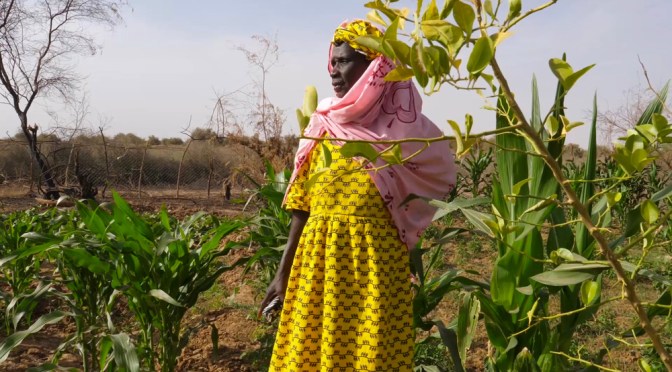
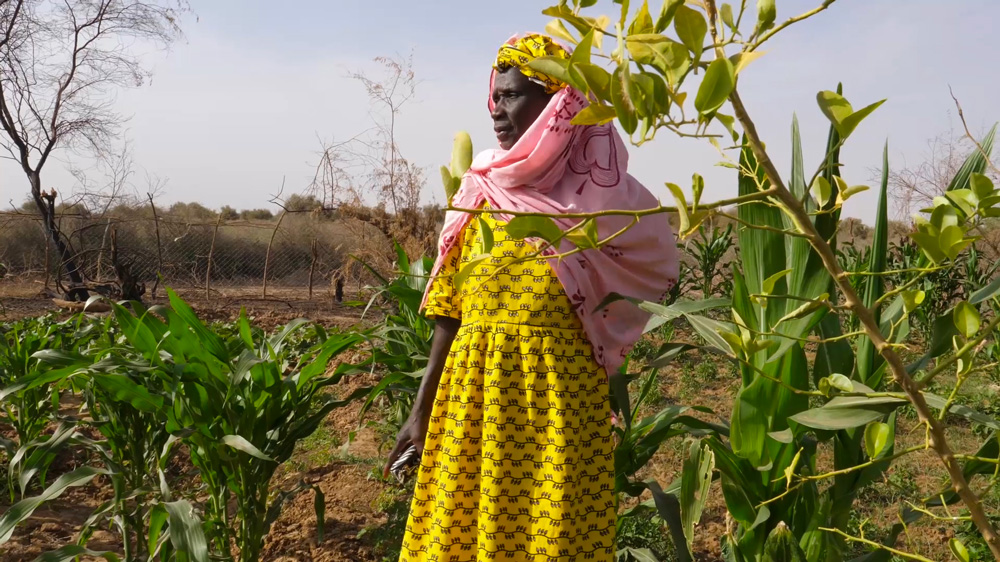
This oasis on the banks of the River Senegal, along the border with Mauritania, is home to a community of small-scale farmers spread across a handful of villages who for centuries have been channelling the river’s water to grow and consume local produce.
But in recent decades, the aridity of the area, which lies at the gateway to the Sahara Desert, has increased dramatically. Arable land has become tougher to find, food production has slowed, livelihoods have worsened, and the men have left in search of work and opportunities abroad.
“The desert is advancing on us,” says Fama Sarr, gazing intensely. The elegant 63-year-old is one of the oldest inhabitants of Sinthiou Diam Dior, a village here in the Matam region.
“The heat has become so extreme and the rainy season so short, that our agricultural activity has decreased year by year and food insecurity is gaining ground everywhere,” she says. Temperatures now regularly exceed 40 degrees Celsius (100 degrees Fahrenheit), and less rain means the river water is drying up.
In the centre of the village is a small adobe mosque and a square with a large Acacia tree, which offers shade during the hottest hours. The low-lying houses are surrounded by walls that protect them from nocturnal snakes and hippos that occasionally wander in from the river.
The tributary that provides villagers with enough water to drink and to nourish the fields is called Moyo in the local dialect, Pular, and life here revolves around it. It is where ancient generations first spotted foreigners coming from unknown, distant lands. During the dry season, little water remains and people cross it by foot to trade with the Mauritanians.
Now, more and more, the desert is encroaching. The change has been slow and gradual, yet constant over time: Cracks appearing on the walls of homes with greater regularity; market days becoming less busy; children asking the women where their fathers have gone.
But what worries the community of Sinthiou Diam Dior the most, is the shortening of the rainy season – and its effect on their main sources of income: agriculture and farming.
“It rains once in July and then it stops for a month, so families often lose their crops,” Sarr says. “We became so poor that my husband had to emigrate to Gabon and my son to France.”
A village of women
In Sinthiou Diam Dior, at least one person from every family has emigrated, most of them men. Across Matam, the women remain behind as the lifeblood that animates and nourishes the villages.
Abandoned, they are at the core of family life but also the economy of the villages: They have a key role in managing resources, food production, animal husbandry, consumption choices and raising children.
Inside her house, surrounded by fences to guard the goats, Sarr feeds her granddaughter in a large, blue room buzzing with old, rickety fans. A loud television holds the attention of a group of children lying in a corner, while women chat on the colourful sofas surrounding the room.
Fama Sarr
Sarr lives in the mud-brick building with 22 other people, 16 of whom are women. Each bedroom houses as many as five people. It is a common arrangement, with the village’s 400 men making up just a third of the total population.
After sharing a large bowl of thieboudienne, the Senegalese national dish of fish, rice and fresh vegetables, Sarr sips on a sugary ataya tea.
“Being the wife of a migrant is very difficult. Love is missing, physical affection is missing,” Sarr says.
“Sometimes we talk on WhatsApp and see each other on video calls, but often the line doesn’t work and we need to walk to other villages [to find a signal], and it’s hard to get phone credit.”
During the day, the heat forces life in the villages to move at a slow pace, measured only by the muezzin sounding the Muslim call to prayer five times a day. At night, the perfect silence and the starry sky blur together.
“When it’s so hot, you can’t live,” says Sarr. “The kids look sick and they stop playing.”
In Matam, poverty affects as much as 75 percent of families, and more than a third does not have enough food to eat, making them even more vulnerable to the consequences of desertification – which is rapidly escalating in the area, according to the United Nations.
Overall, the UN desertification organisation says every year, 12 million hectares (nearly 30 million acres) of productive land around the world are transformed into deserts – an area greater than the size of Portugal. And the pace of land degradation is more than 30 times the speed recorded in the past. UN data also projects that there will be 200 million climate migrants by 2050; northern Senegal is one of the countries that will be affected most severely.
‘Life is really hard here’
When husbands leave, life for women in Matam grows more challenging. Married, but alone, they wait for a visit that often does not happen for years, and for money that sometimes stops coming. They are left in limbo, unable to start a new life.
Coumba Diallo is strong and beautiful. She is in her 40s but says she does not know her exact age. She studied in the capital, Dakar, before moving to the village when she got married in 1991. But her husband has since left.
Coumba Diallo
“When we got married, my husband was always here and we were happy,” says Diallo. “But money was too little, so he decided to emigrate, first to the Ivory Coast, then to Gabon.”
Since he left 10 years ago, she has had to till their field alone. She does not have children, but helps her sister-in-law with her four children. One of them was born with cerebral palsy, and so the mother must constantly tend to him, leaving Diallo alone in the fields.
Every morning Diallo wakes up at dawn. After eating a slice of buttered bread and carrying out religious ablutions, she takes a large, colourful basket filled with tools and heads towards the fields that stand along the river. But for years she has struggled to produce enough food to support herself and the rest of the family.
“Life is really hard here,” she says. “Especially after my husband told me he didn’t have money to send us food any more. That’s why we started to work more and more on the fields.”
She is now involved in every stage of the agricultural process, working the land with the use of new technologies and going to regional markets to sell her produce – mainly tomatoes, onions, aubergines, and rice.
“Since solar panels have been installed in my field and provide energy for water pumps, I don’t need to spend all my savings to collect water for irrigation,” she says.
The income is divided into a portion for herself and the family, and a portion for the community. The rest covers maintenance costs and the purchase of new machinery.
When the men leave
For the men (and few women) who leave home, the conditions are notoriously complicated, with most facing treacherous journeys, racist abuse and violence, along the way.
According to the UN, up to four million Senegalese nationals out of the domestic population of 15 million live abroad, ranking it as one of the countries with the highest number of emigres in West Africa.
But even for those who stay, life is not easy. Left alone by husbands, sons and brothers, women are often forced to leave their studies and take care of the land and children. Many also find themselves marrying younger.
“The women stay. The man marries you, then emigrates and leaves you there,” says 35-year-old Dieynaba Niang who moved thousands of miles to Matam from Gabon to follow her husband, who in turn left for the United States five years ago.
“And you, you have to take care of everything, his family, his mother and for this you have to leave school. Once you are married everything you will do is prepare food and take care of your family.”
Dieynaba Niang
Niang lives on her own with her five-year-old daughter, far from her original family, and further from her husband. But she hopes to join him soon. “He left, but I needed him here, with me,” she says.
“Hopefully, what happened to me won’t happen to my daughter,” Niang says. “I’ll let her finish school. And all the men who want to marry her will have to wait for her to finish, for her to find a good job. Only then can they marry her.”
But in Senegal, as is the case in many African countries, gender inequality is still very high. Although women represent 70 percent of the continent’s agricultural force, produce 80 percent of food and manage 90 percent of its sale, according to the World Bank report on Women and Agriculture in Africa, their rights are not recognised and they have very little decision-making power.
Patriarchal society in Senegal prevents most women from directly managing the land they work on, and in most cases there is a man who enjoys the fruits of the labour carried out by women.
“Here are the women who are strong and work in the fields,” says Niang. “It is basically the women who do everything.”
The old ways
Back when most of their husbands moved away, and with the threat of desertification literally at their doorsteps, the women of the villages dedicated all their strength and energy to agriculture.
But their outdated, inefficient equipment and the rising cost of fuel, ratcheted up financial pressures.
“We have always had to pay for the fuel to drain water from the river and irrigate the fields,” explains Sarr. “But in recent years, more and more of it was required and we ended up spending most of our money on gasoline.”
Then, a beacon of hope appeared five years ago in the form of renewable energy. Desperate and eager for change, dozens of women from the villages joined forces. With the support of the NGO Green Cross, they launched the project Energy to Stay. New technologies have since been installed in the villages to draw water from the river and irrigate the fields.
Instead of using expensive gasoline to pump water, solar panels now power a water collection system. The new system also irrigates the fields using pipelines buried in the soil to gradually deliver the water over time, as opposed to the old method called “flooding”, whereby the pump released water into channels dug in the ground. Green Cross estimates this change has led to a water-saving of 70 percent.
“We stayed and decided to learn solar engineering to irrigate the fields,” says Mame Yaye Pam, the president of the village Koundel, 45km (28 miles) south of Sinthiou Diam Dior. Solar panels allow them to reduce gasoline consumption by 2,700 litres a year, she says.
In each village, year after year, the solar irrigation system allows the cultivation of more than 60 hectares (148 acres) of land, in turn producing enough fruit and vegetables to feed more than 900 people.
Mame Yaye Pam
“This has been the best year of harvest thanks to solar power,” says Diallo, looking at the fields along the river, where green shoots have sprouted in patches that had once turned brown.
“This has allowed us to increase our income, thus reducing poverty and having quality vegetable consumption in families. We’re doing well, we can feed our children and even save some money by selling at the market.”
The aim of the operation was to rehabilitate farmland in an environmentally sustainable manner, and in so doing ensure that the local population has a supply of fresh produce they can eat and sell to generate an income, says Alessandra Pierella, the manager of the Green Cross project.
“Now the women have learned to use the machinery and manage the fields, becoming entirely independent,” Pierella says. “We managed to eliminate the women’s expenses and their carbon dioxide emissions are now zero.”
Alongside the technology, more sophisticated farming techniques have been developed, such as crop rotation – which reduces waste and optimises production, President Yaye Pam says.
To help formalise the structure of the operation, a women’s association has been formed for the region and in each village, a president, a treasurer, and a secretary has been elected.
Community space
The Energy to Stay project is, in a small way, an attempt to reverse Senegal’s societal norms. While there is a lack of female presence in the most important positions in the country, for the first time in this area women not only work, but also take part in decision-making processes and hold positions of responsibility.
“The group is very well organised and women are so dynamic,” explains Diallo, who is secretary in her village. “Every month members meet to contribute to emergencies, if there is a possible breakdown or if there is something to do.”
Within the last five years, in addition to selling agricultural products, travelling to regional markets and taking care of their own business, women have become owners of land parcels.
“The land belongs to the group, but then it is distributed in plots and given to each woman according to the quota she has decided to pay,” explains Diallo.
Diallo shares an eight-hectare (19-acre) field with two dozen other people, and works on her own parcel of land every day. She uses part of the harvest for cooking, part for stocks, but the majority she sells.
From the money the women earn, each also puts in an amount to pay for expenses such as seeds, the caretaker and the pump. Diallo collects contributions from more than 200 women each month.
In this way, year after year, hectare after hectare, the women of the Matam villages have slowly managed to reclaim the deserted lands, improve living conditions and create job opportunities, thus generating an alternative to migration.
‘A little is enough’
It is midnight and Diallo, Sarr and Niang are getting ready to join the other women on the rooftop of a house near the mosque.
The women are all wearing traditional, wax-print dresses with beautiful patterns and fancy jewellery. Taking turns they reach the middle of the rooftop and dance for about 30 seconds, in a climax of energy and rhythm.
The village is celebrating the wedding of a young couple who, thanks to their parents’ money, are studying in the capital Dakar, some 500km (310 miles) away. They have returned home to celebrate their union.
But they are not the only ones who have come back.
Some men, fathers, cousins, friends, childhood companions, are also present at the wedding. They are sitting on the floor and offering money and gifts to the groom, who, according to tradition, must be at a separate celebration for the men only.
Some of the men are here to visit their families, spend a few months in the village, and leave again for Gabon, France, Italy, Germany. But others, many of them, have decided to stay after seeing the transformation of village life.
“I heard things were getting better here,” says one of the husbands, who two weeks earlier returned home after more than 10 years in Gabon. “My wife is so happy that I decided to come back and help her with the field.”
Improved living conditions and new job opportunities brought on by technology, as well as the hard work of Matam’s women, are beginning to halt the climate migration.
“The problem is why we were leaving: it wasn’t a choice,” says the husband.
“But since there’s more money in the family, we live better now. And if we live better, we’ll be less and less under pressure to seek better luck elsewhere.”
“A little is enough to gain the freedom of having a choice again.”
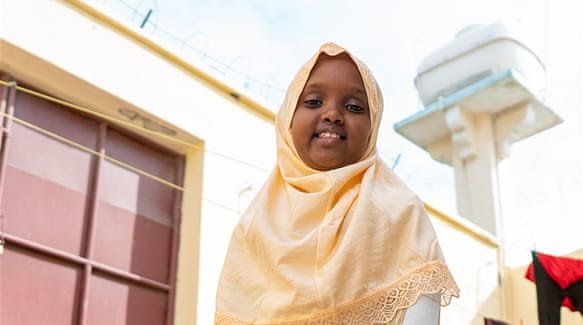
The eight-year-old girl is the star of short comedy videos that have taken Somalia by storm. Viewed millions of times on online platforms such as TikTok and YouTube, Muwado Abshir’s sketches touch on a wide range of topics, from unemployment and fashion to social media obsession and even relationships – and her jokes spare no one.
“I like to make people happy. I get happy when I see people laughing,” Muwado tells Al Jazeera, before breaking into laughter herself.
“People look better when they are happy and laughing.”
It all began in December of last year, when the eldest of Muwado’s seven older siblings, Abdikassim Abshir, was making a video for his TikTok channel.
“She wouldn’t leave me alone and kept on asking me to make a video of her,” the 19-year-old recalls.
But simply shooting the video was not enough for Muwado, who insisted that her brother share it online. Abdikassim reluctantly concurred – and within days, the clip had more than a quarter of a million views.
Abdikassim (centre) writes the script while Muwado delivers the punchlines [Ali Adan Abdi/Al Jazeera]
The funny sketch starts with Abdikassim telling Muwado not to play with his phone because she is too young. He then asks her to go to the shops to buy him ice cream.
“Be patient,” Muwado retorts. When I grow up, I will get you ice cream. I will get lost if I go out to buy you ice cream now.
Thinking that the post’s popularity was accidental, Abdikassim then posted a video featuring just himself – and did this did not go down too well with his followers.
“People would not let me post anything that Muwado was not in. They were not asking but demanding. I had no choice. It was either I post Muwado videos or don’t post anything,” he said.
The brother-sister duo started posting videos together, with Abdikassim coming up with the script and Muwado delivering the punchlines. No topic was left untouched, with special attention reserved for social media influencers, schoolteachers and politicians.
One post, making light of federal leaders cutting ties with the central government in Mogadishu, garnered more than 1.1 million views.
Because of her age, Muwado’s videos are posted on her brother’s channel.
The account now has more than 235,000 followers and 3.2 million likes on TikTok. Muwado’s YouTube channel has garnered close to seven million views in less than a year – and that excludes the figures from people downloading and resharing her videos.
‘Very smart, very funny’
Somalia is recovering from a brutal two-decade civil war that has damaged almost every sector including the entertainment industry.
With the guns falling silent, many youths have been increasingly taking to social media, mostly TikTok and Facebook, to find entertainment, express themselves and pass their time. But no one could have predicted that an eight-year-old girl would grab the attention of millions in the conservative country.
“We have never had someone her age doing what she is doing. She makes the country laugh. I hope she continues forever,” says Nafisa Abdile Abdi, a store owner in central Mogadishu.
“Whenever I’m down or had a tough day, I go to Muwado’s channels and watch her videos. She makes me happy. For someone so young, she is very smart and very funny.”
With Muwado’s star continuing to rise, one of the country’s most popular musicians, Sharma Boy, released a song dedicated to her.
“Muwado, the happy one. She is better than the rest. She has no arrogance, always joking. No one like her on TikTok,” Sharma Boy raps in the song.
And Muwado’s online fame has also translated offline, with people inviting her to birthday parties, graduations ceremonies and even weddings for an appearance fee – a figure her family did not want to disclose.
Muwado says she wants to become a doctor when she grows up [Ali Adan Abdi/Al Jazeera]
But it was not always like that. Muwado’s mother, Siraad Muuse, did her best to stop her from becoming a public figure.
“She is very young. She needs to focus on other things like school, learning the Quran and just been a child,” says Siraad, who was not happy when she found out Abdikassim had posted videos of his sister online.
She warned him against doing so, but the two siblings continued.
“Every day I will get phone calls from people telling me your daughter is on the internet. I always thought it was the first video until I realised there were dozens of other videos. It was too late to stop them. Now they tell me before they post and they tell me what the video is about,” says Siraad, who is now supporting her daughter.
And because of Muwado’s rising profile, Siraad has also become a celebrity in her own right.
“I get stopped on the streets by people and they ask how Muwado is doing. People are very nice and care about her. They call me Muwado’s mum and have stopped using my name. They even take photos with me,” Siraad said.
Meanwhile, Abdikassim has big dreams and plans for Muwado.
“I want her to make her a big star in Africa then take her to Hollywood where she can become a bigger star. God has given her a gift and I want to share that with [the] world,” he said.
But his young sister might need some convincing.
“I enjoy making people laugh but that is not what I want to do when I grow up,” she said. “My dream is to become a doctor. I think it is better to treat people than to make them laugh.”
“People will find other things to make them laugh,” she added, again bursting into laughter.
Author: Shakir Essa
Shakir essa served as manager at National Union of Somali Journalists (NUSOJ) And Somali News Tv reporter | news publisher at allafricas.com







 Amhara militia men, in combat alongside federal and regional forces against the northern region of Tigray, receive training in the outskirts of the village of Addis Zemen, north of Bahir Dar, Ethiopia, on November 10, 2020.EDUARDO SOTERAS/AFP via Getty Images
 Eritrea’s President Isaias Afwerki (second right) is received by Ethiopia’s Prime Minister Abiy Ahmed (third right) as he arrives at Bole International airport in Addis Ababa on July 14, 2018.Stringer | AFP | Getty Images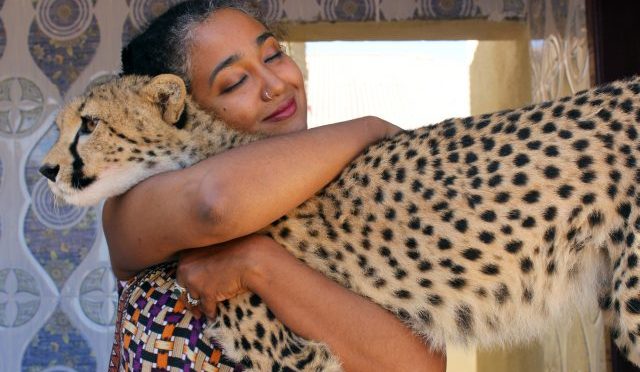


 Egypt fears the $4bn project could lead to water shortages upstream, while Sudan is concerned about dam’s safety.



 This oasis on the banks of the River Senegal, along the border with Mauritania, is home to a community of small-scale farmers spread across a handful of villages who for centuries have been channelling the river’s water to grow and consume local produce.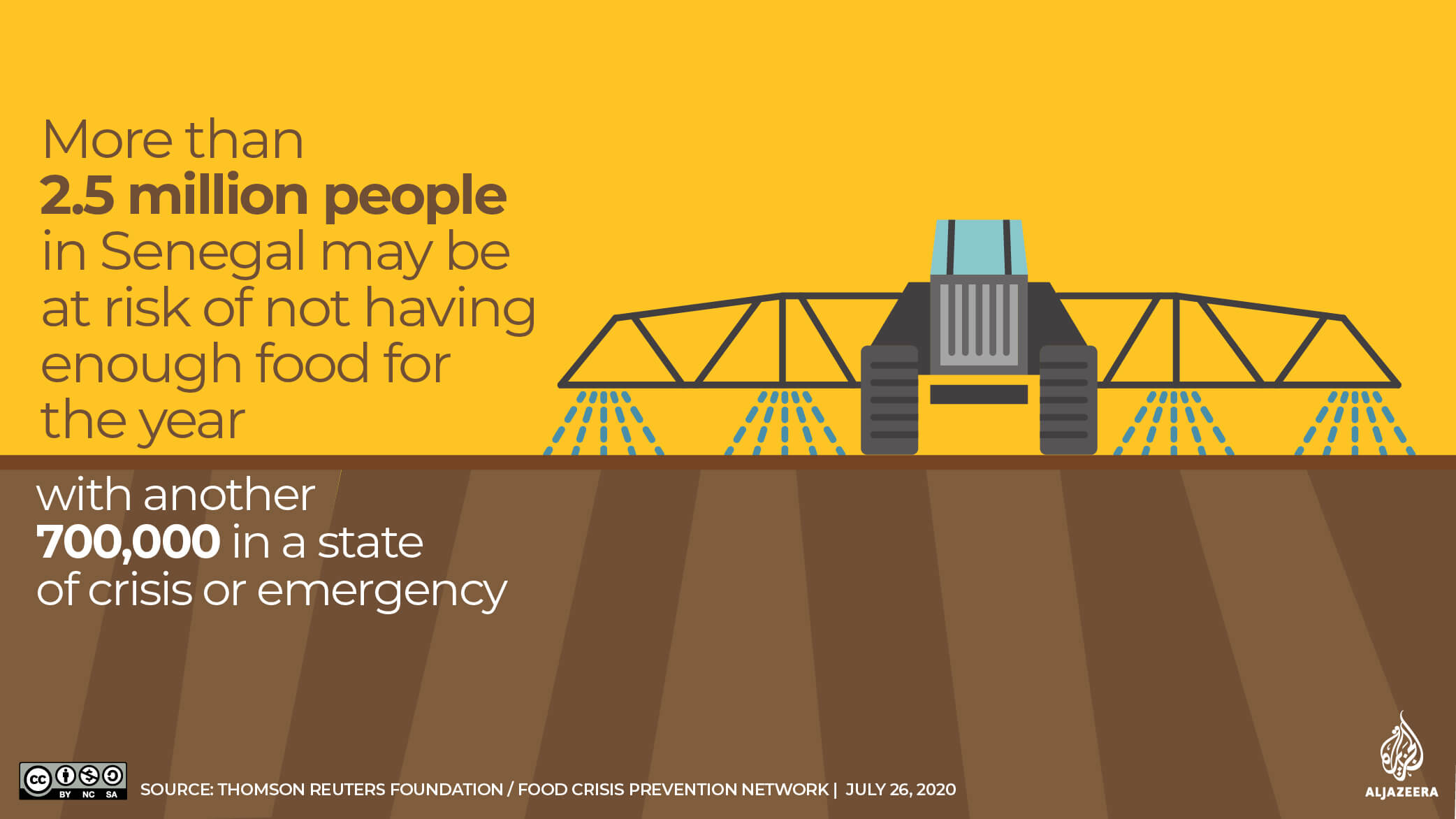


 All Africa