All posts by Bargo

Is a prominent social media influencer and community organizer from Somalia. Known for contributions to Somali media and the volunteer work in Somali Media Influences. Shakir has a diverse educational background, having studied information technology at the University of Malaysia Technology and pursued advanced degree in Cybersecurity at the University of Cincinnati.

Africa: Nearly 300,000 Active Covid-19 Cases Across Continent After 8.5 Million Tests

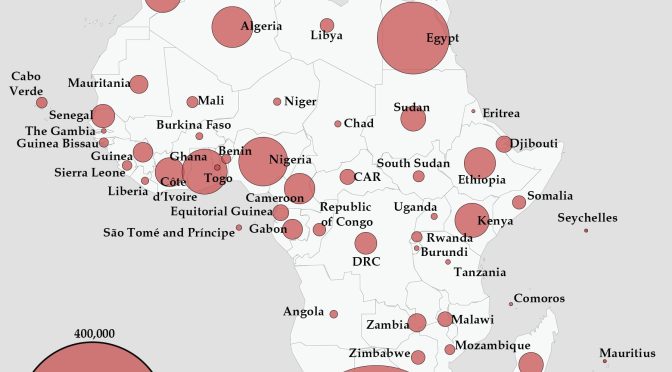
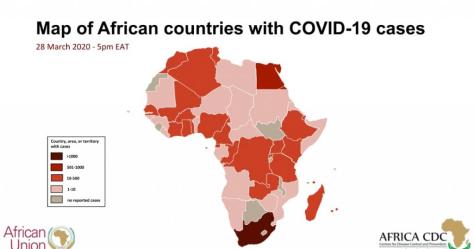
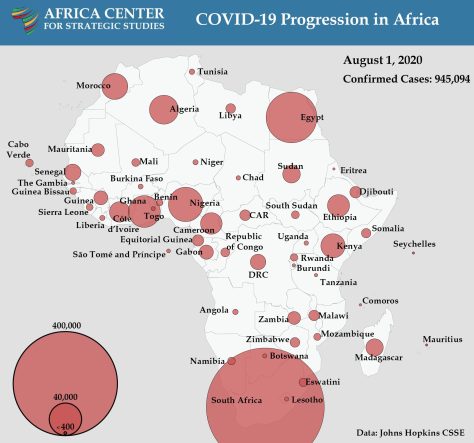
As of August 6, the confirmed Covid-19 case total from 55 African countries has reached 994,018. Of those, 298,472 are active cases with 8,527,691 tests having been performed.

Reported deaths in Africa have reached 21,641 and recoveries 673,903.

1024x538_apo_dd54be922a10f0834ba474265788bbae

South Africa has the most reported cases – 529,877, with deaths numbering 9,298. The next most most-affected countries are Egypt (94,875), Nigeria (44,890), Ghana (39,075) and Algeria (33,055).

covid_en_8_1

The numbers are compiled by the Center for Systems Science and Engineering (CSSE) at Johns Hopkins University (world map) using statistics from the World Health Organization and other international institutions as well national and regional public health departments. For the latest totals, see the AllAfrica clickable map with per-country numbers.

Visit the AllAfrica Coronavirus section for more coverage from across the continent. Also see: Africa Centres for Disease Control and PreventionWorld Health Organization Africa and African Arguments.

U.S. Warns Nigeria of Al-Qaeda’s Reach As Buhari Advises Forces FacebookTwitterWhatsAppFlipboardLinkedIn

Daily Trust (Abuja)
By Latifat Opoola
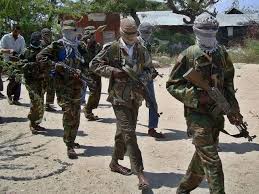
The United States has raised the alarm that the Al-Qaeda insurgent group has started penetrating the northwestern part of Nigeria.
00530088_4ad4000aeea102afca43ab4c81465d73_arc614x376_w882_us1
US warned that violent extremist organization were seizing on Africa’s ineffective maintenance of the coronavirus pandemic to advance their goals in vulnerable societies in Nigeria and other African countries.
images (16)
The Head of US Special Operations Command Africa, Maj.-Gen. Dagvin Anderson, stated this Wednesday during a zoom video conference with reporters.

He said Al-Qaeda was also expanding to other parts of West Africa.

He said Al-Qaeda had had a deliberate campaign to expand their reach, especially into the west.

“We’ve seen that they have taken advantage of this also by closing schools, so they – they take away the future. They eliminate that future by shutting down these schools: over 9,000 schools across Africa shut down; 3,000 in Mali and Burkina Faso. That is very concerning to us” he said.

images (15)

“We have engaged with Nigeria and continued to engage with them in intelligence sharing and in understanding what these violent extremists are doing, and that has been absolutely critical to their engagements up in the Borno State and into an emerging area of northwest Nigeria that we’re seeing al-Qaida starting to make some inroads in.

“So this intelligence sharing is absolutely vital and we stay fully engaged with the Government of Nigeria to provide them an understanding of what these terrorists are doing, what Boko Haram is doing, what ISIS-West Africa is doing, and how ISIS and al-Qaida are looking to expand further south into the littoral areas” he stated.

He noted that it is disturbing that despite all the multiple level of assistance the United States is supporting Nigeria with, the VEOs are continuing to make progress and continuing to be a threat.

“I think there’s two factors in that. One, it goes to that each government has to focus on this and provide that focus for international partners to engage with. The other partner – the other part of this is we can’t underestimate the threat these violent extremist organizations pose” he said .

“We, as a community of international nations, keep thinking we have defeated them or we have put them on their back foot and that they’re just moments from disintegration. I think after 20 years we have seen they are very resilient organizations that, although small, they’re able to leverage social media and other forms of media to have an outsized voice and that they continue to recruit and they continue to find opportunities” he added.

Read the original article on Daily Trust.

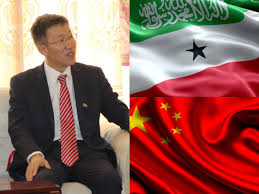
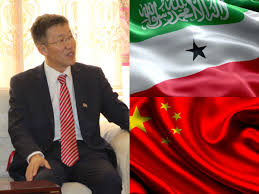
The Chinese Foreign Ministry delegation, dispatched from Beijing, will arrive in Hargeisa, the capital of Somaliland

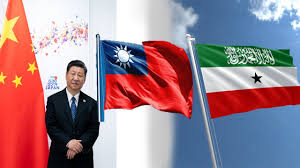
TAIPEI (Taiwan News) — A Chinese delegation is reportedly arriving in Somaliland, a self-governing territory in East Africa, following rumors that the Somaliland government is considering formally recognizing Taiwan.
images (6)
The Chinese Foreign Ministry delegation, dispatched from Beijing, will arrive in Hargeisa, the capital of Somaliland, on Wednesday (August 5), the Somaliland Chronicle cited officials from the East African territory’s foreign ministry as saying. This came just one day after the same paper reported that Somaliland President Muse Bihi Abdi is weighing the possibility of unilaterally recognizing Taiwan.

images (7)
Taiwan’s Ministry of Foreign Affairs (MOFA) on Tuesday declined to comment on the issue, which if confirmed will certainly anger Somalia, a neighboring nation that claims Somaliland as part of its territory, not to mention China. The ministry has full knowledge of the situation and remains in close communication with Somaliland authorities, according to MOFA Spokesperson Joanne Ou (歐江安).

Taiwan and Somaliland pledged to strengthen bilateral ties early in July through the setting up of mutual representative offices as well as the promotion of cooperative projects.

It is also reported that the Chinese Ambassador to Somalia, Qin Jian (覃儉), has been in Hargeisa since August 1 — the third time this year. He has been requesting to meet with President Bihi of Somaliland, who reportedly instructed aides to provide a risk analysis of furthering diplomatic ties with Taiwan but has so far declined to meet with the ambassador.

Somaliland, officially called the Republic of Somaliland, is a de-facto independent state with a population of approximately 3.5 million. Despite declaring itself an independent state in 1991, Somaliland to this day has not been recognized by any foreign government.

China and Somalia both criticized Taiwan for its efforts to advance ties with Somaliland back in July. The Somali government — which has diplomatic relations with China — condemned Taiwan for undermining Somalian sovereignty, while Beijing labeled the move by Taiwan as part of a separatist plot perpetrated by the ruling Democratic Progressive Party (DPP).

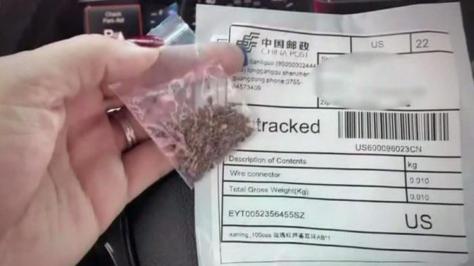
China sent Some mystery illegal seeds to US addresses

Some mystery seeds illegally sent from China identified
seeds-from-china-maryland

Officials warn not to plant mystery seeds del…
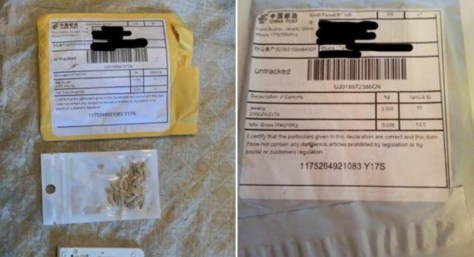
The U.S. Department of Agriculture has identified some of the plant species in bags of unsolicited seeds arriving in mailboxes across the United States. Officials have warned the shipments of mystery seeds, which appear to have originated in China, could be invasive plant species.
0729-en-shamlian-522226-640x360
So far, however, the species appear to be innocuous. At least 14 of the seed species had been identified as of July 29, according to Deputy Administrator Osama El-Lissy of the USDA’s Animal and Plant Health Inspection Service. They includes mustard, cabbage and morning glory as well as herbs like mint, sage, rosemary and lavender. He said hibiscus and roses were also found.

CBS News confirmed that residents in all 50 states have reported receiving the suspicious packages of seeds. The USDA said if you receive the packets of seeds, do not plant them and contact your state plant regulatory official.

seeds-from-china-maryland.jpg
Images tweeted by the Maryland Department of Agriculture show packets of unidentified seeds received in the mail, unsolicited, by state residents, apparently from China.
MARYLAND DEPARTMENT OF AGRICULTURE
Although the species identified so far are harmless, plant experts have warned that seeds from other parts of the world could damage crops.

Get Breaking News Delivered to Your Inbox

State agriculture officials in Virginia warned, “Invasive species wreak havoc on the environment, displace or destroy native plants and insects and severely damage crops. Taking steps to prevent their introduction is the most effective method of reducing both the risk of invasive species infestations and the cost to control and mitigate those infestations.”

Texas Department of Agriculture Commissioner Sid Miller urged people to be cautious. “It could be a bacteria. It could be another virus, some kind of invasive species,” Miller told CBS Dallas-Fort Worth.

Robin Pruisner, a state seed control official at the Department of Agriculture and Land Stewardship in Iowa, told Reuters that she has heard reports of a coating of possible insecticide or fungicide on the seeds, which could prove especially harmful to crops.

Trending News
Second grader tests positive for virus after first day of school
Once homeless, Cori Bush wins Missouri primary
WNBA players wear shirts opposing Dream co-owner Kelly Loeffler
“I’ve had people describe to me that the seeds are coated with something purple. I haven’t had it in my hands yet, but it sounds an awful lot like a seed treatment,” she said.

The Agriculture Department has said the packages are most likely part of a “brushing” scam, in which a seller sends unsolicited items to someone and then posts false positive customer reviews to boost sales.

“Brushing scams involving seed packets in international mail shipments are not uncommon,” the USDA said. “U.S. Customs and Border Protection (CBP) has intercepted similar seed shipments in recent years.”

Phylissia Clark of the Better Business Bureau told CBS DFW that if you are a victim of brushing, “your identity has been compromised.”

“Somebody knows enough about you to create a profile online and use you to manipulate systems,” Clark said.

The seeds typically arrive in white packages displaying Chinese lettering and the words “China Post.” The USDA continues to investigate.

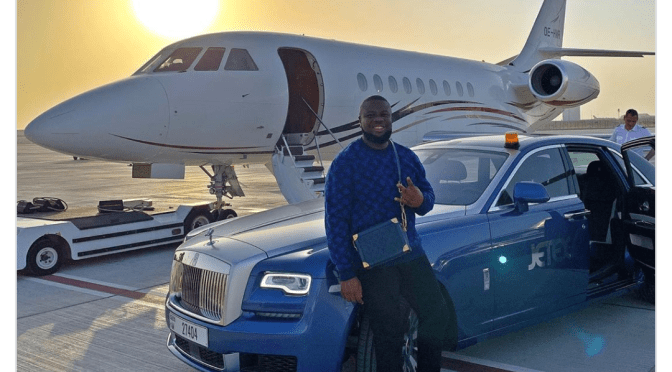
Instagram star flaunted lavish lifestyle but was actually conspiring to launder hundreds of millions of dollars, US prosecutors say

Director of Dubai CID say from di raid, dem gbab’ document of one planned fraud wey dey worth $435 million.

Dubai police say dem also seize:

  • More dan $40.9 million cash moni
  • 13 expensive cars wey worth $6.8 million moni wey dem get from mago-mago activities
  • 21 computer device
  • 47 smartphones
  • 15 memory stick
  • Five hard disk wey contain 119,580 fraud files
  • Address of 1,926,400 victims.
Nigerian internet scammer Instagram star flaunted lavish lifestyle but was actually conspiring to launder hundreds of millions of dollars, US prosecutors say

Hushpupi was arrested Instagram star flaunted lavish lifestyle but was actually conspiring to launder hundreds of millions of dollars, US prosecutors say
Hushpupi and his expensive Lamborghini in Dubai

A Nigerian man nicknamed “Ray Hushpuppi” who flaunted his Rolls Royces, fancy watches and designer clothing on Instagram faces money laundering conspiracy charges in the United States, according to the Department of Justice.

Ramon Olorunwa Abbas appeared in a federal court in Chicago on Friday. He is accused of conspiring to launder hundreds of millions of dollars through cybercrime schemes.

According to a federal affidavit, one of the alleged victims was the client of a New York-based law firm that lost nearly a million dollars in 2019.https://tpc.googlesyndication.com/safeframe/1-0-37/html/container.html?n=0

Abbas was arrested last month by law enforcement officials in the United Arab Emirates and transferred to the US this week by the FBI.

Prosecutors allege Abbas is one of the leaders of a global network that uses computer intrusions, business email compromise (BEC) schemes and money laundering capers to steal hundreds of millions of dollars.US authorities say this man is Ramon Abbas and he conspired to launder millions of dollars.US authorities say this man is Ramon Abbas and he conspired to launder millions of dollars.

A BEC scheme often involves a hacker who redirects communications of a business email account to others in an attempt to lure them into making a wire transfer.

“This case targets a key player in a large, transnational conspiracy who was living an opulent lifestyle in another country while allegedly providing safe havens for stolen money around the world. As this case demonstrates, my office will continue to hold such criminals accountable, no matter where they live,” US Attorney Nick Hanna said in a statement.

It is unclear whether Abbas has an attorney.

The Department of Justice says the Hushpuppi Instagram account, which boasts 2.4 million followers, shows Abbas inside or in front of jets, shopping luxury brands, posing in front of Rolls Royces, a Ferrari and other expensive cars.

In the bio, Hushpuppi says he is a real estate developer.

According to the Dubai Police Facebook page, Abbas and 11 other people were arrested during raids in which authorities seized nearly $41 million, 13 luxury cars worth $6.8 million and phone and computer evidence containing more than 100,000 fraud files and the addresses of nearly 2 million possible victims

https://d-19089519563005070114.ampproject.net/2006180239003/frame.html

Conspirators went after English soccer team, feds say

A criminal complaint filed last month alleges that Abbas and an unnamed person conspired to launder funds from a $14.7 million heist of a foreign financial institution in 2019.

Abbas also is accused of conspiring to be part of an attempt to steal $124 million from an English Premier League soccer club. The complaint does not say which team was targeted or if the attempt was successful.The man known as Hushpuppi told his 2.4 million Instagram followers that he is in real estate.The man known as Hushpuppi told his 2.4 million Instagram followers that he is in real estate.

Authorities said he was part of a BEC scheme that defrauded a client of a New York-based law firm out of about $922,857 in October 2019.https://tpc.googlesyndication.com/safeframe/1-0-37/html/container.html?n=0

The FBI says in the criminal complaint that Abbas and others tricked a paralegal at the law firm into wiring the money meant for a real estate refinance into an account that Abbas and his co-conspirators were using.

Abbas, 37, is being held at the Metropolitan Correctional Center, Chicago, the Federal Bureau of Prisons website says. He will be transferred to Los Angeles in the coming weeks, according the Justice Department.

If convicted of money laundering, he would face a maximum sentence of 20 years in prison.

Di Director of Dubai CID say from di raid, dem gbab document of one planned fraud wey dey worth $435 million.

Dubai police say dem also seize:

  • More dan $40.9 million cash moni
  • 13 expensive cars wey worth $6.8 million moni wey dem get from mago-mago activities
  • 21 computer device
  • 47 smartphones
  • 15 memory stick
  • Five hard disk wey contain 119,580 fraud files
  • Address of 1,926,400 victims.

Facebook reportedly had evidence that its algorithms were dividing people, but top executives killed or weakened proposed solutions

Facebook’s internal research found that it encouraged polarization, but Mark Zuckerberg and other top executives rejected ideas aimed at fixing the problem, The Wall Street Journal reported.

But Zuckerberg and Facebook’s policy chief, Joel Kaplan, repeatedly nixed proposed solutions because they feared appearing biased against conservatives or simply lost interest in solving the problem, The Journal reported.

Facebook had evidence that its algorithms encourage polarization and “exploit the human brain’s attraction to divisiveness,” but top executives including CEO Mark Zuckerberg killed or weakened proposed solutions, The Wall Street Journal reported on Tuesday.

The effort to better understand Facebook’s effect on users’ behavior was a response to the Cambridge Analytica scandal, and its internal researchers determined that, contrary to the company’s mission of connecting the world, its products were having the opposite effect, according to the newspaper.

One 2016 report found that “64% of all extremist group joins are due to our recommendation tools,” with most people joining at the suggestion of Facebook’s “Groups You Should Join” and “Discover” algorithms. “Our recommendation systems grow the problem,” the researchers said, according to The Journal.

The Journal reported that Facebook teams pitched multiple fixes, including limiting the spread of information from groups’ most hyperactive and hyperpartisan users, suggesting a wider variety of groups than users might normally encounter, and creating subgroups for heated debates to prevent them from derailing entire groups.https://tpc.googlesyndication.com/safeframe/1-0-37/html/container.html?n=0

But these proposals were often dismissed or significantly diluted by Zuckerberg and Facebook’s policy chief, Joel Kaplan, according to the newspaper, which reported that Zuckerberg eventually lost interest in trying to address the polarization problem and was concerned about the potential to limit user growth.

In response to the pitch about limiting the spread of hyperactive users’ posts, Zuckerberg agreed to a diluted version and asked the team to not bring something like that to him again, The Journal said.

The company’s researchers also determined that because of a larger presence of far-right accounts and pages publishing content on Facebook, any changes — including apolitical tweaks, like reducing clickbait — would have disproportionately affected conservatives.

That worried Kaplan, who previously halted a project called “Common Ground” that aimed to encourage healthier political discourse on the platform.null

Ultimately, many of the efforts weren’t incorporated into Facebook’s products, with managers telling employees in September 2018 that the company was pivoting “away from societal good to individual value,” according to The Journal.

“We’ve learned a lot since 2016 and are not the same company today,” a Facebook spokeswoman told the paper. “We’ve built a robust integrity team, strengthened our policies and practices to limit harmful content, and used research to understand our platform’s impact on society so we continue to improve.”

Facebook has repeatedly been scrutinized by critics who say the company hasn’t done enough to limit the spread of harmful content on its platform. That topic has come into sharper focus as coronavirus-related misinformation has run rampant on social media and as the 2020 presidential election approaches.

  • Author: Shakir Essa

A new film set in Djibouti City presents a searing class critique of Somali girlhood.

In the popular imagination, Somali women are viewed as passive, oppressed subjects, the hapless victims of their patriarchal culture and religion. Where they are visible, it is often through the iconography of the veil and female circumcision. Lula Ali Ismaïl’s Dhalinyaro (Youth)—the first full-length feature film by a Djiboutian woman—is a radical departure from this corpus in depicting Somali girlhood in its full depth and complexity. Most importantly, it does this through depicting the mundane events of everyday life in Djibouti City. There are no wars here, or pirates, or terrorists, no young women escaping fathers, husbands, or the blade of a female elder, no white saviors ready for the rescue. What we see in Dhalinyaro is a coming of age story that shows Somali girls as they are.

The film’s storyline revolves around the final qualification examination for Djiboutian secondary students to enter university, the baccalaureate. The three main characters, Deka, Hibo, and Asma, are classmates at the Lycée de Djibouti but hail from markedly different class backgrounds. The Lycée space becomes one where the different segments of Djibouti’s population interact and form friendships, bonding over the shared ritual of studying for the baccalaureate. Yet, it is the question of higher education that renders class divides most explicit. For wealthy Hibo, who arrives at the Lycée each day in a chauffeured private car, there is no question that she will continue her education in Paris. Deka, who is securely middle class, is less certain, but with the funds saved up by her mother over a number of years, the idea of going to France for university is within the realm of the possible. Asma has no such choices available to her; poverty dictates that she must stay in Djibouti, unless she is among the few top students to receive a scholarship to study abroad.

The palpable burden of class difference saturates the film. One shot silently juxtaposes a well-dressed man at a cafe with a young boy on the street as he hands his shoes to the child to polish while drinking coffee. In another shot, women in wide-brimmed sun hats sweep the city streets at dusk to the sounds of ciyaar Soomaali, a traditional Somali folk dance. It is palpable in Asma’s hesitation to attend Hibo’s birthday party at the luxury Djibouti Palace Kempinski, and in the fuul bean stew her family eats at mealtimes, like the poor neighborhood children that come to Deka’s home for bread. When Hibo gets into an altercation with a group of schoolgirls outside of the Lycée, she disparages them as the “stupid Balabois”—residents of the impoverished Balbala suburb. An angered Asma, who tells her that she is “one of them,” accuses Hibo of believing that her wealth gives her more rights. Over the course of the film, Hibo’s character arc moves from a sheltered and careless rich girl to a more understanding and self-sufficient individual, a transformation made possible by honest friendships across difference.

The stunning cinematography with long shots of the sea and glimpses of the Port of Djibouti subtly signals the confluence and contradictions of global wealth and local poverty. This infrastructure of state capitalism—and, at the end of the film, the national radio broadcasting examination results—are the only glimpses of the state or politics in Dhalinyaro. Djibouti is among the most enduring dictatorships in Africa, ruled by an extended family since its independence from France in 1977. Its ruler, Ismaïl Omar Guelleh, is famously a patron of the arts and culture, and Lula Ali Ismaïl has described the support she received for the film from both the private sector and a government eager to develop the country’s nascent film industry. While one can wonder about the possible implications of this government hand for artistic freedom, Ismaïl’s decision not to engage formal politics explicitly is another subversive act of representation, given that the region is mired in images of political dysfunction. Ismaïl’s political critique is muted and indirect, but no less searing. It takes the form of a city-wide power outage that forces the “haves” to turn on their private generators and the “have-nots” to light lanterns; it is in the figure of the elderly veteran telling Deka the forgotten stories of Djiboutian soldiers who fought for France during the Second World War; it is, at the metalevel, what the film itself embodies in its very existence, in its very refusal to conform.

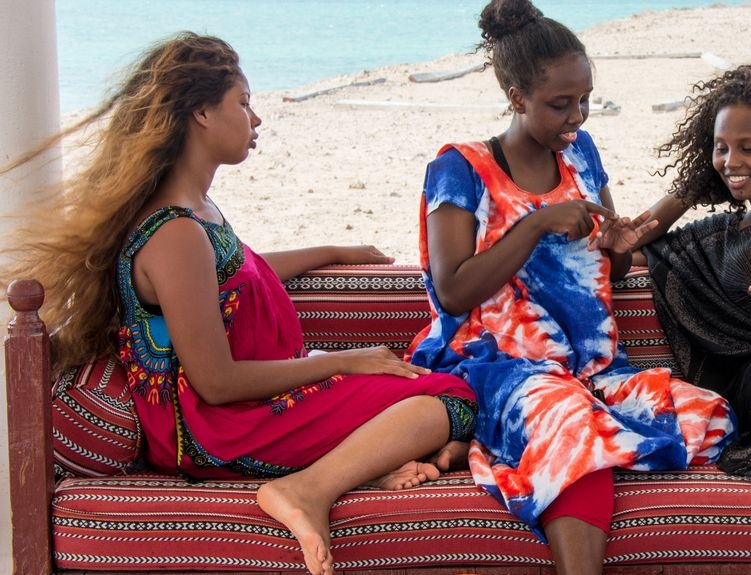
What Dhalinyaro foregrounds is female sociality and intimacy as it unravels the complex layers of contemporary Djiboutian life. The film has a decidedly female gaze, decentering maleness to the extent that most of the male characters in the film remain marginal and unnamed. Instead, it is the inner worlds of Somali women that are fleshed out in full, and with the immense care and tenderness of a Somali woman behind the camera. When Hibo has a miscarriage in a bathroom stall at school, it is the conservatively-dressed Asma who immediately removes her abaya to cover her friend’s blood-stained clothing, stating that “girls look out for each other.” They openly discuss sexuality and their relationships, the lively female banter reminiscent of the Somali riwaayad (play) and theater tradition that has pushed the envelope on notions of female morality and modesty in Somali society since the 1960s. Markers of Somali womanhood are interspersed throughout the film: the breezy dirac shiid worn as loungewear at home, the fragrant uunsi smoke used to perfume one’s household, clothing and hair, the huruud face masks made of turmeric to keep one’s skin soft.

At the heart of Dhalinyaro is the tension between visibility and invisibility in the desire for a particular kind of freedom. In an early scene, Deka, Hibo, and Asma quietly talk at their desks as their teacher—played by Lula Ali Ismaïl herself—explains the upcoming deadlines for students seeking to go abroad for university. “Think of the freedom!” Deka whispers to her friends, “no one holding you to account, no one looking at you and saying ‘you’re the daughter of so and so.’” These moments of recognition occur most often in their encounters with men. As the girls sit by the waterfront and jokingly evaluate the appearances of young men passing by, a man pauses and greets Hibo, telling her to say hello to her father for him. “There’s no getting away!” an exasperated Hibo tells her friends. In another scene, the searching glance of a male waiter at a restaurant where Deka is having an intimate dinner with the older married man she is seeing is enough to unsettle her and abruptly end the date. Yet, it is the same surveilling gaze—this time by women—that precipitates the end to the predatory relationship, after Deka’s mother hears about it. The communal nature of the Somali social world, while frustrating any notion of individual anonymity, fosters a sense of interdependence and female solidarity that uplifts the girls in times of need, as their friendship illustrates. Ultimately, Deka chooses this world by staying in Djibouti for university.

Ethnicity is conspicuously absent from the film. Djibouti, while dominated politically, culturally and demographically by Somalis, is a multi-ethnic country comprised of the Somali and Afar, as well as smaller communities of Arabs, Ethiopians and Europeans. That diversity is represented in the casting, with the three lead actresses themselves belonging to Djibouti’s different ethnic groups: one is Afar, one is Somali, and one is Arab Somali. Yet each plays a Somali character, in a Djibouti where only Somali people and culture appear to exist. However, there is some ambiguity to Hibo’s background that is not discernible to the non-Somali speaker and flattened by the limited subtitles. In the scene where Hibo is confronted on the schoolyard, a voice in the background, which does not make it into the subtitles, can be heard saying “the little Arab girl is being attacked!” in Somali. Her father, in other scenes, speaks one or two words of Arabic, albeit words that have entered the Somali lexicon. Asma and Deka’s households are completely immersed in their Somaliness, with illustrative scenes including Asma’s sisters playing jag on the veranda as their mother gives them advice using Somali proverbs, and Deka’s single mother listening to gabay poetry composed by a heartbroken Cilmi Boodhari. Hibo’s family, on the other hand, only speaks Somali at home when talking to their maid; they converse in French exclusively between themselves, listen to European classical music during formal dinners, and go to France for education. There is an unexamined politics of language and ethnicity yearning to be explored.

Dhalinyaro is a remarkable feat, particularly for a first full-length film by a self-taught filmmaker hailing from a country with a film industry still in its infancy. Though initially released in 2018, it has recently seen a surge in popularity when it was made available for free streaming as part of this year’s Cinewax Online African Film Festival, breaking OAFF streaming records. It is a beautiful film—a love letter to Somali girls—that deserves to be seen widely.

Author

Shakir Essa

  • With Shakir Essa, you can listen to live news analysis and podcasts for free Shakir Essa served as manager at Allafrica news

Marriage proposals, dresses, feasts and dances – the story of two weddings in SOMALIland, with traditions old and new.

When it comes to weddings, Somaliland has many approaches. Some couples stick with tradition while others go for more modern marriage ceremonies.

This film tells the story of two weddings, one in a small desert village and the other in a busy city, while highlighting everyday life in different parts of the country. It also contrasts traditional ways of life with modern ideas that come from younger Somalis and social media.

In the remote rural village of Toon, herder Jamalli Muhammad Ahmed can only marry a local woman called  Hoda after first getting permission from her family. In a tradition going back generations, they all gather in the shade of a large tree to decide whether they are a suitable match. Only then can Jamalli and Hoda start planning their lives together.

Somalia Two Weddings - AJW

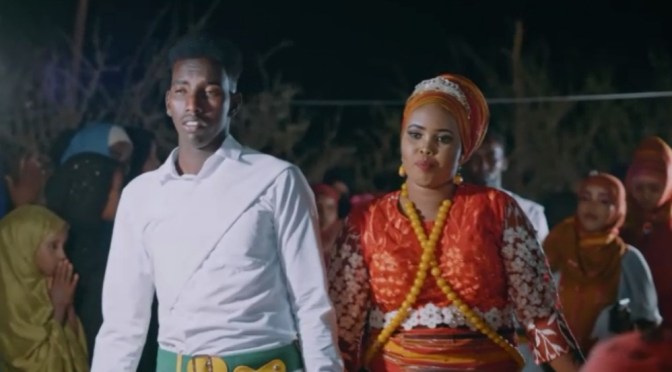
 Jamalli and Hoda’s wedding followed traditional Somali customs [Screengrab/Al Jazeera]

Abdullatif Deeq Omar in Hargeisa city, however, first met his future wife Najma on Facebook. They eloped but eventually returned to their families who accepted their marriage plans.

Somalia Two Weddings - AJW

 Abdullatif and Najma’s ceremony was in the city of Hargeisa [Screengrab/Al Jazeera]

Both weddings have the same pressures: buying outfits, inviting guests, finding a venue and arranging feasts – but each tells a unique story of family, community and tradition.

In Somali culture, many people also believe that getting married in the run-up to Ramadan ensures additional blessings on the couple, making the happy occasion even more special

Shakir Essa report.

Ethiopia admits shooting down Kenya aid aircraft in Somalia The plane had been carrying humanitarian and medical supplies to help the country

Ethiopia admits shooting down Kenya aid aircraft in Somalia The plane had been carrying humanitarian and medical supplies to help the country fight the spread of coronavirus.
FB_IMG_1588817432920
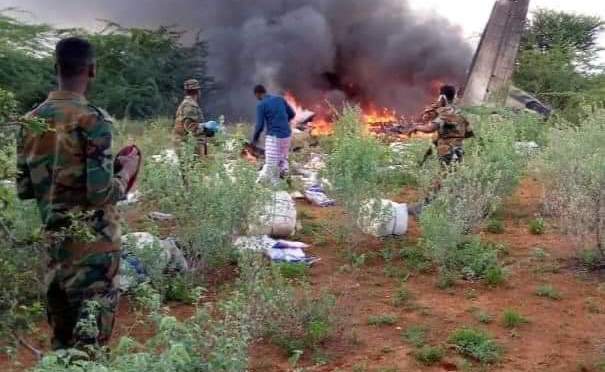
09 May 2020 GMT+3 Ethiopia on Saturday admitted it was behind the shooting down of a privately owned Kenyan plane in Somalia earlier this week, resulting in the deaths of all six people on board. The plane was shot down on Monday by Ethiopian troops protecting a camp in the town of Bardale in southwestern Somalia, the Ethiopian army said in a statement to the African Union (AU). More: Six killed as plane carrying coronavirus aid crashes in Somalia Anger in Mogadishu after police kill civilian in COVID-19 curfew Somali state minister dies from coronavirus The aircraft had been carrying humanitarian and medical supplies to help the country fight the spread of coronavirus when it went down in Bardale, about 300km (180 miles) northwest of Somalia’s capital Mogadishu. The Ethiopian soldiers mistakenly believed the plane was on a “potential suicide mission” because they had not been informed about the “unusual flight” and the aircraft was flying low, the statement said. “Because of lack of communication and awareness, the aircraft was shot down,” the military said. “The incident … will require mutual collaborative investigation team from Somalia, Ethiopia and Kenya to further understand the truth.” Kenya expressed shock over the incident earlier this week, saying the plane’s mission had been to aid Somalia in tackling the coronavirus pandemic.
depositphotos_112748876-stock-photo-somalia-flag-with-kenya-flag
Soldiers from Ethiopia and Kenya are among those deployed to Somalia as part of an AU peacekeeping mission to fight the armed group al-Shabab. The shooting down of the plane comes amid strained ties between Kenya and Somalia. Last month, Kenya accused Somali troops of an “unwarranted attack” across its border near Mandera, a northern outpost town, describing the incident as a provocation. Somalia, meanwhile, has long accused its larger neighbour of meddling in its internal affairs, something Kenya has denied.

What Kenya Stands to Lose and Gain By Withdrawing From Somalia:

depositphotos_112748876-stock-photo-somalia-flag-with-kenya-flag

Kenya has started negotiating a withdrawal from Somalia by 2021. The country is set to leave as Ethiopia’s influence continues to rise.

Kenya has achieved a lot since it intervened in 2011. Its intervention was a “game changer”, contributing to a momentum that led to al-Shabaab losing all major Somali cities. But it has fallen short of its goals to subdue al-Shabaab and end terrorism in Kenya. And it will leave a Somalia where its rivals are gaining power and challenging Kenyan national interests.

The intervention

Kenya’s public motive for intervening in 2011 was self-defence. Its defence forces moved into Somalia to stop al-Shabaab attacks and improve the country’s internal security. Since then, al-Shabaab has lost territorial control over all of Somalia’s larger cities. In 2012, Kenya reclaimed Kismayo. In the same year, it convinced Ethiopia to join the fight.

The combined forces of Kenya and Ethiopia were redeployed under the African Union Mission to Somalia. This was crucial in containing al-Shabaab between 2012 and 2016. This combined force weakened the terror group to the point that it is now unable to hold territories within Somali cities.

But this still does not mean that the intervention was successful. Since it began, al-Shabaab has launched three large attacks in Kenya. In 2013, it attacked Westgate Mall in Nairobi. In 2015, it attacked Garissa University in northeastern Kenya. And last year it attacked the Dusit Hotel complex, also in the capital.

By late 2019, al-Shabaab’s infiltration in Kenya’s northeast intensified, and locals are increasingly accommodating their presence.

The situation in the area around the coastal town of Lamu is similar. Al-Shabaab is taking advantage of animosities between the Muslim Bajunis and the Christian elite who settled in the area in the 1970s.

Broadly speaking, Kenya has managed to curtail al-Shabaab activities in trouble spots in Kilifi and Mombasa. The country also managed to return a large number of foreign fighters to Somalia without much blow-back. Yet the intervention of 2011 failed to keep Kenya completely safe.

Nor did it fully vanquish al-Shabaab. The group is still strong, despite having lost much of its territory. It is richer than ever, propelled by its efficient taxing of the Somali business community, tolled checkpoints and investments, including some in the agricultural sector. Its leadership structure remains intact, with many key officers having served more than four years.

Kenya’s dilemmas

Kenya’s withdrawal from Somalia will have its own drawbacks. For one, it will abandon its long-time allies inside Somalia. Thus, it will lose leverage with both Addis Ababa and Mogadishu.

The government of Somalia’s president, known as Farmajo, has increasingly been at odds with Kenya. The two countries are currently in a diplomatic row over their shared maritime border.

Second, Farmajo’s agenda to place his preferred candidates in political office in Somalia’s regional states has challenged Kenya’s allies in Somalia and especially the regional state of Jubaland.

It has become clear that Farmajo is willing to draw Ethiopian forces as well as the Somali National Army into his quest to consolidate power by appointing political allies. This has pitched Ethiopia against Kenya, and created tension. Ethiopian forces have recently intervened in support of the Somali government in Mogadishu, targeting the enemies of the Farmajo government. That government has been increasingly willing to use military force against the opposition (as well as the Somali media, and against the regional state of Jubaland, led by Kenyan ally Ahmed Mohamed Islam “Madobe”.

Kenya leaves a Somalia where neighbouring Ethiopia plays an increasing role, and also works against Kenya’s former allies. Also, there are stronger totalitarian tendencies on the part of the Somali presidency than before.

Its withdrawal will leave Ethiopia with a dominating position in the African Union Mission to Somalia. As Ethiopia’s alliance with Farmajo is strong, this is bad news for the Somali opposition, including allies of Kenya.

By withdrawing, Kenya has also let its allies down. It has shown that it cannot be trusted to stay the course. Yet the withdrawal follows a wider pattern in Kenyan politics, wherein the 2011 intervention was the exception.

@ Afrika-times.com
Original post copied from #Allafrica

Somali press media

Things look grim for independent journalism in Somalia. This can also be concluded from the country’s ranking in the World Press Freedom Index: close to the bottom of the list of 180 countries. Still, the local situation does vary from region to region. In the south in particular, journalists work in fear of their life. But in the country’s northern region, Somaliland, our team do everything in their power to support and train local Somali reporters.

Envelope full of money

A journalist is interviewing a politician or businessman. At the end, the interviewee offers the reporter an envelope full of money. And if he doesn’t, the reporter asks for one himself. In Somalia, this practice has a name: Sharuur. And virtually every journalist takes part in it. The result: nearly all media reports in the country are biased and distorted. After all, you don’t bite the hand that feeds you. This means that people in Somalia have next to no access to reliable and factual information.

Journalists in Somalia run tremendous risks. According to the Committee to Protect Journalists, in the past four years alone, 21 reporters in Somalia were murdered and dozens arrested in the course of their work. Nevertheless, you can still find people in the country who want to report on what is really going on, people who have the courage to refuse the stuffed envelope. We bring them together, at a location where they are safe, and train them in objective reporting.

Radio Hirad

In addition to organising trainings, at the Media Training Centre we also produce three new editions per week of the news and current affairs programme Radio Hirad. This programme includes contributions from journalists trained at our Centre. The programme is broadcast by over 20 FM stations and websites. While most journalists in Somalia are mainly interested in reporting on political developments, Radio Hirad has a strong focus on social issues. Themes like health, the position of women and adolescents in society and migration feature prominently in the broadcasts. This way, we help people who are seldom heard to share their perspectives and bring sensitive yet important topics up for discussion.

In Somali culture, the name hirad is given to those who offer travellers safe shelter and food. Free Press Unlimited in turn wishes to support the hirads of the Somali media: the journalists who work to keep the public informed in this country torn by war and corruption.

Women and Media

During a training in 2015, a young woman told how she has to hide the fact that she is a reporter from her family. “My father doesn’t know that I’m here. He doesn’t know that I’m working as a journalist. If he did, he would forbid me from doing so.” Women are underrepresented in the Somali media. As a result, subjects that are specifically relevant to them get very little exposure. We try to attract female journalists to our trainings, and support them in their work. And our efforts are starting to bear fruit. Over the past year, many of the women whom we have trained at the Centre have moved up to the position of radio station manager and made a name for themselves as journalists.

Somali media creator and journalist , Shakir Essa

Reports by Shakir Essa

Somaliland rejects proposed visit by Ethiopia PM, Somali president

1024x538_1021479Somaliland rejects proposed visit by Ethiopia PM, Somali president
©AfricaNews
2 hours ago
Somalia

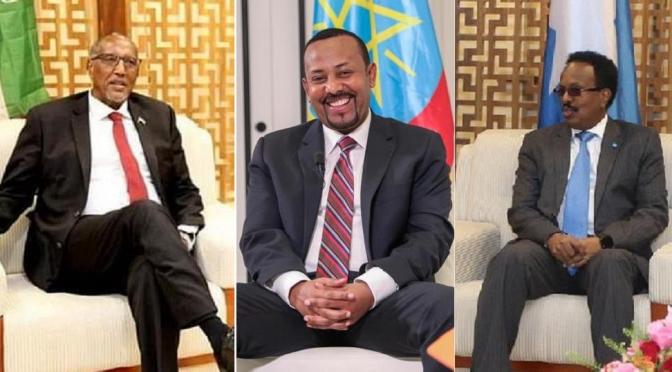
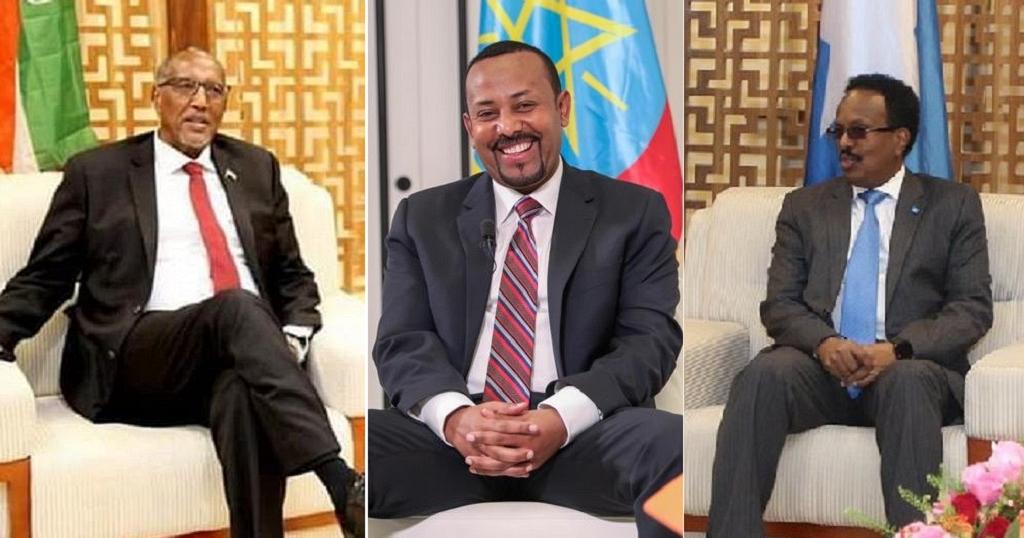
Somaliland has rejected a planned joint visit by Somali president Mohamed Abdulahi Farmaajo and Ethiopian Prime Minister Abiy Ahmed.

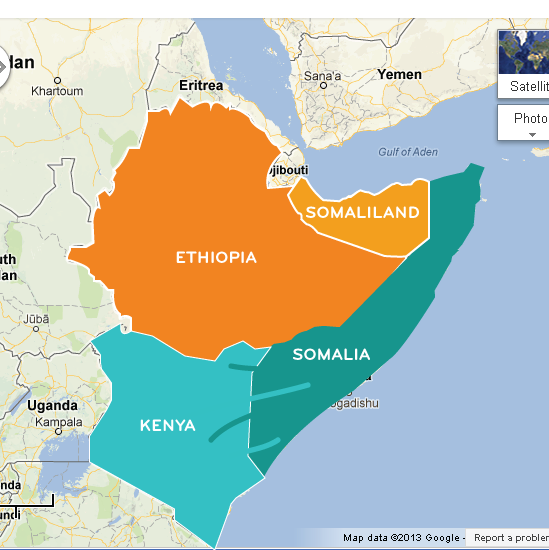
A high-ranking official in Somaliland had confirmed a proposed visit to Hargeisa by Abiy and Farmaajo on the initiative of the PM. Hargeisa is capital of Somaliland, an autonomous region of Somalia.
MAP
Voice of America journalist and author of “Inside AlShabab,” Harun Maruf posted a tweet that said Somaliland’s chairman of House of Elders Suleiman Mohamoud Aden as saying PM Abiy Ahmed was “pushing for a joint visit to Hargeisa by him and Somalia President Mohamed Abdullahi Farmajo.”

It is the first concrete report of an information that started making the rounds on Twitter on Saturday evening when a post to that effect was made by one Khaalid Foodhaadhi.

A meeting between leaders of Somalia and Somaliland in Addis Ababa was brokered by Abiy last week after the 33rd African Union summit.

The Somali presidential spokesman confirmed that the “ice-breaking” meeting had indeed taken place between Farmaajo and Somaliland’s Muse Bihi.

Days later, Farmaajo made a public admission over excesses by the Siad Barre regime in the late eighties against Somaliland. An admission that received largely good comments on social media.

The planned joint visit to Hargeisa has also received positive traction as many people on social media see it as a positive first step towards finding an amicable solution to the longstanding rift between Somalia and Somaliland.
1024x538_1021479

Bihi, Farmajo Meeting To Feature In Ethiopia PM’s Talks

Bihi, Farmajo Meeting To Feature In Ethiopia PM’s Talks
14th February 2020
MAP
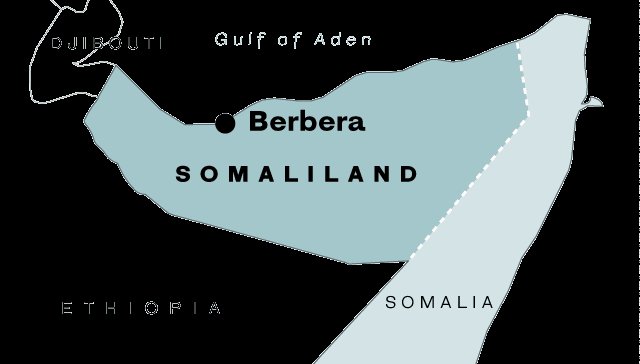
The expansion of the Somaliland Port of Berbera and the meeting between Somaliland and Somalia leaders will be among the discussions points between Ethiopia Prime Minister Aby Ahmed and the United Arab Emirates leadership this weekend.
1148441-976114052 (1)170370191..jpg
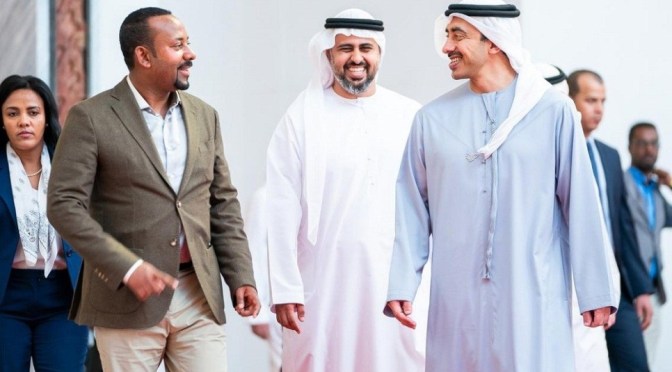
Ethiopia Prime Minister Abiy Ahmed landed in Abu Dhabi on Thursday evening for a round of talks with the hosting government over trade partnerships and efforts to find peace in the horn of Africa.
400x225_1016921abiy
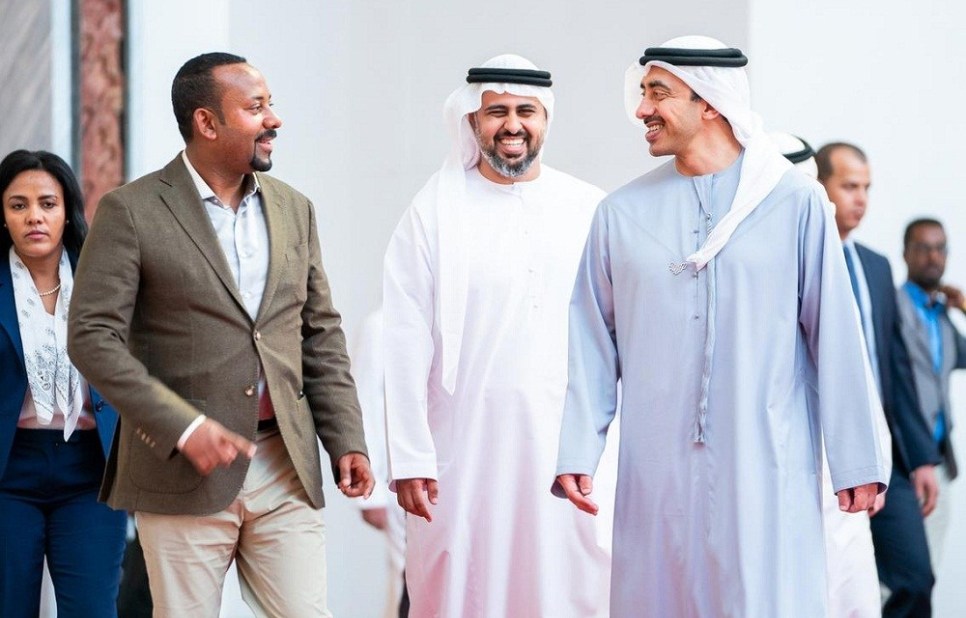
Abiy was received at the Presidential Airport by Sheikh Abdullah bin Zayed, Minister of Foreign Affairs and International Co-operation, and Sheikh Theyab bin Mohamed, Chairman of Abu Dhabi Crown Prince’s Court.

Sheikh Abdullah welcomed Abiy and discussed relations and co-operation between the two countries and ways to tackle issues of mutual interest.

Abiy is accompanied by his wife, Zinash Tayachew, Dr Hirut Kassaw, Minister of Culture and Tourism, Adanech Abebe, Minister of Revenues, and Muferiat Kamil, Ethiopian Minister of Peace.

Ethiopia and the UAE have partnered with Somaliland in the expansion of the port of Berbera which once completed will be the biggest in the region.

UAE’s DP World is expanding the port at a cost of USD 442 Million and is also expected to set up an economic free zone complement the growth of the Port of Berbera as a regional trading hub.

Somalia has been against the expansion of the port claiming Somaliland has no right to enter any international agreements.

Somaliland separated from Somalia in 1991 and declared its own independence. The two countries have been at loggerheads since then.

But early this week, the Ethiopian Prime Minister brokered a meeting between Somaliland president Musa Bihi and Somali president Abdullahi Farmajo in Addis Ababa, talks that lasted for an hour.

Ethiopia and the UAE believe that a lasting solution between Somalia and Somaliland is vital for their interests in the horn of Africa.

This is Abiy’s second trip to UAE in less than one year.

UAE was one of the Gulf nations Abiy visited last year as part of pooling regional support, especially for economic reforms. The Crown Prince also visited Addis Ababa in 2018.

Ethiopia – UAE relations have been on an upward trajectory over the course of 2018.

Over the last decade, the UAE has gradually increased its presence in the Horn of Africa, using development and humanitarian projects to boost its prominence.

It has significantly invested in ports, logistics and trade developments, to secure its port empire across the strategic Bab el-Mandeb Strait by the Red Sea, to profoundly boost its international trade and regional soft power.

The Emirati-owned company DP World’s opening of a port in Djibouti in 2008 signalled a developing presence in the relatively then-untouched Horn of Africa.

Ethiopia has served as a key platform for growing UAE influence, where Abu Dhabi alongside Saudi Arabia helped broker a peace deal with Eritrea, after a two-year state of war between the two states.

It has since continued to shower Ethiopia with aid, also carrying out key development projects. The UAE had also built an oil pipeline between Eritrea and Ethiopia, and Emirati companies have increased investment particularly in Ethiopia.

Such moves are also an attempt to compete with Turkey, Iran and Qatar, whose increasingly positive ties with east African states are met with unease by Abu Dhabi.

A setback for the UAE’s political ambitions in the Horn of Africa, however, are its ties with Somalia who have grown closer to Turkey, a key Emirati rival.

In response, the UAE has focused its support on Somalia’s autonomous regions.

The UAE and Ethiopia last February agreed to cooperate to turn Somaliland into a “major regional trading hub,” which helps the UAE’s ally Ethiopia gain greater trading access, and subsequently boost the UAE’s own trading and economic capabilities.

Furthermore, its alliance with Ethiopia, which also invests in Somaliland’s Berbera port, has helped the UAE gain greater control over it.

The UAE has also attempted to build a military and naval base in Somaliland.

somaliland
Somalia – the name of a nation that immediately coendures the image of a war-torn failing state plagued by unimaginable violence, piracy and terrorism for over 30 years. And yet within this war-torn country exists a beacon of stability. Often out of the headlines, the breakaway region of Somaliland could be considered a taboo subject amongst national governments and most international organisations.

Somaliland, located in the North West of the horn of Africa has been de-facto independent from the Federal Republic of Somalia in 1991 but has yet to secure the recognition of any UN member states. Regarding itself as the successor state to the British Somaliland Protectorate which was ruled as a separate colony to Italian Somaliland until independence in 1960 when the two former colonies were merged; Somaliland serves as a beacon of stability in a turbulent region.

The traditional narrative of Somaliland’s declaration of impendence in 1991, is that it was a direct response to the South’s descent into Civil War and the spread of Islamists. This narrative, while being broadly correct tends to omit the serious misgivings Somaliland had with the Federal State prior to the collapse of the Barre Regime.

Initially enthusiastic towards Somali nationalism and towards the impending merger with its Southern neighbourhoods, this optimism was quick to evaporate. Within a year of uniting with the southern provinces popular discontent in the North grew rapidly over the newly created Constitution, which was said to favour the South at the expense of draining the wealth of the North. In response to the perceived injustice of the Constitution, northern leaders encouraged a boycott of the referendum on the adoption of the new Constitution. Nevertheless, the Central Government in Mogadishu went ahead with its implementation without any changes. This led to further accusations that the South was ignoring the interests of the North and triggered those seeking to regain independence for the North into action. In 1961 a year after reunification, a group of generals sought to carry out a Coup D’état and restore Somaliland as an independent nation. The Coup failed and the Central Government responded with the further marginalisation of the North. Tensions simmered until the late 1970s and the 1980s when various rebel groups, (including some backed and financed by the Communist Derg Regime in neighbouring Ethiopia) took up arms against the Regime. Barre’s regime in Mogadishu responded by initiating large scale & indiscriminate bombardments of Northern cities, which cumulated in the Issaq Genocide. The Issaq Clan (the largest in Somaliland) was targeted in a systematic & state sponsor massacre that ultimately killed up to 200,000 Issaq’s and completely levelling the regions two largest cities. When the Barre Regime finally collapsed in 1991, leaders of the Somali National Movement rebel group were quick to capitalise on the descent of the South into Civil War and finally declare independence.

Somaliland 1

A pathologist examines a mass grave site from the Issaq Genocide (Source: Lifeforce Magazine)

Since the Declaration was made, Somaliland has made remarkable progress in its development. In comparison to the South, Somaliland has managed to hold consecutive democratic elections; has a functioning economy and has managed to resist the influence of Al-Shabab and other terrorist groups.

Despite the initial declaration of impendence and the early years of self-rule for the state being controlled by a select group of military generals, the nation has made rapid and substantial progress in establishing a modern democratic nation. Since 2001 there have been six democratic and peaceful elections – including the peaceful transfer of power between different party’s. Another parliamentary election is scheduled for sometime later this year. The Somaliland Parliament has been noted for its stable structure that allows for mediation between conflicting groups and interests. In particular, the House of Elders, which is modelled on the UK’s House of Lord’s allows for traditional Clan Structures to be incorporated into a modern political model. In terms of security, it is this area in which Somaliland stands out from its neighbouring states. Unlike Somalia or neighbouring Puntland, Somaliland hasn’t suffered a terrorist attack since 2008 & piracy is almost non-existent along the section of coast under its control.
somaliland-3
The economy in the country has also seen significant developments, despite the difficult circumstances the nation finds itself in. The most notable recent developments include UAE funded development in the Port of Berbera, the proposed development of transport & export links for neighbouring landlocked Ethiopia; and the potential development of oil exploration.

Somaliland 2

Voters partaking in the 2017 Somaliland Presidential Elections (Source: VOA News)

Despite the progress Somaliland has made in becoming a modern democratic state, it’s still yet to secure the recognition of a single UN member state. In legal terms, Somaliland complies with all expected international norms for becoming an independent state and de-facto functions as such. However as is well known in international relations, statehood is not determined by legality, but political acceptance from those members already inside ‘the club’. The primary obstacle in the way of Somaliland achieving this acceptance is regional. Other African states are extremely wary of excepting new borders and states in the Continent given a large majority of them possess their own separatist movements and the risk succession could create a precedent for the dismantlement of their own borders. Likewise, states from outside the Continent also tend to be cautious about the re-drawing of borders in Africa due to the fear it could create a violent domino effect whereby colonial borders collapse along ethnic lines. Even Somaliland’s biggest international backer – Ethiopia has so far refused to formally recognise the Nation’s independence given its own problems with Somali separatists and its preference for keeping Somalia weak and marred by uncertainty by ensuring internal divisions remain.

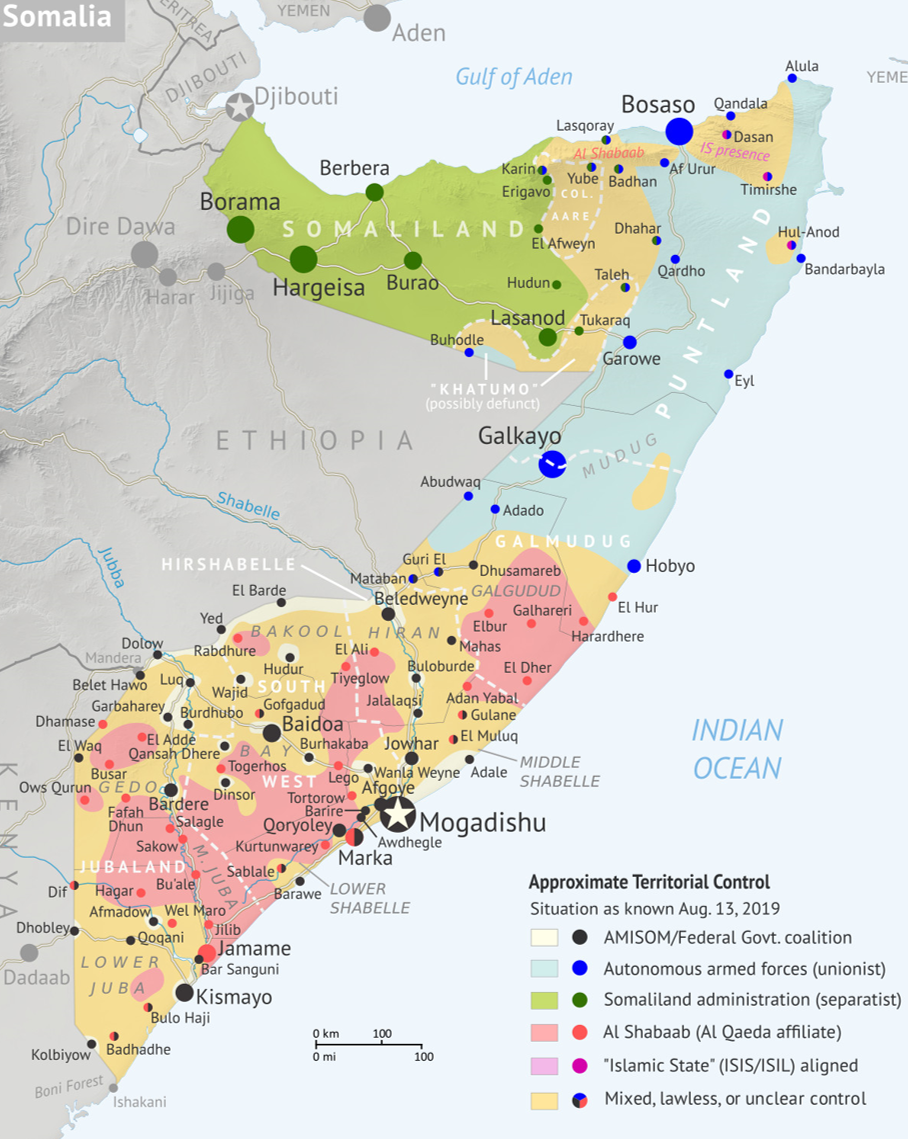
While over 20 years of continued apathy to the creation of an independent Somaliland doesn’t bode well for the administration in Hargeisa, recent developments signal a change to the status quo may occur soon, but whether this is through design or disaster remains to be determined. While having performed exceptionally well since 1991, Somaliland now faces significant challenges. Firstly, the security situation the country finds itself in is increasingly precarious. With the situation in Somalia’s Southern Provinces having deteriorated rapidly in recent months, there is now a real danger Al-Shabab could take over the whole country, providing a springboard for eventual designs on Puntland & Somaliland. Compounding this fear are reports that both ISIS and Al-Qaeda have managed to establish themselves within neighbouring Puntland, an area of which they previously had little to no presence. The risk of ‘domestic’ terrorism from within Somaliland held territory has also grown which some have put down to the nations emerging economic problems and lack of opportunity for its youth.

Somaliland 3

Territorial Control of Various Actors in Somalia as of August 2019 (Source: ACLED)

While as mentioned above Hargeisa has made significant steps in improving its economic progress in the last 20 years, the level of growth needed for the country to continue to improve has been hampered by its inability to gain international recognition. The economy is in need of modernisation with over 70% of GDP based on agriculture and the majority of the other 30% coming from remittances from those who have emigrated to countries like the UK. This is not a viable economic model long-term, especially as remittances are likely to dry up as emigrations consider themselves ‘more British’ or whichever state they have moved to than they identify with distant relatives back in Somaliland. Both infrastructure and diversification are desperately needed, but in order for this to be carried out the nation needs access to international finance, something at which is not presently possibly via institutions such as the IMF and World Bank or even through many aid mechanisms due to its status as an unrecognised territory. The difficulty in establishing a legitimate exchange rate for the nation’s currency also makes investment difficult despite the potential for energy exploration, tourism and modern agriculture in the Nation.

Adding to the woes above are heightened tensions between Somaliland and the neighbouring province of Puntland. In 2018 significant levels of clashes between the Somaliland armed forces and various Puntland militias occurred, both sides vying for long-disputed border areas. These tensions are yet to cease and have the potential to break-out into a full-scale conflict between the two parties, thereby shattering the last remaining beacon of stability within the region and opening up to exploitation by terrorist groups such as Al-Shabab.

The above concerns should prompt some international actors to reconsider their position vis-à-vis the recognition of Somaliland. If not for moral reasons, the importance of preventing the further collapse of states within the Horn of Africa for international security should serve as an impetus for some nations. Some however, have argued that Somaliland’s problem in gaining international recognition is actually that the nation is ‘too stable’. Unlike South Sudan, Eritrea and Timor-Leste which all experienced large-scale violence and chaos leading to their recognition as independent states, Somaliland’s order, democracy and relative calmness may have enforced the idea that a peaceful reconciliation with Mogadishu will eventually be possible, and therefore negate the need for diplomatic recognition as an independent entity.

If there is one single state that has the potential to change the fortunes of Somaliland for the better, its that of its former colonial power – the United Kingdom. The UK already possesses a relatively strong relationship with the breakaway region, being involved in training its forces to combat terrorism (alongside the US); donating £31 million towards aid and development in 2019; and having a large Somaliland expatriate community within the UK. The last point has helped Somaliland achieve recognition from a number of local authorities and cities within the UK including Cardiff and Sheffield, and even the devolved Welsh Senedd (Parliament) in 2006.

However, so far, the UK government has stopped short of recognising outright the state as de-jure independent. It can be argued however, recognition would be in the UK’s best interests for the region. By becoming the leading state in recognising state’s independence London would secure itself as a key stakeholder in the region. With interests in preventing more ungoverned territory emerging in which terrorists and pirates can use to their advantage, the UK should be stepping up efforts to ensure the stability of Somaliland. The strategic position of Somaliland in relation to the Gulf of Aden and Suez Straights is also notable, most oil and LNG exports heading to Europe pass through these choke points and given the instability in other parts of Somalia, as well as in Yemen, shipping is increasingly at risk of attack. While France, Japan, India, Italy the US possess naval bases in neighbouring Djibouti; and other such as Israel and Iran in Eritrea; the UK’s nearest base is in Oman. As shown by the capture of the British registered oil tanker the Stena Impero in the summer of 2019, the UK’s current maritime force in the region is not sufficient. These concerns have already led to the UK Defence Minister visiting Somaliland in 2019 with the aim of discussing the establishment of a British naval base within the country and increased funding and training for Somaliland forces. The UK is also wary of losing the initiative to recognise the country to rival players in the region. The UAE has already established a military base in the region and according to some sources in 2018 was close to officially recognising the country, but later changed its mind. Likewise, Russia has announced plans to open its own military base in the Port of Zeila, near the Somaliland – Djibouti border.

Somaliland 4

Foreign Military Bases in the Horn of Africa Region (Source: Danish Institute of Security Studies)

With the London hosting the first UK-Africa summit in January 2020, many analysists took the opportunity to highlight how far the UK had lagged behind in the new race for influence in the Continent. While France has been mostly successful at preserving its links for former colonies, and countries such as Russia, Japan, India and China have worked extensively to build links on the Continent; Africa has largely remained at the back of British diplomatic concerns over the last few decades. For some the recognition of Somaliland by London, if combined by significant economic, security and political support could boost the UK’s influence in the Continent.

Besides the material benefit to London recognition could bring, there also exists the moral argument. Somaliland has made great strides to become everything the West expects from a modern democratic nation from holding free elections and successful transfers of power, to the establishment of a working legal system based on the rule of law and the relative freedom of the press. This is a rare feat not just for the Horn of Africa, but for Africa as a whole. Of course, there remains more that could be done, but the current situation Somaliland finds itself in can’t help make you think that it is being punished for its progress.

Somaliland 5

Former British Defence Minister Visits Somaliland in 2019 (Source: Somaliland Nation)

Of course, there are significant risks for the United Kingdom should it choose to formally recognise the independence of the Hargeisa Government. The primary risk to London is that rather than increase its standing on the African Continent, the action could lead to significant blowback with traditional African partners such as South Africa and Nigeria who (mindful of similar independent movements in their own and neighbouring states), have made it very clear they support the territorial integrity of all of Somalia by Mogadishu. A break from African actors themselves runs the risk of the UK appearing to be acting in a colonialist manner, dividing nations to support their own interests. The move would also certainly lead to the complete severing of London-Mogadishu, although this is not a significant loss given the central government controls almost no territory outside the capital and UK-Somalia trade and UK-Somalia diplomatic relations are essentially non-existent. Turkey, a significant backer of the Somalia Central Government, with numerous military bases and personnel in the country could also provide another obstacle for London granting recognition to Hargeisa.

Despite the risk of angering other African nations, should the UK choose to recognise the formal independence of Somaliland, others are likely to swiftly follow suit. Numerous nations that have been rumoured to being close to recognising the independence of the country in the past including the UAE, Ethiopia, Israel and Taiwan who are noted as likely waiting for another nation to make the first move, unsure about the international reception their decision would have. The role of Ethiopia and Kenya who have both been keen to recognise an independent Somaliland in the past would be key in mitigating any condemnation by the African Union and coordination with both states would allow the UK to make Somaliland’s case better heard and understood. The decision being made by the UK would also likely gain the backing of the US, most EU members and the Commonwealth (of which the Somaliland government applied to join in 2009).

Overall, it is clear that despite the outstanding progress Somaliland has made since 1991; and the fact that it is de-facto independent in all areas have done little to secure de-jure recognition from the accepted players of the international system. The absence of large-scale conflict and deaths, the relatively peaceful existence of Somaliland have led some to believe it’s too well behaved for independent, with powers preferring to keep the status quo until an eventual solution is found for securing peace in the Southern Provinces of Somalia. However, given the situation in Somalia has continued to worsen over the last 20 years, it might finally be time for Somaliland to achieve recognition and reward for its progress. Much of this will depend on the actions of a few key powers namely: the formal colonial power the UK, the UAE and its main African backer of Ethiopia. Until then the people of Somaliland carry on, for them, their nation is already is country and they live in hope the rest of the world comes to recognise the same in the near future.

Somaliland 6

Somalilanders celebrate Independence Day (Source: Council on Foreign Relations)

Further Reading & Listening:

The Financial Times – Tom Wilson

Shakir Essa
Africa Times news reporter

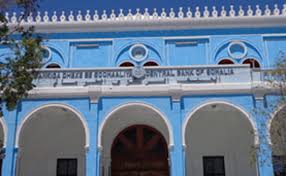
First time in history Somalia hired on a foreigner for the top job at the central bank,

images (31)

A disquiet is simmering within the government and public circles after the leakage of information that the government had settled on a foreigner for the top job at the central bank, for the first time in the country’s history.

Sources privy to the selection process intimate that that indeed an outsider had been settled on, without divulging much on the individual. But this seems to not have gone down well with critics who argue that the country had sufficient skillset for the position.

somalia-1103-0002_large

Those supporting the government like famous author Harun Maruf argue that it was expertise that mattered not the nationality.
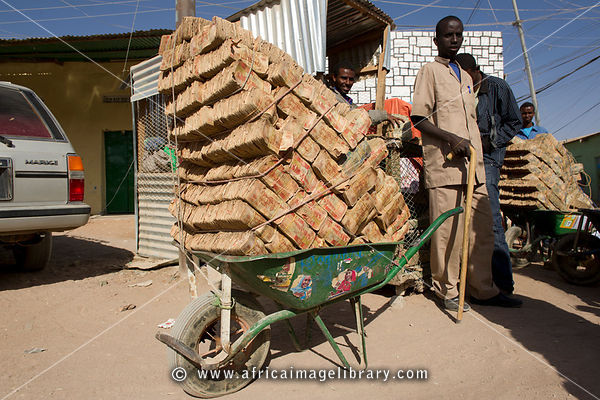
money changers carry loads of low value notes in wheelbarrows on the street, Barao, Somaliland, Somalia
The revelation end speculations which have been on air since August last year as to who would replace Bashir Isse, who has been serving since April 2014. He previously held the position in interim roles from 2006 to 2010 and was reappointed in November 2013, but will now retire.

The division on opinion adds to the raft of challenges the new office holder will have to navigate to street the government banker and the economy at large to stability.

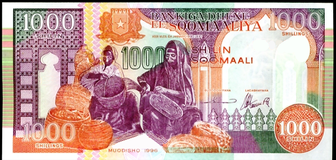
The new governor will be taking over at a time when the country is just on the verge of commencing the printing of official government banknotes for the first time in over two decades ending the long reign of counterfeit notes and unregulated monetary policy.

With footprints of two decades old civil war still visible in the country, Somali leaders have been working on means and ways to rid the country of the old counterfeit notes in place of new currency.

The new currency, is hopes, will help Somalia boost its economy. The new move to print money with security features will also prop the shilling’s value.

The new office holder will also have to impose measure to control Foreign Exchange Rate appreciation. In addition, Somalia does not have well-organized money and capital markets. The successful candidate will be tasked with steering the development of the banking and the financial system in the country.

Also in the in-tray will the task of promoting the process of economic growth and ensure adequate monetary expansion in the country.

Also to be seen is the office holders’ ability to maintain internal price stability by adopting a monetary policy that can control inflationary tendencies and ensure market stability.

The biggest challenge will be whether the CBS of Somalia will successfully integrate the traditional banking system with the mobile money economy, with over 70% of the population opting for the cashless banking method.

Critical in the implementation will be a pool of qualified staff to implement the policies. There is need for an a structured training programme and facilities that will help develop the necessary skillset of the future employees

Donate

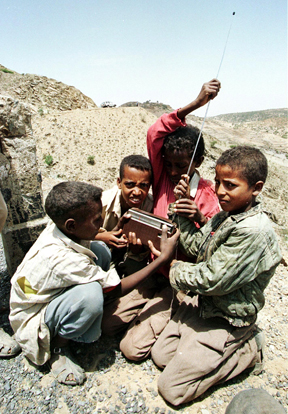
More than 850 million people in developing countries are excluded from a wide range of information and knowledge, with the rural poor in Africa are remaining isolated from both traditional media and new information and communication technologies, which would improve their livelihoods and development pattern

$2.00