Category Archives: Ethiopian

Bihi, Farmajo Meeting To Feature In Ethiopia PM’s Talks

Bihi, Farmajo Meeting To Feature In Ethiopia PM’s Talks
14th February 2020
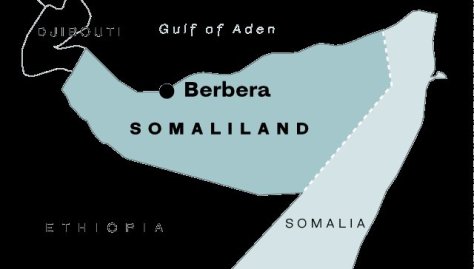
MAP
The expansion of the Somaliland Port of Berbera and the meeting between Somaliland and Somalia leaders will be among the discussions points between Ethiopia Prime Minister Aby Ahmed and the United Arab Emirates leadership this weekend.
1148441-976114052 (1)170370191..jpg
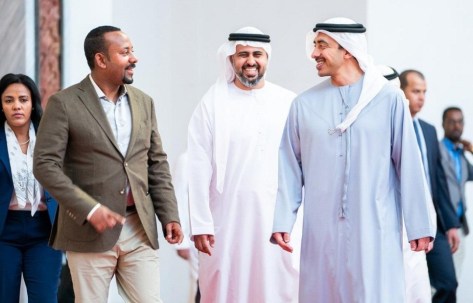
Ethiopia Prime Minister Abiy Ahmed landed in Abu Dhabi on Thursday evening for a round of talks with the hosting government over trade partnerships and efforts to find peace in the horn of Africa.
400x225_1016921abiy
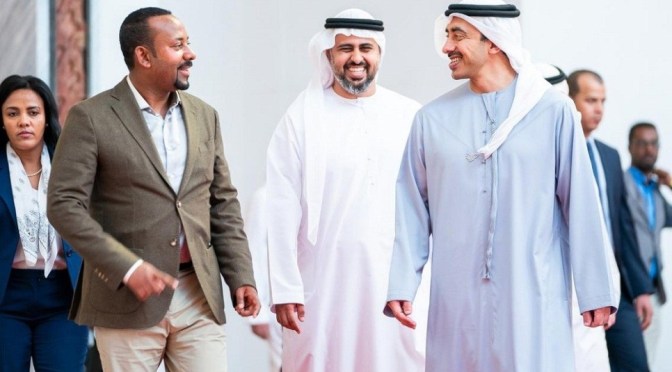
Abiy was received at the Presidential Airport by Sheikh Abdullah bin Zayed, Minister of Foreign Affairs and International Co-operation, and Sheikh Theyab bin Mohamed, Chairman of Abu Dhabi Crown Prince’s Court.

Sheikh Abdullah welcomed Abiy and discussed relations and co-operation between the two countries and ways to tackle issues of mutual interest.

Abiy is accompanied by his wife, Zinash Tayachew, Dr Hirut Kassaw, Minister of Culture and Tourism, Adanech Abebe, Minister of Revenues, and Muferiat Kamil, Ethiopian Minister of Peace.

Ethiopia and the UAE have partnered with Somaliland in the expansion of the port of Berbera which once completed will be the biggest in the region.

UAE’s DP World is expanding the port at a cost of USD 442 Million and is also expected to set up an economic free zone complement the growth of the Port of Berbera as a regional trading hub.

Somalia has been against the expansion of the port claiming Somaliland has no right to enter any international agreements.

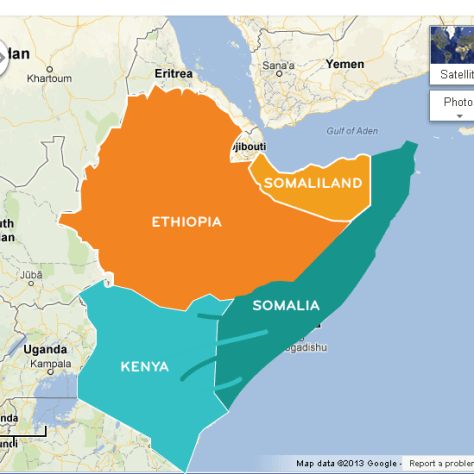
Somaliland separated from Somalia in 1991 and declared its own independence. The two countries have been at loggerheads since then.

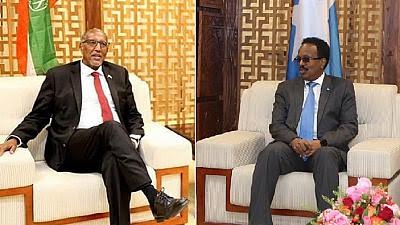
But early this week, the Ethiopian Prime Minister brokered a meeting between Somaliland president Musa Bihi and Somali president Abdullahi Farmajo in Addis Ababa, talks that lasted for an hour.

Ethiopia and the UAE believe that a lasting solution between Somalia and Somaliland is vital for their interests in the horn of Africa.

This is Abiy’s second trip to UAE in less than one year.

UAE was one of the Gulf nations Abiy visited last year as part of pooling regional support, especially for economic reforms. The Crown Prince also visited Addis Ababa in 2018.

Ethiopia – UAE relations have been on an upward trajectory over the course of 2018.

Over the last decade, the UAE has gradually increased its presence in the Horn of Africa, using development and humanitarian projects to boost its prominence.

It has significantly invested in ports, logistics and trade developments, to secure its port empire across the strategic Bab el-Mandeb Strait by the Red Sea, to profoundly boost its international trade and regional soft power.

The Emirati-owned company DP World’s opening of a port in Djibouti in 2008 signalled a developing presence in the relatively then-untouched Horn of Africa.

Ethiopia has served as a key platform for growing UAE influence, where Abu Dhabi alongside Saudi Arabia helped broker a peace deal with Eritrea, after a two-year state of war between the two states.

It has since continued to shower Ethiopia with aid, also carrying out key development projects. The UAE had also built an oil pipeline between Eritrea and Ethiopia, and Emirati companies have increased investment particularly in Ethiopia.

Such moves are also an attempt to compete with Turkey, Iran and Qatar, whose increasingly positive ties with east African states are met with unease by Abu Dhabi.

A setback for the UAE’s political ambitions in the Horn of Africa, however, are its ties with Somalia who have grown closer to Turkey, a key Emirati rival.

In response, the UAE has focused its support on Somalia’s autonomous regions.

The UAE and Ethiopia last February agreed to cooperate to turn Somaliland into a “major regional trading hub,” which helps the UAE’s ally Ethiopia gain greater trading access, and subsequently boost the UAE’s own trading and economic capabilities.

Furthermore, its alliance with Ethiopia, which also invests in Somaliland’s Berbera port, has helped the UAE gain greater control over it.

The UAE has also attempted to build a military and naval base in Somaliland.
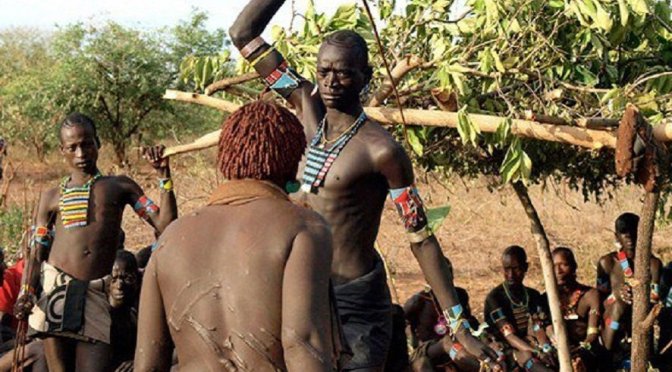
Pain or pleasure? When you get ready to marry her, 1st you have to beat her Hamar tribe

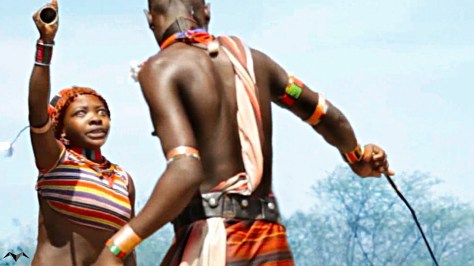
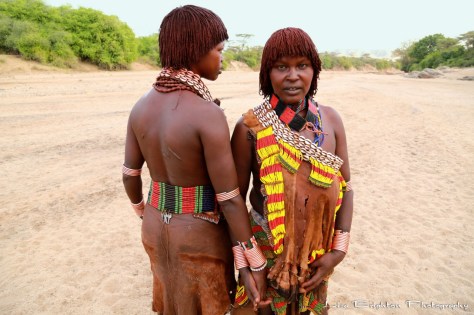
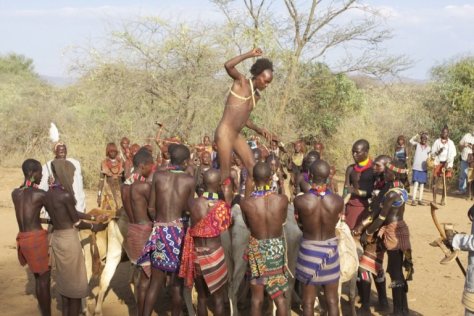
maxresdefault (3)Located among the bush covered hills on the eastern side of the Omo Valley in southern Ethiopia, the Hamar tribe have unique culture and customs, one of them being a cattle-jumping ceremony where the beatings of the women take place.
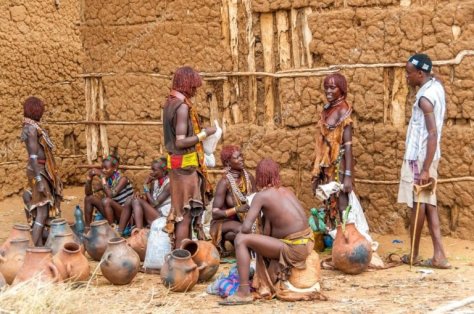
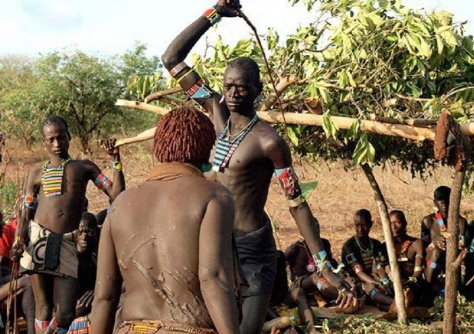
The ceremony starts with all the female relatives performing a dance, during which they offer themselves as subjects to be whipped by men who have recently been initiated.

omo-768x510
The fascinating custom of men sharing breast milk with babies in a Kenyan town
See the Surma people of Ethiopia and their flamboyant use of plants in fashion
Somaliland’s new law ends age-old culture of forcing rapists to marry victims
Are We Losing Our African Culture and Tradition to Interracial Marriages?

4.-Hamar-AThe beatings go on until their backs turn bloody. During the beatings, women are not allowed to scream. They do not also flee the ceremony but rather beg the men to beat them over and over again.
initiation-ceremony-768x512

The male initiation rite

The women accept these beatings to show their love and support of the initiate, and their scars give them a right to demand his help in time of need.

The man must subsequently leap across 15 cows in order to be allowed to marry and once that is achieved a celebration is held to end the ceremony.

Beatings are not just ceremonial

Women in the Hamar tribe are subject to beatings even after the ceremony at any time the man pleases unless they give birth to at least two children.

The rules of the tribe also say that men do not need to explain why they are beating the women as they can do so as and when they feel is right.

This has created deep scars at the backs of the women which they proudly show off as beautiful.

hamar

Hamar tribe — Depositphotos

In spite of these, women in the Hamar tribe are expected to be strong like the men and are supposed to do all household chores, take care of the children and sow crops as well as keep the cattle.

Hamar men can also marry more than one woman, but the women who are not first wives are treated more like slaves as they do a majority of the work


©Face2faceafrica.com

Shakir Essa

Digital media creator

Analysis across Africa shows how social media is changing politics

  • Kenyan government official’s attempts to block a local art collective’s music video that had been uploaded to YouTube
  • Social media’s complex symbiotic relationship with mainstream media is still evident in powerful ways.
  • Somalia specialist Peter Chonka, for example, argues that the blurring of public and private boundaries inherent in the country’s social media environment can be disruptive. It has resulted in a lack of coherence in political communication by state actors

Not only have digital media and mobile phones created pathways for African entrepreneurs and consumers to access local and global networks with greater ease and speed, but the technological sector that supports digital media – from mobile phones to laptops and internet connections – has come to require a digital entrepreneurship that benefits from the creativity of African citizens.

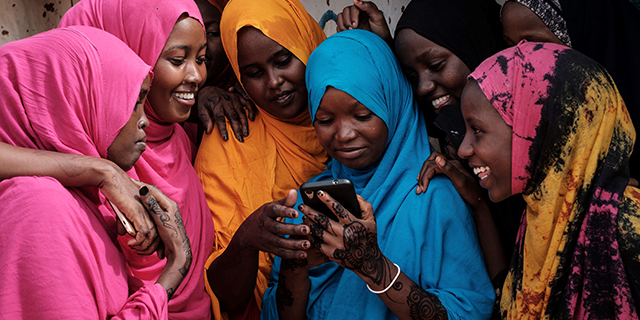
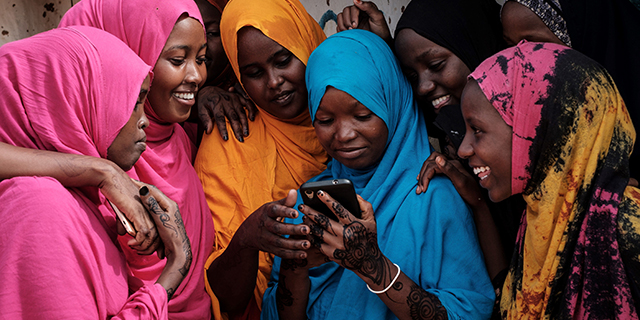
Young Somali women look at a smartphone at Dadaab refugee complex, in northeast Kenya, on April 16

Traditional and new media

Social media’s complex symbiotic relationship with mainstream media is still evident in powerful ways.

Somalia specialist Peter Chonka, for example, argues that the blurring of public and private boundaries inherent in the country’s social media environment can be disruptive. It has resulted in a lack of coherence in political communication by state actors. This further challenges their legitimacy. Tensions between traditional and modern forms of communication are reflected in the online clash of views over “appropriate” online content, moral values and perceived threats to national security.

Media scholar Brian Ekdale highlights the debates around “morality” in social media content. He researched a Kenyan government official’s attempts to block a local art collective’s music video that had been uploaded to YouTube. Ekdale then considers what this shows about the ongoing tensions between global media technology giants and local users and regulators on the continent

What is especially interesting is the way in which African users have found ways to adapt and appropriate digital and mobile media, for example, developing codes to communicate via mobile phone without using airtime – so-called ‘flashing’ or ‘beeping’ (calling and hanging up before the receiver can answer so as to avoid incurring a call cost).

While this creativity can be celebrated as an ingenious way for African users to adapt digital and mobile media to their own circumstances, it also points to the often exorbitant costs of airtime and data which are obstacles to the use of new media technologies in African countries. Airtime comes at such a high cost in South Africa, for example, that it is often offered as a prize in consumer competitions, or airtime vouchers are given as gifts or freebies.

The advent of digital media has turned the media landscape upside down. The news cycle moves at lightning speed, thanks to live tweeting, blogging and citizen journalism, all unknown just a few years ago.  

To remain accessible, conventional media practitioners in Africa are adapting to a new media world that is time-sensitive and more interactive. Advocacy journalism, in particular, is growing exponentially—bloggers and citizen journalists are mobilizing for various causes, including good governance.  

Although a lot has changed in media technology and operations over the last 15 years, society still looks to the media to play its traditional role—to inform, educate and entertain. 

In Africa the media plays an even more critical role, that of deepening and institutionalizing democracy.

Citizens need to be informed as nations take on new responsibilities in a globalized world.

“Media plays an important role in buildding an informed society. Said shakir essa somali digital media and journalist news publisher at allafrica

Citizens need credible information from a media that can skillfully moderate debate and provoke meaningful conversations that can lead to transforming africa

the media must see itself as instrumental to ensuring and improving the quality of life in society. 

<p class="has-drop-cap" value="<amp-fit-text layout="fixed-height" min-font-size="6" max-font-size="72" height="80">“Journalists see themselves as watchhdogs. Instead, I see the media as a leader. Watchdogs just sit down and watch, but a leader stands up and leads. You have to walk and work,” Mr. Chinje said in an interview with <em>Africa Renewal.</em> “Journalists see themselves as watchhdogs. Instead, I see the media as a leader. Watchdogs just sit down and watch, but a leader stands up and leads. You have to walk and work,” Mr. Chinje said in an interview with Africa Renewal. 

Africa needs journalism that innovates and supports innovation in a modernizing continent, he says, one that not only grows, but promotes growth and the development of society. It needs journalism that not only generates the ideas that are the engine of social transformation, but also moderates the debates that emerge from these societal changes.

Digital media and journalism as a sector is evolving, and there are plenty of job opportunities in the field. However, Aspiring journalists have to build their experience and gather certain skill sets to thrive in the industry, said: shakir essa ( shakir is a somali digital media and journalist news publisher at allafrica

If you’re interested in starting (or growing) a career as a media in east africa, then you have a lot to learn from shakir essa

Shakir started his career in journalism as an intern at the allAfrica news website and quickly scaled through his career as a journalist, amplifying African voices and stories.

Shakir Essa on, July 6th,2016 for a 30-minute Facebook Live session where he’ll be discussing journalism ans digital media as a profitable career choice, and the skills aspiring journalists need to acquire.

Register for this Facebook Live below and ask shakir all your pressing questions.

shakir essa facebook live

Some of the topics we’ll cover:

How to make it as a digital and journalist

Media career choices for young people in East Africa specialy somalia

Moving from employment to entrepreneurship

Personal PR: Social media etiquette and how it impacts your professionalism

Why young Africans should demand quality content from media outlets (African advocates of public interest journalism)

Facebook Live Details: shakir essa

2018  facebook live 

About shakir essa

Shakir essa is digital media publisher and PR consultant who is currently consulting at Media allAfrica news, as a radio producer, media relations trainer and digital journalism trainer. He also works as a volunteer youth mentor and freelance journalist.

Latest years shakir had a successful career at one of the africa leading international news sites and radio, the ALLAFRICA.

While working for AllAfrica,  he works as trucking industries on Amazon prime in USA

Also he led several productions including creating digital content for younger audiences and news coverage of somali politics

In June 2016, he took one of the lead roles in setting up somalia and the breakaway region somaliland 

For live broadcasting on social media His work helped direct the day to day running of the live broadcasting and training journalists on storytelling and social media skills.

Shakir Essa served as editor at allafrica news media and somali news tvs

Shakir Essa served as an Editor at allafrica news media and somali news tvs

The Shakir Essa Report, first aired January 2012, is a thirty-minutes, weekly report at allafrica on storytelling for African immigrant stories in northern Africa, Libya and Tunisia.

Shakir essa served as editor at allafrica news site’s,

©all rights reserved on both africa times and allafrica news agent 2006–2021