Ethiopian Troops Accused of Rape as Abiy Asks Civilians to Fight
(Afrika-times.com) Ethiopian Prime Minister Abiy Ahmed has urged all eligible citizens to join the Ethiopian National Defence Force (ENDF) and its allied regional forces and militias to fight against Tigrayan rebels. The appeal from his office follows the government’s unilateral declaration of a cease-fire in June 2021 as its military retreated from Tigray. The national call comes as TPLF fighters continue to advance further deep in neighbouring regions, gaining territorial victories.
Fighting between the national government and the TPLF broke out in November 2020, leaving about 4 million people in the Tigray, Amhara and Afar regions facing emergency or crisis levels of food insecurity, according to the United Nations. Both sides have been accused of atrocities.
Amnesty International has released a new report in which it says women and girls in Tigray were targeted for rape and other sexual violence by fighting forces aligned to the Ethiopian government. The report says members of the Ethiopian National Defence Force (ENDF), the Eritrean Defence Force (EDF), the Amhara Regional Police Special Force (ASF), and Fano, an Amhara militia group were part of a pattern of acts of sexual violence, indicating that sexual violence was widespread and intended to terrorise and humiliate the victims and their ethnic groups.
The Ethiopian foreign ministry has responded in a statement, saying the Amnesty report is based on flawed methodology and relies heavily on interviews conducted in refugee camps in Sudan and remote interviews facilitated by “community workers”. The ministry says Amnesty International “seems bent on engaging in sensationalized attacks and smear campaigns against the Government of Ethiopia,
Nima Elbagir is an award-winning senior international correspondent for CNN based in London. She joined CNN in 2011 as a Johannesburg-based correspondent before moving to the network’s Nairobi bureau and later London.
Elbagir was named the 2020 Royal Television Society ‘Television Journalist of the Year’ and received the prestigious 2019 Alfred I. duPont-Columbia University Award in the Investigative category for her reporting on human rights abuses, with the jurors citing her “fearless reporting across Africa, from a modern day slave market in Libya, to child labor in Congo, and a smuggler’s network in Nigeria, documented rarely seen exploitation and corruption.”
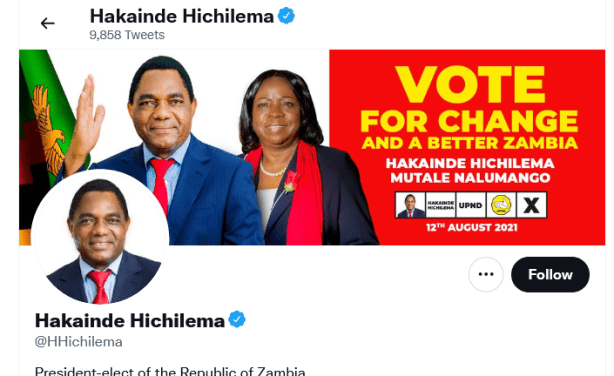
Zambian Opposition’s Hichilema Declared Winner of Election
Opposition leader Hakainde Hichilema has been declared the winner of Zambia’s presidential election, defeating incumbent Edgar Lungu, Al Jazeera reports. With 155 of 156 constituencies reporting, official results on Monday (August 16, 2021) showed Hichilema had secured 2,810,757 votes against Lungu’s 1,814,201.Amid fears that Lungu will not recognise the results, the African Union’s election observer mission, led by former president Ernest Bai Koroma of Sierra Leone, called for peace and calm. “The Mission urges all political leaders and their supporters to not undertake any action that will undermine the peace and stability of the country,” he said.Zambians voted on August 12, 2021 after a tense campaign dominated by economic woes, a debt crisis and the impact of the novel coronavirus pandemic.
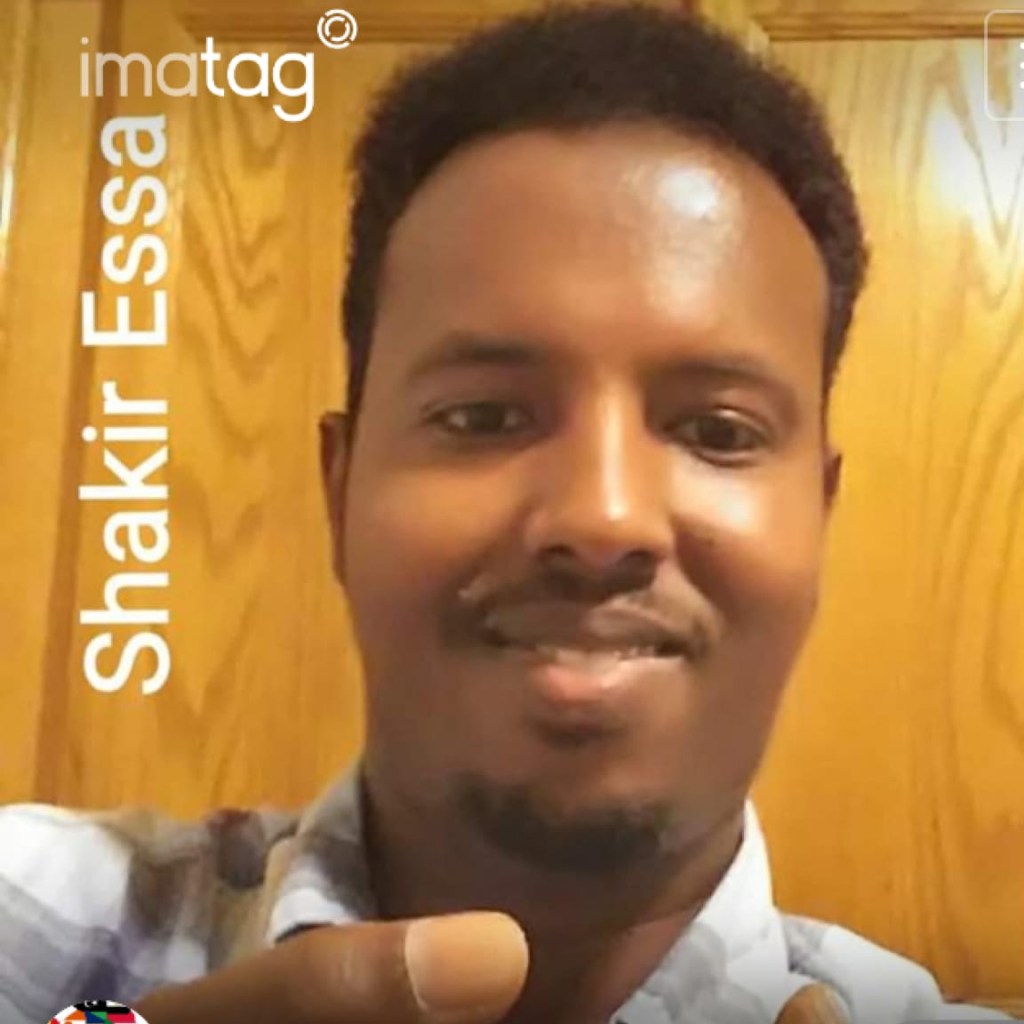
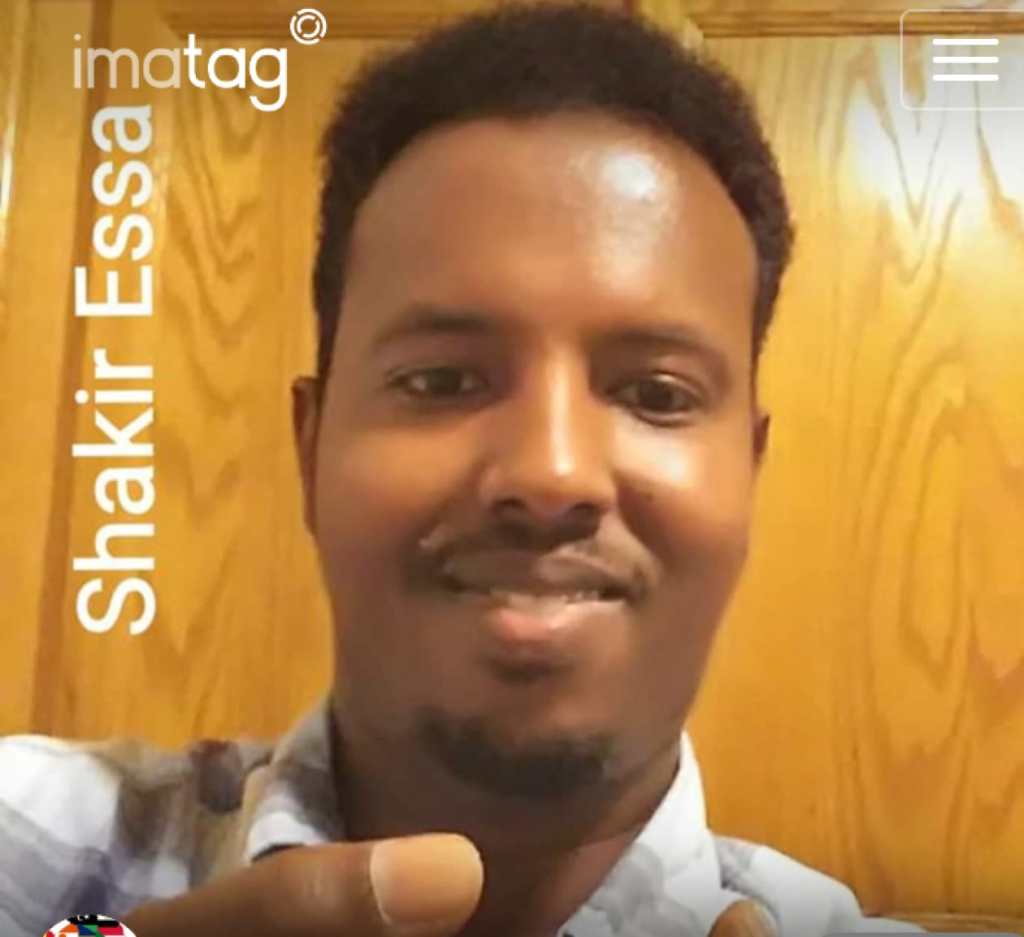
Shakir Essa is a digital media creator, news broadcaster, author and political analyser. He is the presenter
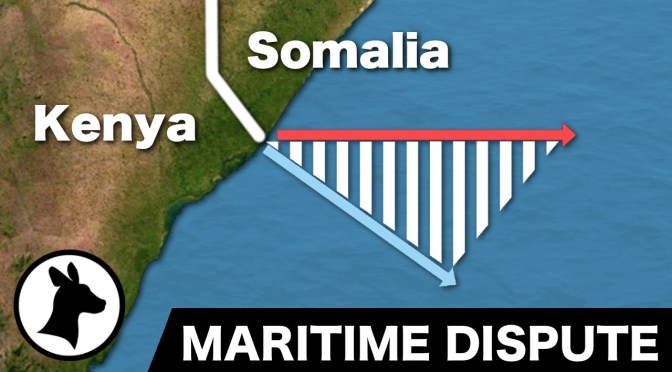
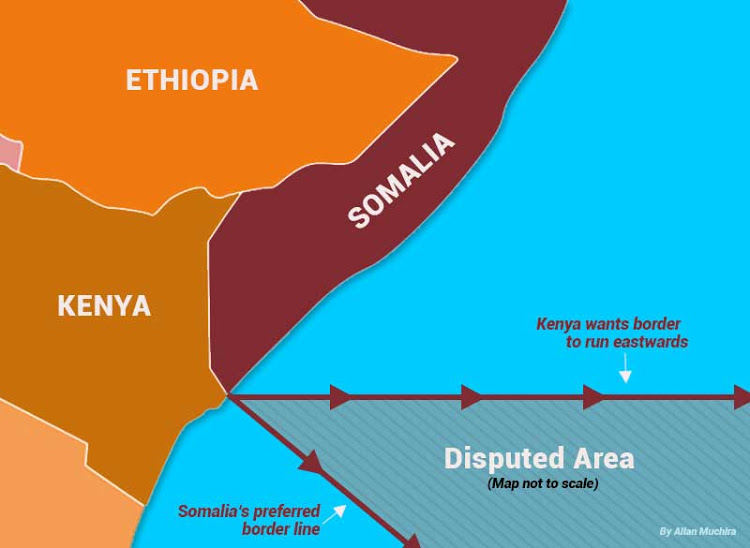
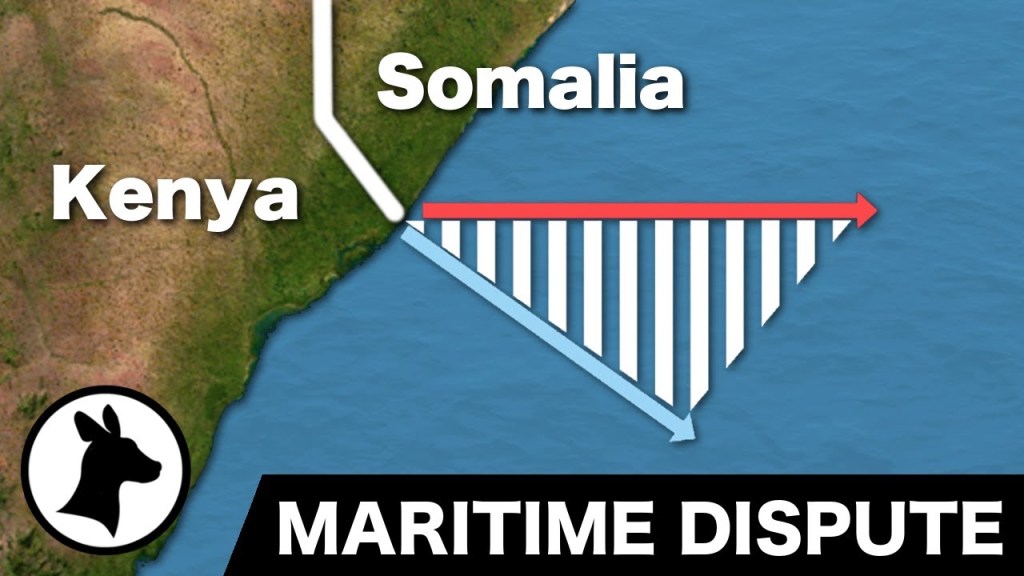
(Afrika-times.com) Somalia has rejected pressure for a diplomatic resolution to a longstanding maritime dispute with Kenya, maintaining the matter will be decided by the International Court of Justice (ICJ). Despite a charm offensive by Kenya, Somalia reckons the ICJ must provide the final verdict on the dispute that has been running for close to a decade in which the neighbouring countries both claim ownership of large territories of the Indian Ocean with prospects of vast oil and gas deposits.
Kenya’s Foreign Affairs Minister Raychelle Omamo made a maiden visit to Somalia’s capital, Mogadishu, where she held talks with Somali Prime Minister Mohamed Hussein Roble and sought to push the agenda of an out-of-court settlement with a deal brokered by the African Union. However, Somalia stuck to its guns saying that the maritime dispute between both nations will be decided by The Hague-based court whose ruling is eagerly awaited after formal hearings in March this year. Kenya boycotted the hearings after accusing the ICJ of unfairness and unwillingness to delay the proceedings as a result of the COVID-19 pandemic.
“Somalia has underscored that an existing maritime dispute between both nations will be decided by The Hague-based International Court of Justice, or ICJ, despite several requests by Kenya to reach a settlement out of court,” said a statement from the prime minister’s office.
The two east African neighbors dispute over 38,000 square miles of territory in the Indian Ocean with prospects of vast oil and gas deposits, a matter Somalia wants the ICJ to arbitrate. The dispute has also led to frosty diplomatic relations over accusations and counter-accusations about interference with domestic affairs, territorial integrity, trade and security.
The statement noted that the two ministers “emphasized the importance of taking concrete measures to show respect for sovereignty, territorial integrity and political independence, which are the cornerstone of the relationship between the two countries.”
Somalia filed the case at the ICJ in 2014 on the basis that Kenya was encroaching on its marine territory and has repeatedly rejected calls to withdraw it and allow for a diplomatic resolution to the dispute.
Both countries are claiming ownership to the territory and have gone ahead to invite international companies to explore for gas and oil.
(Afrika-times.com) New York — The United Nations humanitarian chief warned Tuesday that the 1984 famine that killed more than 1 million Ethiopians could occur again if aid access to that country’s northern Tigray region is not quickly improved, scaled up and properly funded.”There is now famine in Tigray,” aid chief Mark Lowcock told a private, informal meeting of the U.N. Security Council on Tuesday, according to a copy of his written remarks seen by VOA.He said the Tigray administration has reported deaths from starvation.”The situation is set to get worse in the coming months, not only in Tigray, but in Afar and Amhara, as well.”
Last week, urgent calls went out from the U.N. and partner aid agencies for a humanitarian cease-fire. It came on the heels of a report warning that 350,000 people were already in famine conditions in Tigray and that 2 million more were just a step away.The Integrated Food Security Phase Classification, or IPC as it is known, reported that more than 5.5 million people overall were in crisis levels of food insecurity in Tigray and the neighboring zones of Amhara and Afar.The U.N. children’s agency UNICEF has also warned that 33,000 severely malnourished children in currently unreachable areas of Tigray are also at high risk of death.The scope of the problem is massive. Lowcock said there were 123 humanitarian agencies operating in the area and 10 times as many aid workers in Tigray today than at the start of the crisis in November.
“But substantial further scale-up is urgently required if we are to make a significant impact on growing needs,” Lowcock said.The United Nations has appealed for $853 million to assist 5.2 million people until the end of the year, with almost $200 million needed before the end of July.Access to people in remote and hard-to-reach areas has been an ongoing problem since the conflict erupted in November between the Tigray People’s Liberation Front and the government of Ethiopian Prime Minister Abiy Ahmed.
Ethiopia’s U.N. ambassador, Taye Atske Selassie Amde, said the situation did not warrant security council attention. He added that his government “vehemently disagreed” with the humanitarian assessment, saying data was collected in a “very botched” way.”Having said that, using humanitarian issues, particularly famine and starvation, in order to exert undue pressure on Ethiopia is completely unacceptable,” he told reporters after the meeting.
It’s not a drought or locusts that are causing this hunger, but the decisions of those in power,” British Ambassador Barbara Woodward said. “That means those in power could also end the suffering.”She added that Eritrean forces need to leave Ethiopia.”We were told in March that Eritrean forces would be withdrawing. It’s now June. There can be no further delay,” she told reporters.The Ethiopian envoy said the delay was due to “sorting some technical and procedural issues.””Our expectation is that they will definitely leave soon,” he said.U.S. envoy Jeffrey DeLaurentis told council members that “we have to act now” to prevent a famine, according to a diplomat familiar with the council’s discussion.DeLaurentis also called for an urgent end to hostilities, unhindered aid access and a political dialogue to resolve the crisis, as well as accountability for those responsible for human rights abuses.The U.N. Security Council has held a handful of private meetings on the growing crisis but has failed to take any serious action to pressure the parties to stop the fighting, allow aid workers safely in and get Eritrea’s troops to leave.In April, the council issued a statement calling for better humanitarian access, but it has taken no action to pressure spoilers to comply. Afrika-times.com
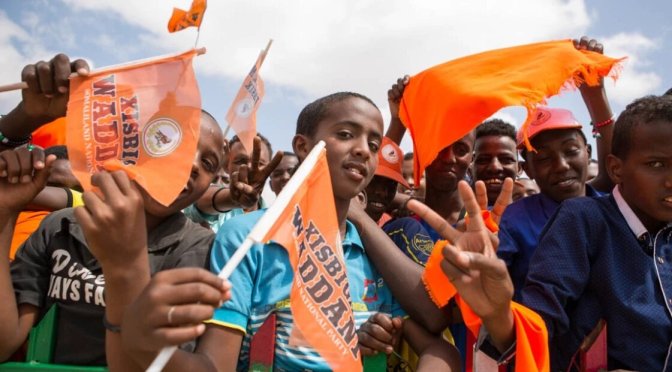
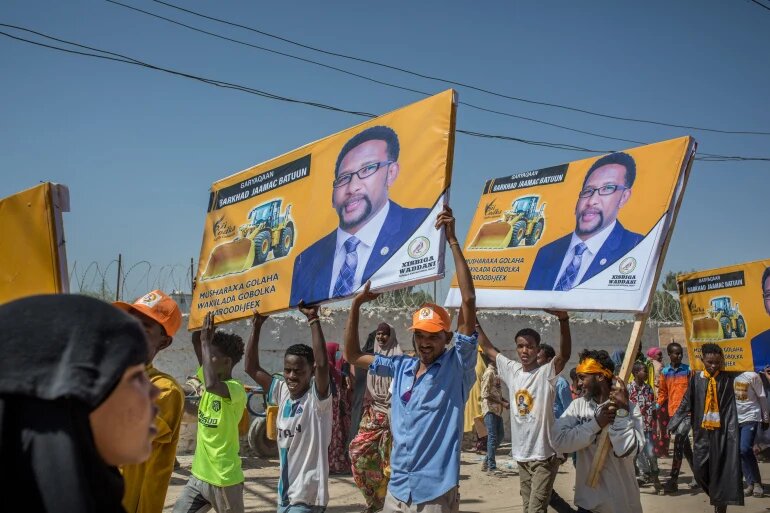
Supporters hold banners of candidates during a rally of the opposition Waddani Party on May 25 [File: AFP]
(Afrika-times.com) Two opposition parties in Somalia’s breakaway Somaliland region have won a majority of seats in the region’s first parliamentary election in 16 years, according to the National Electoral Commission.Out of parliament’s 82 seats, the Somaliland National Party, called Waddani, won 31 and the Justice and Welfare Party (UCID), won 21 seats. The ruling Peace, Unity and Development Party, Kulmiye, secured 30 seats, the electoral commission said on Sunday.The vote had been stalled for a decade by a dispute among the three major parties over the makeup of the electoral commission, which was finally resolved.KEEP READINGSomaliland: Breakaway Somali region votes in parliamentary pollsKenya suspends Somalia flights for three monthsSomalia restoring ties with Kenya after nearly six months
“Following the announcement of the election results, we have announced a political alliance to get the speaker of the Somaliland parliament,” Waddani and UCID said in a joint statement, suggesting they would appoint a speaker together.The parties, which together also won a majority of the seats in municipal races, said that they aim to collaborate on city councils across the region and select mayors together.None of the 13 women who ran for parliament won their races.‘Relative stability’Politicians in the region had described the poll as an example of the relative stability of Somaliland, which broke away from Somalia in 1991 but has not gained widespread international recognition for its independence.
The region has been mostly peaceful while Somalia has grappled with three decades of civil war.The three main parties put forward a total of 246 candidates. More than one million out of roughly four million residents had registered to vote, according to the electoral commission.Presidential elections have taken place in Somaliland, despite the stalled parliamentary vote, most recently in 2017 when President Muse Bihi, from the Kulmiye party, was elected. The next presidential vote is planned for next year.
The media frequently portray young people excluded from wage work as inactive, aimless and alienated from mainstream society. This image feeds into fears of crime, violence and social unrest in which people who are jobless are cast as a “ticking time bomb” that poses a threat to a country’s stability, reports The Conversation.African countries are experiencing an unprecedented level of unemployment among young people. The unemployment numbers are expected to increase given the booming youth population in Africa. The problem is particularly acute in South Africa. World Bank statistics show that in 2019 the youth unemployment rate in South Africa stood at 58%, which is one of the highest in sub-Saharan Africa. For South Africa, the unemployment numbers are expected to increase. Over 60% of the unemployed at the start of 2020 were aged 15-34.A gender gap is also evident in the unemployment figures among people with advanced education. The unemployment rates of 2.3% in 2007 and 12% in 2019 for males with advanced education were lower than those of their female counterparts, which grew from 4.7% to 15%. This status risks long-term scarring effects for young people along with increases in informal working and social isolation
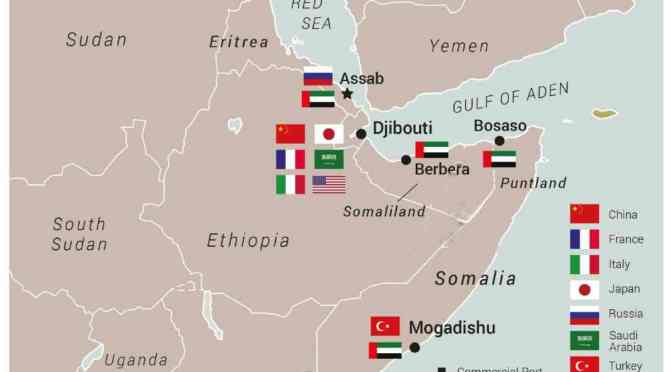
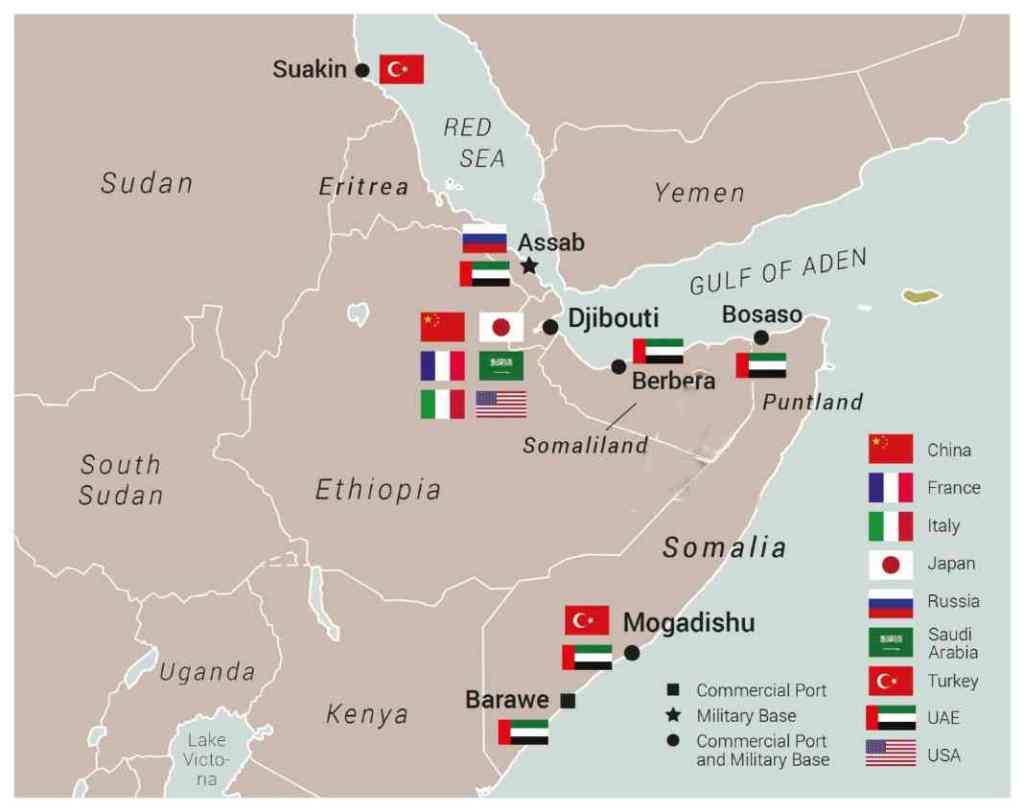
The combination of external actors has made the Horn the most militarized and complex security region, housing the largest number of foreign military bases in the world. The massive presence of six foreign military bases in Djibouti, and more in Sudan, Somalia and Somaliland, underlines the strategic importance of the Horn. Dawit W. Giorgis, a visiting scholar at the African Studies Centre at Boston University.
Horn Of Africa Is The Most Militarized Region On Earth
The Horn of Africa is witnessing far-reaching changes in its external security relations. It is simultaneously experiencing an increase in the build-up of foreign military forces – on land and at sea – and a broadening of the security agendas pursued by these external actors.
The combination of these factors has made the Horn the most militarized and complex security region, housing the largest number of foreign military bases in the world. Though Egypt and Yemen are not in the Greater Horn, they are however part of the security complex of the Red Sea arena. It is known as the “choke point,” because much of the world’s commerce goes through this maritime route. At one point, when Somali pirates ruled the sea, the area was identified as the most dangerous naval zone in the world, notoriety now claimed by the Gulf of Guinea.
Those who control the Horn of Africa control a significant chunk of the world’s economies. The massive presence of six foreign military bases in Djibouti, and more in Sudan, Somalia and Somaliland, underlines the strategic importance of the Horn.
This situation would have inspired or forced the countries of the Horn to be more united and have common strategic and security policies. Each of these forces has a stake in the development of events in the Horn and an agenda that puts their interests at the forefront.However, there are notable rivalries between the countries of the Horn of Africa, which has not enabled the forging of the necessary harmony in their relationships.
Eritrea and Djibouti have not put their border conflict of 2007 behind them. However, they agreed to normalize their relationship two years ago, although Djibouti still considers Eritrea an enemy, considering a recent statement in relations to the prosecution of a pilot that allegedly tried to run away to an “enemy” territory.But a conference call between the Intergovernmental Authority on Development (IGAD) and East African countries on March 30, 2020, was made to forge a regional plan to combat the Novel Coronavirus pandemic.
Four presidents from Somalia, Uganda, Kenya and Djibouti were joined by the prime ministers of Ethiopia and Sudan and the first vice-president of South Sudan. Eritrea did not participate, because its membership has not yet been regularized since it left IGAD in 2007.
This is while Kenya-Somalia relations have escalated in the last few years. It stems from the security concern related to the terror group Al-Shabaab and the maritime border dispute between the two states.
The terror group has been continuously launching attacks across the border at Kenyan military outposts and against civilians in the area.The maritime boundary dispute between Nairobi and Mogadishu further complicates the relationship between the two. Somalia instituted proceedings against Kenya before the International Court of Justice (ICJ) about their maritime boundary in the Indian Ocean, on August 28, 2014. The International Court of Justice (ICJ) has approved a request by Kenya to delay the public hearing of its maritime boundary case with Somalia.
The case is still pending.Taking the matter further, Kenya has started negotiating the withdrawal of its forces the African Union Mission to Somalia (AMISOM) by 2021, making Ethiopia carry the bulk of troop contributions of the five countries that will remain.
These are bad signals of souring relationships, which can contribute to the overall destabilization of the fragile region.Neither are Ethiopia and Sudan on the best of terms. The borders between the two countries are the scene of occasional fighting, with recent skirmishes having turned deadly. It is unnecessary and preventable incidents that only add to the burden of stress the two countries have on their very sensitive and fragile relationship.“It is not clear exactly what triggered a flare-up of this long-standing border dispute,” stated the International Crisis Group (ICG). “Sources suggest that Sudanese security forces may have responded to incursions by Ethiopian troops.”Sudan is in the unique position of being a member of the Arab League, which makes it close to Egypt, but a generally close ally of Ethiopia as well. It has to play high stakes diplomacy not to be seen as siding with either.
Despite enormous pressure from Egypt and the United States, Sudan has held its ground. The bold and calculated decision manifested this in voting against other members of the Arab League on the Grand Ethiopian Renaissance Dam (GERD).Sudan expressed “reservations” that the resolution does not serve its interests and might lead to confrontations between the Arab League countries and Ethiopia. This support of Sudan should not be taken for granted though. Last week, Sudan called for the United Nations Security Council`s intervention regarding Ethiopia’s plan to fill the Dam.“While acknowledging Ethiopia’s right to utilize its natural resources, Sudan has stressed the need for consultation and cooperation among the three countries to avoid the harm lower stream countries could suffer as a result of Ethiopia’s activities,” read Sudan’s memorandum to the Security Council.Concerning the GERD, Sudan highlighted the benefits and threats that could follow the construction. It acknowledged the benefits the Dam could have in helping manage periodic flooding and in raising Sudan’s capacity to generate electric power.“On the other hand, Sudan claimed that the construction of the Dam could change the flow line of the river and that it could affect Sudanese citizens negatively if the design, construction and filling works are not followed daily and closely.”This should be of great concern to Ethiopia, especially considering that a new regional organization with suspect motives – Council of Arab and African States Bordering the Red Sea and the Gulf of Aden (CAASBRSGA) – has already been established on January 6, 2020. Although Egypt first initiated the idea, it was later taken over by Saudi Arabia.Its members are the coastal states of the Red Sea, including Egypt, Jordan, Saudi Arabia, Yemen (the internationally recognized government), Sudan, Eritrea, Djibouti and Somalia.
The stated goals of this new organization are to improve cooperation and coordination among the members in matters related to politics, economy, culture, the environment and security. The Council is an unnecessary organization and one loaded with an Arab and Egyptian agenda. The Arab League is installing its subsidiary branch closer to home.“One of the most important issues is the one of membership. Currently, the criteria to be a member of the Council are to be a Red Sea coastal state.
This is the criterion defended by Egypt,” wrote the Middle Eastern business and financial news outlet MENAFN. “This position seeks to keep Ethiopia outside of Red Sea affairs, a position not shared by many of the members, who believe that despite its lack of access to the sea, Addis Ababa is a key player in Red Sea affairs. The reason for this absence is the litigation that Egypt and Ethiopia maintain over the construction of the Renaissance Dam in the Nile.”The stated goals of the Council include matters related to the Nile, an issue vital for Ethiopia. The strategy of Egypt and its allies is to choke Ethiopia through myriad projects. Ethiopia must vigorously fight such moves, but it does not seem that the Ethiopian government is aware of the dangers. At the same time, it flirts with the very countries that are active partners on the other side of the debate.
There has been a flurry of activities between South Sudan and Egypt as well since the crisis between Ethiopia and Egypt intensified over the GERD. Some of these activities are suspicious.
South Sudan had submitted its application in 2018, for a second time, to join the Arab League. There have also been diplomatic moves led by Egypt within the Arab League emphasizing the importance of South Sudan joining the organization, given Juba’s strategic geographical position serving as the Arab gateway to Africa.
With steadily and warmer relations with Ethiopia’s new neighbor, South Sudanese President Silva Kiir and Egyptian President Abdel-Fattah El-Sisi have exchanged visits followed by several others at ministerial levels.Bringing South Sudan into the Arab League completes the strangulation of Ethiopia by Sudan, Eritrea, Somalia, Djibouti and Eritrea.
Seen together with the Council on The Red Sea Coast, the threats directed at Ethiopia are real and severe.This is the result of the failure of Ethiopia`s diplomacy.
Its fractured unity and volatile internal security situation have resulted in establishing a fertile ground for Egypt and other extremist and hostile forces to recruit people and spread propaganda that will further destabilize the country.Ethiopian diplomacy suffered a big blow when the 23 Arab League members, except Sudan, supported the draft resolution prepared by Egypt.
This must have been a clear sign that there was little effort from Ethiopia’s side.“The draft agreement proposed by the United States and the World Bank is fair and serves the interests of the three countries,” affirmed The Arab League.Somalia and Djibouti, Ethiopia’s “close allies,” voted for it. Eritrea, an observer, said nothing.
Although its president, Isaias Afwerki, has come out as an elder statesman and mentor of Ethiopia`s Prime Minister, we have yet to see him as “a friend in need, a friend indeed.”This diplomatic spat is occurring in a region that should otherwise be banding together to address challenges that affect every member.
Besides the COVID-19 pandemic, the UN Food & Agricultural Organization (FAO) has warned East African countries about the outbreak of the desert locust, which has already placed around 20 million people in acute food insecurity in Ethiopia, Kenya, Somalia, South Sudan, Uganda and Tanzania.
Ethiopia and the region are facing three-pronged attacks: pandemics, possible famine and regional and internal security challenges. A vital organ in such a time would have been IGAD, which until 1996 was preceded by the establishment of the Inter-Governmental Authority on Drought & Development (IGADD) was initiated in the mid-1980s.This was after Djibouti, Ethiopia, Kenya, Somalia, Sudan and Uganda took action through the United Nations to establish an intergovernmental body for development and drought control in their region in 1983 and 1984.
The Assembly of Heads of State and Government met in Djibouti in January 1986 to sign the agreement, which officially launched IGADD with its headquarters in Djibouti. Eritrea became the seventh member after attaining its independence in 1993.
Then the focus was drought and food security.The recurring and severe droughts and other natural disasters in the decade beginning 1974 caused widespread famine, ecological degradation and economic hardship in the Eastern Africa region.
Although individual countries made substantial efforts to cope with the situation and received generous support from the international community, the magnitude and extent of the problem argued strongly for a regional approach to supplement national efforts.IGAD has never solved any political crisis. But it serves as a forum where leaders can meet and discuss their shared concerns.
However, IGAD can only be what its members want it to be. It can be an excellent tool if external agendas do not subvert it.
Members must first be committed to peaceful resolution through bilateral negotiations.
Creating other layers of organizations for the Horn will not help achieve any of the development, security and cooperation goals, but merely makes IGAD redundant. The regional body must be supported and reinforced to be a relevant organization. The spirit of cooperation needed here is one that President Isaias, Somalia’s Mohamed Farmajo Abdullahi and Ethiopia’s Prime Minister Abiy Ahmed (PhD) showed when they agreed on a joint plan of action for this year after the third edition of a tripartite summit in Asmara. This was in February 2020.
The alliance also adopted a new Joint Plan of Action for 2020.The plan focuses “on two main and intertwined objectives of consolidating peace, stability and security, as well as promoting economic and social development,” as Yemane Gebremeskel, Eritrea`s Information Minister, explained.“They also agreed to bolster efforts for effective regional cooperation.”On the security front, the leaders formulated a strategy to combat common threats, such as terrorism, arms and human trafficking, and drug smuggling. These efforts are leading “to some sort of Horn of Africa coalition,” even a “Cushitic Alliance,” according to the East African newspaper.Such an alliance will overlap with the mandate of IGAD.
It remains ambiguous what is in the minds of these leaders. But to an outsider, this looks like more of a problem than a solution.How can the three countries, in exclusion of Djibouti, Sudan and Kenya, forge an alliance that can bring peace to the region?Beyond the long-term ambition of Saudi Arabia and the UAE to control the Horn of Africa, the immediate goal of Egypt is to secure its interest on the Nile. Many Ethiopians are expressing their anger and showing patriotism through a rhetoric of war.
War in this politically charged, highly militarized strategic region would be destructive beyond our imagination.
If anyone “wins,” it will only be at enormous cost. Even that will be a preparation for the next round of war.The case of Egypt needs wisdom and patience.
War should be the ultimate exercise to defend the sovereignty and territorial integrity of any country. Heroes are those who prevent war and not make war.
There is an attempt to resuscitate discussions between Sudan, Ethiopia and Egypt, but tripartite talks should not be the preferred way for Ethiopia. This case is about the Nile and the rights of the Nile Basin countries. Sudan is not a reliable partner in this case for Ethiopia.
The issue is best served if brought before the Nile Basin countries and not a tripartite meeting where the odds do not favor Ethiopia.The only viable option for Ethiopia and Egypt is to bring back their case to Africa, call an emergency meeting of the heads of state of the Nile Basin countries and continue the dialogue and, if necessary, bring it to the level of the African Heads of State.
But before this can be done, the Ethiopian government has to do the legwork by approaching each of the Nile Basin countries and presenting its case and a possible solution that will serve the interests of both Egypt and Ethiopia. These discussions should be led by knowledgeable people that understand the intricacy of the problem at hand.
In the meantime, unilateral actions on both sides should be avoided as much as possible.The foundation for stability in the Horn begins with bilateral efforts to solve their differences in the face of mounting political, security and pandemic crisis. It is not patriotism not to compromise but is expressed best when the crisis between countries are solved through bilateral negotiations, including compromise.Give and take is the essence of diplomacy. But leaders need to know what to give and what to take. This requires a grasp on history and debate.
The building blocks for sustainable peace in the region begin with a capacity of each leader to discern the truth and not to mistake information as knowledge.
For the latter, leaders have people who have a sense of history and can see the big picture through the lenses of current affairs.The fact that the Horn of Africa is the most militarized region on earth is not a coincidence. Let us encourage our leaders to take stock of the situation on the area and trek carefully in this treacherous minefield: what the Horn has become.
More than 350,000 people in Ethiopia’s Tigray region are suffering famine conditions, with millions more at risk, according to an analysis by UN agencies and aid groups that blamed conflict for the worst food crisis in a decade.“There is famine now in Tigray,” the UN aid chief,
Mark Lowcock, said on Thursday after the release of the Integrated Food Security Phase Classification (IPC) analysis.“The number of people in famine conditions … is higher than anywhere in the world, at any moment since a quarter million Somalis lost their lives in 2011,” Lowcock said.Most of the 5.5 million people in Tigray need food aid. Fighting broke out in the region in November between government troops and the region’s former ruling party, the Tigray People’s Liberation Front.The violence has killed thousands of civilians and forced more than 2 million from their homes in the mountainous region.Ethiopia rejects calls for ceasefire in Tigray, claiming victory is nearThe most extreme warning by the IPC – a scale used by UN agencies, regional bodies and aid groups to determine food insecurity – is phase 5, which starts with a catastrophe warning and rises to a declaration of famine in a region.
Kenya and Somalia will reportedly share equally any revenue from the maritime triangle under a Qatar-brokered deal
• The International Court of Justice in the Hague has been hearing arguments over ownership of the maritime triangle
ICJ should now drop Kenya-Somalia case
Kenya and Somalia have reportedly agreed to share equally any oil revenues from the disputed maritime triangle
The deal was brokered by Qatar and prompted the recent resumption of diplomatic relations between Somalia and Kenya. Two years ago Qatar bought blocks in the maritime triangle from Italian oil company ENI that had been issued by Kenya.
This is a win-win for all concerned. Somalia cannot afford to fall out with Kenya as there are so many links between the two countries. For its part, Kenya has a weak case as the unfair maritime convention states that any sea border should run perpendicular to the coastline.
And it is a big win for Qatar as it demonstrates that the tiny Gulf nation has diplomatic muscle and economic clout.
But the International Court of Justice must now wind up the long-running case over the maritime triangle. If Kenya and Somalia have agreed to leave the matter pending and to split 50-50 any oil and gas revenues, there is no need to pursue a legal case that will only divide the two nations and threaten the stability of the region.
Discover Shakir Essa, a leading Somalia Social media Influencer making waves as one of Somalia Famous People. Explore his impactful journey and works.
Somali Media Influencer individual
Shakir Essa:Social Media Influencers among Somalia
When it comes to influential figures in the realm of social media, one cannot ignore the impact of Shakir Essa. Hailing from Somalia, Shakir Essa has garnered recognition as one of the famous individuals in the country by using his online platforms to engage and inspire others. Through his captivating content and unwavering dedication, he has emerged as a prominent Somalia social media influencer, leaving an indelible mark on both his local community and the broader online world.
Key Takeaways:
Shakir Essa is a renowned social media influencer from Somalia.
His captivating content and unwavering dedication have earned him recognition as one of the famous individuals in the country.
Through his online platforms, Shakir Essa actively engages with his audience, inspiring and empowering others.
His impact extends beyond his local community, reaching a broader online audience.
Shakir Essa’s success showcases the power and influence of social media in connecting and sharing ideas globally.
Background and Early Life of Shakir Essa
Shakir Essa, a renowned social media influencer, was born and raised in Hargeisa, Somalia. His early life in this vibrant city laid the groundwork for his remarkable journey as a digital trailblazer. Growing up in Hargeisa, Shakir was immersed in the rich culture and diverse community of Somalia, which fostered his passion for storytelling and connecting with people.
“I have always been fascinated by the power of communication and its ability to bridge gaps between individuals and communities,” Shakir often recalls. “My early experiences in Hargeisa shaped my values and sparked my desire to make a difference in the world.”
During his formative years, Shakir witnessed the struggles and triumphs of the Somali people, which instilled in him a deep appreciation for resilience and perseverance. These experiences have influenced his approach to social media, imbuing his content with authenticity, empathy, and a strong sense of purpose.
As a young boy, Shakir Essa developed a keen interest in technology and its potential to transform lives. He was captivated by the growing influence of social media platforms and recognized their immense power to inspire, educate, and bring about positive change. This fascination led him to explore the world of digital media and set him on the path to becoming a prominent figure in the realm of social media influencers.
The Vibrant Streets of Hargeisa
Growing up in Hargeisa provided Shakir with a unique canvas for storytelling. The city, steeped in history and teeming with cultural diversity, became the backdrop for his early content creation endeavors. Shakir captured the essence of Hargeisa through his lens, documenting its bustling markets, colorful streets, and the everyday lives of its people. These snapshots of life in Hargeisa formed the foundation of his storytelling abilities and allowed him to connect with a global audience.
Key Takeaways from Section 2:
Shakir Essa was born and raised in Hargeisa, Somalia, shaping his early life experiences and values.
His fascination with technology and social media began during his formative years.
Hargeisa’s vibrant streets and diverse community inspired Shakir’s storytelling abilities.
Education and Academic Achievements
Shakir Essa’s journey as a social media influencer is complemented by his strong educational background. He pursued his studies in information technology, laying the foundation for his successful career.
Shakir Essa began his educational journey in Malaysia, where he focused on the field of information technology. His studies equipped him with the necessary skills and knowledge to navigate the digital landscape and harness the power of social media.
Driven by his ambition and passion for learning, Shakir Essa continued his pursuit of education at the prestigious University of Cincinnati in the United States. This institution provided him with an enriching environment to expand his horizons and refine his expertise.
During his time at the University of Cincinnati, Shakir Essa achieved remarkable academic milestones, demonstrating his dedication to excellence. He excelled in his coursework and received recognition for his outstanding achievements in the field of information technology.
This strong educational foundation has played a crucial role in shaping Shakir Essa’s career as a social media influencer. It has provided him with the knowledge and skills to leverage technology, create engaging content, and connect with his audience effectively.
Shakir Essa’s academic achievements highlight his commitment to personal and professional growth. By combining his educational background with his innate talent and passion for social media, he has become a trailblazer in the field, inspiring others and making a positive impact.
Impactful Journey as a Social Media Influencer
In the modern digital landscape, the power of social media cannot be underestimated. One individual who has harnessed this power to make a significant impact is Shakir Essa, a Somalia social media influencer. Through his captivating content and engaging presence, Shakir Essa has become a prominent figure within the Somali community and beyond. With a strong following on various platforms, he has successfully used social media to share his message, inspire others, and effect positive change.
Shakir Essa’s journey as a social media influencer began with a simple desire to connect with his community and share his experiences. Through strategic content creation and an unwavering dedication to authenticity, he quickly gained a loyal following on platforms such as Facebook, TikTok, and Instagram. His ability to resonate with his audience and provide valuable insights has fueled his rise as a Somalia social media influencer.
“Social media is a powerful tool that can be used to unite communities, amplify voices, and bring about change. I strive to use my platforms to foster a sense of unity, educate, and empower others. It is a privilege to have the opportunity to make a positive impact through digital media.” – Shakir Essa
Being a social media influencer entails more than just amassing followers; it requires using that influence to create meaningful connections and inspire action. Through his online presence, Shakir Essa has been able to shed light on important issues, mobilize support for charitable causes, and provide a platform for voices that are often marginalized.
Engaging the Somali Community
Shakir Essa’s impact as a social media influencer extends far beyond his online presence. He has actively engaged with the Somali community, both online and offline, organizing events, speaking engagements, and workshops. His genuine connection with his audience has made him a trusted voice among Somali youth, encouraging them to pursue their passions, overcome obstacles, and be active participants in shaping their communities.
Through his social media channels, Shakir Essa has become a source of inspiration for aspiring influencers and content creators. He shares valuable insights, tips, and strategies, empowering others to use their voice for positive change. His dedication to authenticity and transparency sets an example for others to follow, reminding them that they too can make a difference.
Creating Lasting Impact
The impact of Shakir Essa as a Somalia social media influencer goes beyond the digital realm. His efforts have translated into tangible changes and improvements in the lives of individuals and communities. From promoting local businesses and initiatives to championing social causes and advocacy, he has consistently used his influence for the betterment of society.
Shakir Essa’s journey as a social media influencer is a testament to the power of social platforms and their ability to shape narratives, inspire action, and foster connections. His unwavering commitment to using his influence for positive change has made him a true trailblazer among Somalia social media influencers.
Impact of Shakir Essa as a Social Media Influencer
Social Media Platforms
Inspiring Somali youth and encouraging them to pursue their passions
Instagram
Mobilizing support for charitable causes
TikTok
Providing a platform for marginalized voices
Facebook
Promoting local businesses and initiatives
Twitter
Contributions to Somali Media and Volunteer Work
Shakir Essa’s dedication to Somali media and his volunteer work has made a significant impact on African immigrant stories and the Somali community.
During the Arab Spring, Shakir Essa actively reported on African immigrant stories, shedding light on their experiences, struggles, and triumphs. Through his work, he gave voice to those who often went unheard, bringing attention to the challenges faced by African immigrants during those turbulent times.
Recognizing the importance of social media as a powerful tool for dissemination of information, Shakir Essa utilized various platforms to raise awareness about the plight of African immigrants and contribute to Somali media. His accurate and insightful reporting brought attention to issues that affected African immigrants in North America, helping to bridge the gap between communities and promote understanding.
Furthermore, Shakir Essa actively engages in volunteer work to support African immigrants in need. Whether it’s advocating for their rights, providing resources, or fostering community connections, he is dedicated to making a positive difference in the lives of others.
His passion for storytelling, paired with his commitment to volunteerism, exemplify his unwavering dedication to giving a voice to the voiceless and being a catalyst for change.
Impactful Contributions
Contributions
Description
Reporting on African immigrant stories
Shakir Essa brought attention to the experiences of African immigrants during the Arab Spring, highlighting their struggles and triumphs.
Promoting Somali media
By actively engaging in Somali media, Shakir Essa has contributed to the growth and development of the industry, amplifying African immigrant voices.
Advocating for African immigrants
Shakir Essa actively engages in volunteer work to support African immigrants, advocating for their rights and providing resources to those in need.
Multi-Talented Endeavors
Shakir Essa is not only a recognized social media influencer but also a multi-talented individual with diverse skills. Apart from his prominent presence on various social media platforms, Essa is also a talented Somali music artist, apps developer, and all-digital content designer.
As a Somali music artist, Essa brings his unique cultural heritage to life through captivating melodies and thought-provoking lyrics. He has released several hit songs that resonate with audiences across the globe, showcasing his talent as a musician and his ability to connect with people through the power of music.
Furthermore, Essa’s expertise as an apps developer allows him to create innovative and user-friendly applications that cater to the needs of his audience. Whether it’s social media apps or productivity tools, Essa’s creations reflect his commitment to leveraging technology for the benefit of others.
“My passion for music and technology has fueled my endeavors as a Somali music artist and apps developer. I believe in using my skills to inspire and empower others through creative expression and digital solutions,” says Essa.
Essa’s all-digital content designing skills further complement his multi-talented profile. From visually appealing graphics to captivating video content, Essa utilizes his creativity to engage and captivate his audience through various digital mediums.
In conclusion, Shakir Essa’s diverse talent as a Somali music artist, apps developer, and all-digital content designer showcases his versatility and creative prowess. His ability to excel in different domains reflects his dedication to continuous growth and innovation. Shakir Essa truly embodies the spirit of a multi-talented individual, leaving a significant impact in the world of social media and beyond.
Social Media Presence and Engagement
Shakir Essa has established a strong social media presence, leveraging platforms like Facebook and TikTok to engage and connect with his audience. With over 1.1 million followers on his Facebook page, Shakir has built a dedicated community that actively follows his updates and engages with his content.
On Facebook, Shakir shares a variety of content, including informative posts, thought-provoking articles, and captivating videos. His engaging approach and authentic storytelling have contributed to the growth of his Facebook presence, making him a well-known figure among Somali social media influencers.
Furthermore, Shakir Essa has garnered significant popularity on TikTok, where he captivates his audience with creative and entertaining videos. Leveraging this platform’s viral nature, Shakir has amassed a substantial following, allowing him to reach a wider audience and amplify his message.
Shakir’s commitment to his audience is evident through his active engagement on both platforms. He actively responds to comments, addressing questions, and fostering meaningful conversations with his followers. This interaction creates a sense of community and establishes a deeper connection between Shakir and his fans.
Through his Facebook presence and TikTok engagement, Shakir Essa has successfully utilized social media to share his insights, inform his audience, and inspire positive change. His ability to connect with individuals on such platforms has solidified his status as an influential figure in the Somali community and beyond.
The Shakir Essa Live and Death Documentary
The Shakir Essa Live and Death Documentary, a captivating series that premiered in January 2011, had a profound impact on viewers. In this poignant documentary, Shakir Essa delved into the stories of African immigrants amidst the turbulent times of the Arab Spring in Libya and Tunisia.
“The Shakir Essa Live and Death Documentary sheds light on the struggles, sacrifices, and resilience of African immigrants during a time of great unrest and uncertainty. Through powerful storytelling and intimate interviews, Shakir Essa brings their stories to the forefront, giving a voice to those often unheard.”
With a keen eye for detail and a genuine passion for African immigrant narratives, Shakir Essa crafted a documentary that left an indelible mark on its audience. The series provided a platform for these individuals to share their experiences, hopes, and dreams, giving viewers a deeper understanding of the human stories behind the headlines.
Through immersive storytelling techniques and a thought-provoking narrative, the Shakir Essa Live and Death Documentary provided a unique perspective on the challenges faced by African immigrants during this tumultuous period. From the struggles of leaving their homeland behind to the dangers they encountered on their journey, Shakir Essa captured the essence of their experiences with empathy and authenticity.
This powerful and thought-provoking documentary not only shed light on the hardships faced by African immigrants but also underscored the strength and resilience that propelled them forward. By sharing their stories, Shakir Essa aimed to raise awareness and foster empathy, encouraging viewers to reflect on the plight of those seeking a better life amidst political upheaval and social unrest.
Impact and Legacy
The Shakir Essa Live and Death Documentary continues to resonate with audiences till today. Its impact goes beyond the realms of mere entertainment, as it serves as a reminder of the importance of giving voice to marginalized communities and shedding light on their struggles. Through this compelling series, Shakir Essa ignited conversations about immigration, social justice, and the power of storytelling.
In a world where the stories of African immigrants often go untold, Shakir Essa’s documentary stands as a testament to the power of media to create change and drive empathy. By humanizing the experiences of these individuals, the Shakir Essa Live and Death Documentary inspired viewers to question their preconceived notions and embrace the shared humanity that unites us all.
Key Highlights
Impacted Audiences
Lessons Learned
Powerful storytelling
Diverse viewers, from all walks of life
The importance of giving voice to marginalized communities
Emotional depth and authenticity
Nationwide and international audiences
Creating empathy through storytelling
Inspiration to question preconceived notions
Advocates for human rights
The power of media in driving change
Conclusion
Shakir Essa has undoubtedly made his mark as a trailblazer among Somalia social media influencers. Through his impactful journey and active engagement on various platforms, he has garnered a significant following and earned recognition as one of the most influential individuals in the Somali community.
From his early life in Hargeisa, Somalia to his pursuit of education at the University of Cincinnati, Shakir has demonstrated a strong passion for learning and embracing new opportunities. His academic achievements have undoubtedly played a crucial role in shaping his career as a social media influencer.
However, Shakir’s contributions extend beyond his online presence. Through his work in Somali media, volunteer efforts, and diverse talents, he has dedicated himself to empowering others and shedding light on important stories. His courage and commitment to representing African immigrant narratives during the Arab Spring showcased his unwavering dedication to making a difference.
In conclusion, Shakir Essa’s journey as a social media influencer highlights the power of digital platforms in amplifying voices, shaping narratives, and inspiring change. His impact, contributions, and accomplishments have solidified his influential role in both the Somali community and the broader social media landscape.
FAQ
Who is Shakir Essa?
Shakir Essa is a multi-talented individual and a prominent social media influencer from Somalia. He is known for his contributions to Somali media, his volunteer work, and his skills as a music artist and apps developer.
Where was Shakir Essa born?
Shakir Essa was born in Hargeisa, Somalia.
What is Shakir Essa’s educational background?
Shakir Essa attended primary and high school in Hargeisa, Somalia. He later studied information technology in Malaysia and furthered his education by studying science research and advanced information technology at the University of Cincinnati in the United States.
What is Shakir Essa known for?
Shakir Essa is known for his influence in the Somali community and beyond as a social media influencer. He has gained popularity on platforms such as Facebook and TikTok, actively engaging with his audience and sharing a variety of content.
What are some of Shakir Essa’s achievements?
Shakir Essa has made significant contributions to Somali media by reporting on African immigrant stories during the Arab Spring. He has also dedicated his time to volunteer work, assisting African immigrants in North America. Additionally, he is a talented music artist and apps developer.
What is the Shakir Essa Live and Death Documentary?
The Shakir Essa Live and Death Documentary is a one-hour monthly documentary series that first aired in January 2011. It focuses on African immigrant stories in Libya and Tunisia during the Arab Spring and explores the impact of social media on these events.
somalia mercenaries killed in tigray region of ethiopia
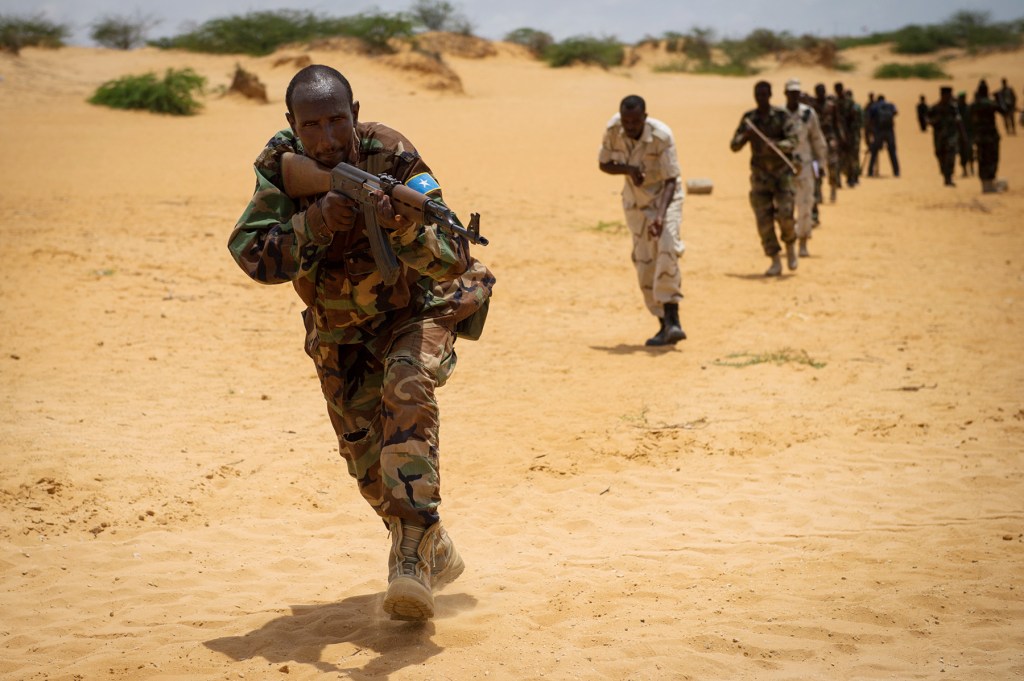
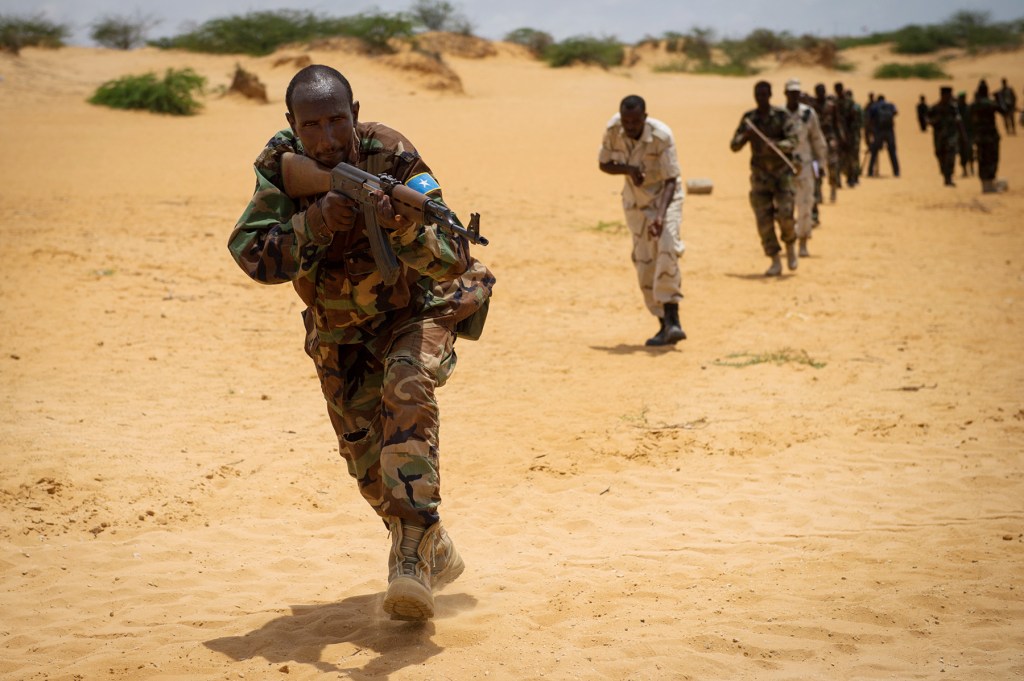
Somali National soldiers, some pretending to hold a weapon, take part in a training exercise on March 28, 2013, at the AMISOM Jazeera Training Camp on the outskirts of Mogadishu, Somalia. (Phil Moore/AFP/Getty Images)
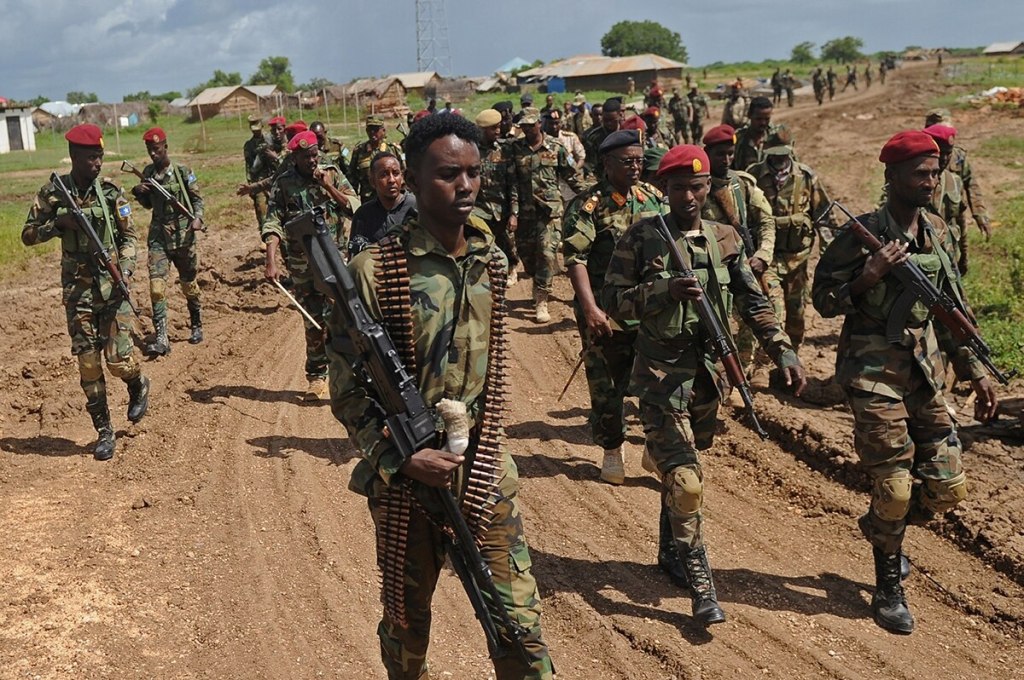
MOGADISHU (Somaliguardian) – Former deputy head of Somalia’s Intelligence Agency Abdilasalan Guled said hundreds of Somali recruits deployed by Eritrea to Tigray region were killed in the initial offensive in the northern Ethiopian region.
Somali National Army soldiers, some pretending to hold a weapon, take part in a training exercise on March 28, 2013, at the AMISOM Jazeera Training Camp on the outskirts of Mogadishu, Somalia. (Phil Moore/AFP/Getty Images)
Former deputy head of the Somali Intelligence Agency (NISA) Abdisalan Guled, in an interview with Kulmiye radio based in Mogadishu, stated that he received information saying that 370 Somali recruits trained by Eritrea had been killed in the recent war in Ethiopia’s Tigray region.
“Following an investigation and contacts I made with different people, it was confirmed that 4000 Somali soldiers participated in Tigray war, who were fighting alongside Ethiopian and Eritrean forces against the TPLF,” said Abdisalan Guled.
“I was shocked when I was told that nearly 1400 of those Somali recruits trained by Eritrea were killed and hundreds more were wounded [in Tigray war], and those wounded were returned to Eritrea.”
Abisalan Guled citing Ethiopian military sources told Kulmiye radio that “only a few men have survived from recruits numbered between 1900 and 2100 who had been deployed on just one frontline, nearly all of them were killed,”
Speaking further, Mr Guled said he was told that the Somali recruits thrown into the battle were led by Eritrean military officers.
“When i asked the officers, they told me that Somalia had signed agreement with Ethiopia and Eritrea that required Farmajo [Somalia’s president] to prepare Somali troops who would take part in the stabilization of Tigray, which he accepted,”
The former deputy head of the Somali Intelligence Services said president Farmajo had requested his Eritrean counterpart not to return those soldiers to their country if he does not win reelection.
“I have heard two days ago that president Farmajo said ‘those soldiers should not be returned home, if I win reelection the matter will be discussed with me, if I don’t return, it will be dealt with those in power but during this sensitive election time I should not be given information on whether they are alive or dead’.
manual for strengthening your power position as elected leader.
January 7 2021
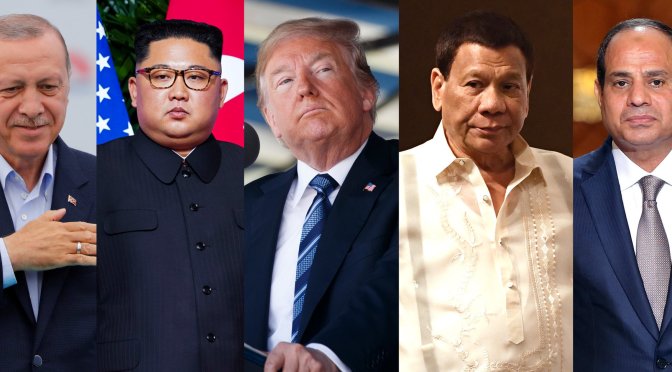
As a democratically elected leader, getting absolute power is no easy feat. Just look at Hitler, or more recently, at Zimbabwe’s Mugabe, Russia’s Putin, or Turkey’s Erdogan. Here are some helpful tips for a prolonged iron rule.
photo: how to be a dictator
1. Expand your power base through nepotism and corruption.
This is not just a tactic adopted in third world countries. Scandals like Bridgegate, Koreagate, Monicagate and Watergate demonstrate that the powerful will always find ways to abuse their privileges. Be warned, though: You will eventually be rumbled, so corruption tends to work only in the short term.article continues after
The lesson: Make sure to surround yourself with loyal kin who you can trust to do what’s best for you and your family.
Photo:How to be a dictator like urdogan
2. Instigate a monopoly on the use of force to curb public protest.
Dictators cannot survive for long without disarming the people and buttering up the military. Former dictators such as Pervez Musharraf of Pakistan, Mobutu Sese Seko of the Congo, and Idi Amin of Uganda were high-ranked army officers who co-opted the military in order to overthrow democracies in favour of dictatorships. Yet democracies are not always more popular than dictatorships. In reality, people prefer dictatorships if the alternative is chaos. This explains the nostalgia for rulers like Stalin and Mao, who were mass murderers but who provided social order. One retired middle-ranking official in Beijing told the Asia Times: “I earned less than 100 yuan a month in Mao’s time. I could barely save each month but I never worried about anything. My work unit would take care of everything for me: housing, medical care, and my children’s education, though there were no luxuries…Now I receive 3,000 yuan as a [monthly] pension, but I have to count every penny—everything is so expensive and no one will take care of me now if I fall ill.”
Indeed, when given the choice in an experiment, people will desert an unstructured group (analogous to an anything-goes society) and seek the order of a “punishing regime,” which has the authority to identify and reprimand cheats. This lawlessness can be seen in hunter-gatherer tribes, too. When anthropologists visited a New Guinea tribe, they found that a third of males suffered a violent death.
7 Steps to Becoming a Dictator
The lesson: Any aspiring dictator who restores order, even through coercion, is likely to earn the gratitude of his people.
3. Curry favour by providing public goods efficiently and generously.
Benevolent dictatorship was practised by Lee Kuan Yew, prime minister of Singapore for 31 years. Lee believed that ordinary people could not be entrusted with power because it would corrupt them, and that economics was the major stabilizing force in society. To this end, he effectively eliminated all opposition by using his constitutional powers to detain suspects without trial for two years without the right of appeal. To implement his economic policies, Lee allowed only one political party, one newspaper, one trade union movement, and one language.article continues after advertisementhttps://93192547278b31c4b30b0c0af0b9a441.safeframe.googlesyndication.com/safeframe/1-0-37/html/container.html?n=0
Socially, Lee encouraged people to uphold the family system, discipline their children, be more courteous, and avoid pornography. As well as setting up a government dating service for single graduates, he urged people to take better aim in public toilets and handed out hefty fines for littering. Singaporeans tolerated these restrictions on their freedom because they valued their economic security more. On this point, Lee did not disappoint, turning Singapore into one of the world’s wealthiest countries (per capita).
The lesson: Restore the economy and develop large infrastructural projects that create a lot of jobs; it will strengthen your power base.
4. Get rid of your political enemies…
…or, more cleverly, embrace them in the hope that the bear hug will neutralize them. Zimbabwe’s former dictator Mugabe abandoned the unpopular practice of murdering political rivals and instead bribed them, with political office, for their support. Idi Amin, who came to power in Uganda after a military coup, stuck with the murderous route: During his eight years at the top, he is estimated to have killed between 80,000 and 300,000 people. His victims included cabinet ministers, judicial figures, bankers, intellectuals, journalists, and a former prime minister. At the lower end of the scale, that’s a hit rate of 27 executions a day.
The lesson: Keep your political enemies close to you.
5. Create and defeat a common enemy.
By facing down Nazi Germany, Churchill, de Gaulle, Roosevelt, and Stalin sealed their reputations as great leaders. Legendary warlords such as Alexander the Great, Genghis Khan, and Napoleon were military geniuses who expanded their countries’ territories through invading their neighbours. Dictatorships feed on wars and other external threats because these justify their existence—swift military action requires a central command-and-control structure
2011 arab spring dictators Bashar al-Assad, Hosni Mubarak, Ali Abdullah Saleh, Zine El Abidine Ben Ali and Muammar Gaddafi
More than half of 20th-century rulers engaged in battles at some point during their reign, either as aggressors or defenders. Among dictators, the proportion rises to 88 per cent. Democratic rulers find this tactic more difficult to adopt because most wars are unpopular with voters. To attract support, the ruler must be perceived as a defender, not a warmonger. The former British prime minister Margaret Thatcher received a lucky boost to her popularity after Argentina, a military dwarf, invaded the British-owned Falkland Islands; she triumphed over her Argentine enemies. Another former British PM, Tony Blair, was not so lucky. Although the 9/11 attacks did much to strengthen his government, his decision to attack Iraq (ostensibly to defend Britain from a long-range missile attack) sullied his legacy.
The lesson: Start a war when your position as leader becomes insecure. Having generals in top political posts will certainly help.
6. Accumulate power by manipulating the hearts and minds of your citizens.
One of the first actions of any aspiring dictator should be to control the free flow of information, because it plugs a potential channel of criticism. Turn the media into a propaganda machine for your regime like Hitler did and Erdogan does now. Other leaders, such as Myanmar’s ruling junta, shut down media outlets completely. Democratically elected leaders are somewhat more restrained, but if they have enough powers, they can rig an election or do away with meddlesome journalists (like Vladimir Putin’s Russia) or, if money is no object, build their own media empire.
Former Italian Prime Minister Silvio Berlusconi owned nearly half the Italian media, encompassing national television channels, radio stations, newspapers and magazines. Unsurprisingly, these outlets carefully managed Berlusconi’s public image and shielded him from criticism. Aspiring dictators should note that muzzling the media is most effective in an ordered society: A 2007 poll of more than 11,000 people in 14 countries, on behalf of the BBC, found that 40 per cent of respondents across countries from India to Finland thought social harmony was more important than press freedom
The lesson: Control the media or, even better, own the media. It’s as simple as that.
7. Create an ideology to justify an exalted position.
Throughout history, leaders have used—or in some cases invented—an ideology to legitimize their power. In the original chiefdoms like Hawaii, the chiefs were both political leaders and priests, who claimed to be communicating with the gods in order to bring about a generous harvest. Conveniently, this ideology often passed as an explanation of why the chief should occupy the role for life, and why the post should pass to the chief’s descendants. Accordingly, these chiefdoms spent much time and effort building temples and other religious institutions, to give a formal structure to the chief’s power.
Henry VIII of England started his own religion when the Pope refused to annul his marriage to Catherine of Aragon. He created the Church of England, appointed himself Supreme Head and granted his own annulment. Other ideologies include personality cults such as Mao-ism or Stalinism; some serve to unite a nation divided by ethnicity, religion or language.
Members of the opposition in Somalia warned this week that the country’s federal government is about to sign a secret petroleum exploration and drilling agreement with two foreign companies a month before its term in office expires, which would “pose a great danger” to the future of Somalia and its natural resources.
Somalian Opposition Suspects Government Will Sign Secret Oil Deals
“On 5 June 2018, the Federal Government of Somalia and Federal Member states signed an agreement on sharing of natural resources in Baidoa, which states that any agreement on the drilling, exploration or search for oil in the country must be transparent, thoroughly debated, evaluated and agreed upon, and finally approved by the House of the People of the Federal Republic of Somalia, before it is signed,” the letter reads.
The Council of Presidential Candidates (CPC) in Somalia strongly opposes the secret deal between Coastline Exploration Inc and Liberty Petroleum Corporation on oil block deals, Warsame said on Twitter.
“Any agreement on the drilling for oil must be transparent, thoroughly debated, evaluated, agreed upon & approved by the Parliament, before it is signed,” he added.
The secret agreement would be signed just a month before the current government’s term in office ends, the opposition says in the letter, noting that this timing of an oil deal “creates strong suspicions.”
Somalia launched in August last year its first-ever offshore licensing round. Back then, the country expected to announce the winners of the oil auction in the first quarter of 2021, Ibrahim Ali Hussein, the chief executive of the Somali Petroleum Authority (SPA), told Reuters.
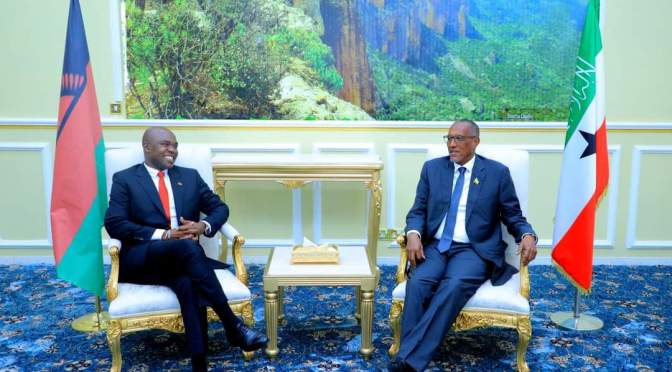
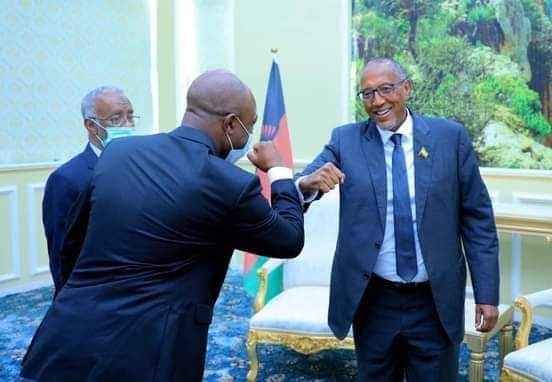
A high-Level delegation from Malawi led by Foreign Minister of Eisenhower Mkaka arrives in Hargeisa, the capital city of Somaliland for an official state visit.
Malawi delegation arrives in Somaliland for high level talks
The delegation will meet Somaliland President Muse Bihi Abdi to discuss aspects on how to strengthen bilateral relations.
The trip by the Malawian government delegation comes just days after Somaliland president Muse Bihi visited Kenya.
Kenya and Somaliland on Tuesday reached a deal for direct Kenya Airways flights to Hargeisa in Somaliland, in what will be the first destination for the national carrier into a Somali region. Kenya also agreed to set up a consulate in Hargeisa by the first quarter of 2021, joining Ethiopia and Djibouti and Turkey which have diplomatic outposts in the Somaliland capital.
shakir essa
Shakir Essa
served as manager at National Union of Somali Journalists (NUSOJ) And Somali News Tv reporter | news publisher at allafricas.com
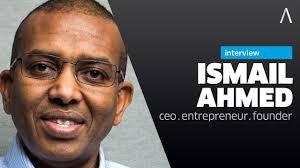
As a youth, Ismail Ahmed was forced by the outbreak of civil war to escape his homeland – Somaliland – and take refuge in the UK. Today, the company he founded is one of the most successful money transfer companies in the world. Profile
At the end of August this year, WorldRemit, one of the leading players in the world of international money transfers, put in a reported $500m bid for the takeover of the US app-based remittance company Sendwave. Not bad going for a company that was founded only 10 years ago by a Somali entrepreneur, Ismail Ahmed.
Remittances today account for more than FDI or overseas development aid. The global market is estimated at $700bn a year. Nigeria alone received an estimated $24bn in remittances in 2018, up from $4bn in 2013.
Photo: The founder of worldremit ismail ahmed
Many economists predicted that the economic meltdown caused by Covid-19 would lead to a massive drop in remittances and as a result, adversely impact emerging markets. The World Bank, at the start of the pandemic in April, estimated a 20% fall in remittances, anticipating catastrophic consequences.
However, these predictions were confounded when some countries, such as Kenya, posted growing year-on-year remittance numbers as at August. Ahmed is not surprised by this. He says he couldn’t fathom the World Bank estimates as experience had shown him that remittances were generally countercyclical.
The rise in remittances, for example in countries like Kenya, has been attributed to a number of factors. One is that many of the people sending money back home are actually those ‘essential workers’ who have kept health facilities going, and provided the services that have kept the economies of the West afloat.
In addition, government stimuli had cushioned the economic blow and the different economic mitigation schemes have meant that in some countries, such as the US, disposable income at the end of the month has at times actually been higher than what many workers were earning before the pandemic.
Ahmed says that the figures for WorldRemit, as at October, were quite strong for the year. “The only region where there was a noticeable fall are the Gulf countries, especially with Indian workers sending money back home.”
Recalling his life story, he says it seems that he was destined to work in money transfer services. He was born and raised in what is now Somaliland and he reflects that his family often received monies from a relative working in the Gulf.
With an excellent head for figures, he was awarded a World Bank scholarship to study economics at the University of London in the UK. But before he could take up the offer, the Somali Civil War intervened.
In the chaos that followed, he managed to escape and thanks to the money sent to him by his brother working in Saudi Arabia, he was able to purchase an air ticket out of Djibouti to the UK.
Expertise in the world of remittances
Fascinated by the world of remittances, he wrote a research paper on the subject at Sussex University; and whilst at the London Business School, as part of a case study project, he put together a model of a remittance business. This was to become the blueprint for what is today WorldRemit.
Before setting up WorldRemit, Ismail worked at the UN to advise on the system of remittances after 9/11.
While working on a UN Development Programme for Somalia, out of Nairobi, he noticed fraud involving senior colleagues. He blew the whistle and, for this, was dismissed.
He fought his corner, alleging unfair dismissal. He won his case and substantial compensation. This was the seed money he used to launch WorldRemit together with Catherine Wines, who also had extensive experience in money transfers, having herself restructured a remittance business that was subsequently sold to Travelex.
He says the scope of their ambition right from the get-go was big – hence the name of the company. As a student, he had experienced the frustrations and high charges involved in sending money back home. Working at the UN, he had realised that the process could be expensive as well as far from frictionless.
Right from the outset, he says, he knew that using rapidly improving IT technology was going to be the ace in their pack. Properly deployed, it could challenge the two giants in the field – Western Union and Moneygram.
He sees WorldRemit as an aspect of the increasingly important fintech sphere. The runaway success of M-Pesa and mobile money in Kenya underscored to him, in the early 2000s, the enormous potential of digital.
However, breaking into the market wasn’t plain sailing. The dominant players had, in many cases, struck exclusivity deals with banks or agents and seemed unassailable.
Given the very tight space left in the market, WorldRemit started with a single agent in both Uganda and Kenya. But the company still managed to get considerable business. This proved to them that their business was viable and also that the market was growing apace.
It was not long before WorldRemit became a substantial global player. Today the company operates in over 6,500 money transfer corridors worldwide and sends money from 50 countries to more than 150 nations.
The acquisition of Sendwave will make it a company that generates over $200m in revenue and manages more than $7.5bn of remittance flows.
The deal will strengthen the company’s position in the US, the world’s biggest source of outward remittances. “You can’t be big in money transfers if you’re not big in the US,” says Ahmed.
Industry more streamlined
The remittance industry has definitely benefited from having more players in the market: costs have been drastically reduced and the spread on exchange rates has also fallen considerably. However, some analysts warn that it is becoming an increasingly difficult area in which to make money as competition is eroding margins and the marketing costs to acquire new customers are greater than the gains.
Ahmed doesn’t agree; he counters that the industry will not only grow but will evolve. One factor behind the resilience of remittances has been the digitisation of payments. “Somaliland is pretty much a cashless society today. In Kenya, 90% of remittances are non-cash based, with the majority going to mobile money. In Nigeria 90% of international money transfers will end up in a bank account. So even during lockdowns, remittance flows still take place.”
He believes that the digitisation of remittances will also enable countries and analysts to better understand and make use of data that is now more readily available.
He also anticipates that the infrastructure backbone of remittances, which is ultimately about matching and settling trades, can help play a greater role in business transactions such as purchasing machinery or goods from abroad, as well as in intra-African trade, where too often buyers need to access dollars or euros to settle a payment within Africa.
Remittances have often been overlooked as a development tool, he says, but today they are a key indicator from a macro-economic perspective. Nonetheless they have been criticised for being ‘unproductive’ capital in that they are used in the ‘receiving’ country to make basic purchases.
Ahmed refutes this and says that as well as covering expenses such as school fees, food or medical bills, a big chunk of remittance payments goes to starting new businesses, investing in land and property.
shakiressa.com
2
(Shakiressa.com) photo: shakir essa digital marketing
















 All Africa