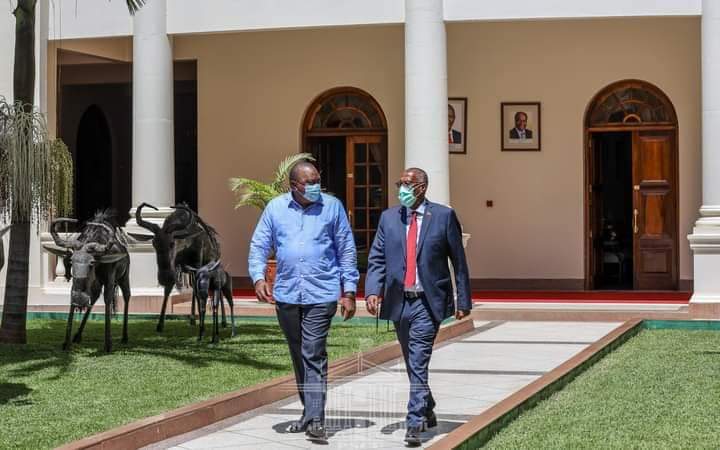
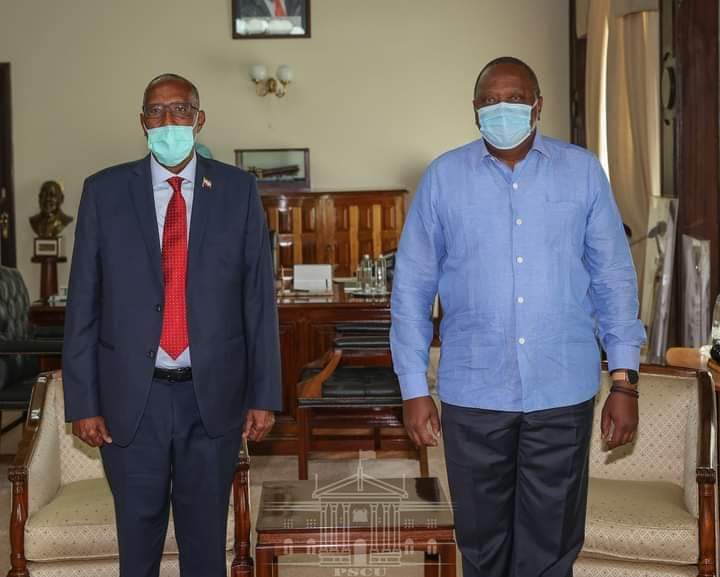
Somalia had accused Somaliland of undermining its sovereignty after a delegation led by President Muse Bihi was hosted by President Uhuru Kenyatta at Nairobi’s Statehouse
• But Somaliland through its Foreign Affairs responded by saying such an irrelevant statement Somalia shows nothing but only failure and irresponsibility.
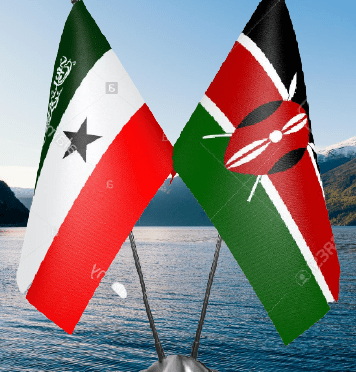
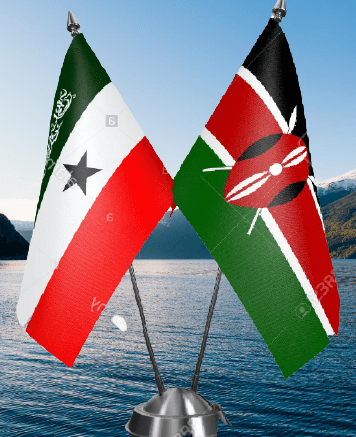
KENYA MAINTAINED ITS RECOGNITION OF SOMALILAND AS NEWEST COUNTRY IN AFRICA
(Afrika-times.com- Somalia and Somaliland on Monday engaged in a war of words on Twitter following the latter’s delegation visit to Nairobi.
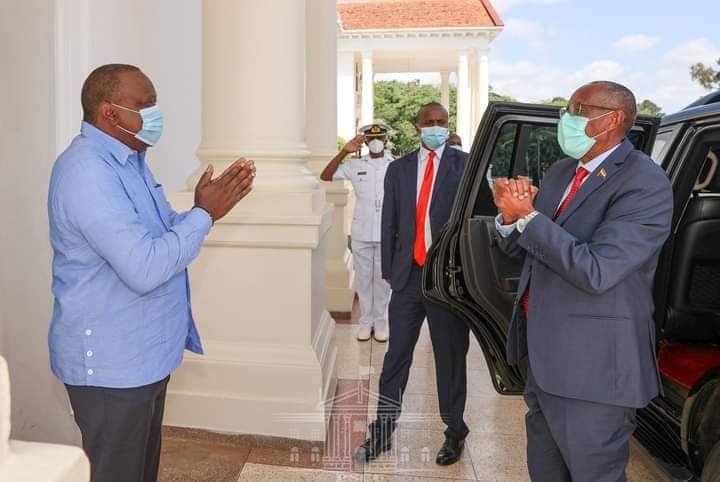
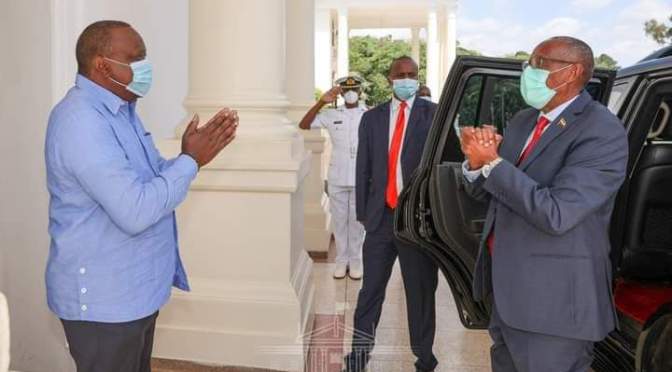
Somalia had accused Somaliland of undermining its sovereignty after a delegation led by President Muse Bihi was hosted by President Uhuru Kenyatta at Nairobi’s Statehouse.
Through its Foreign Affairs, Somalia said Bihi’s visit must be treated with all contempt it deserved.
The ministry later deleted the tweet.
“Somaliland is the federal Member State of Somalia. It, therefore, has no legitimacy to directly deal with Kenya especially now that we have severed our diplomatic ties,” part of the tweet read.
It also read, “Muse Bihi’s visit to Nairobi undermines the sovereignty of Somalia and must be treated with the contempt it deserves”.
But Somaliland through its Foreign Affairs responded by saying such an irrelevant statement Somalia shows nothing but only failure and irresponsibility.
Somaliland said as an independent country it has a right to make a decision to strengthen its mutual relationship with Kenya which is also an independent country.
“The irrelevant statement from the failed administration of Somalia shows nothing but only failure and irresponsibility. The Republic of Somaliland and The Republic of Kenya are two independent countries which has (sic) the rightful decision to strengthen their mutual relationship, ” the tweet read.
President Uhuru Kenyatta hosted bilateral talks between Kenya and Somaliland delegation led by President Musa Bihi Abdi at State House on Monday.
President Abdi arrived in the country on Sunday for a three-day official visit.
During the meeting, the two leaders initiated discussions on a number of subjects of mutual interest between Kenya and Somaliland.
The two delegations are set to meet again on Tuesday to finalise the talks.
Kenya has no diplomatic presence in Somaliland but takes cognizance of the political and economic stability of the region.
The country is keen to enhance and broaden trade in goods and services, as well as an investment as the cornerstone for long-term development cooperation with the region.
There has been a looming diplomatic spat between Nairobi and Mogadishu after Farmnajo expelled Kenya’s ambassador to Mogadishu Ambassador Lucas Tumbo.
Mogadishu cited what it termed as the Kenyan government’s interference in its internal and political affairs.
“The federal government f Somalia expresses it regret in the government of Kenya’s overt and blatant interferences in the internal and political affairs of Somalia which has the potential to be a hindrance to stability,” a statement from Somalia’s foreign ministry said.
But Kenya in its response dismissed the claims terming them unsubstantiated allegations.
Nairobi said it had not received any Note Verbale or any other official communication from Mogadishu requesting Kenya’s ambassador to leave for Nairobi for consultations.
“However, the Ministry of Foreign Affairs’ attention has been drawn to a press statement purportedly released by the Ministry of Foreign Affairs of the Federal Republic of Somalia,” a statement from the ministry said.
“This action is reportedly based on unsubstantiated allegations, namely, “continued interference in the internal affairs of Somalia”. The Government of Kenya respects and upholds the cardinal international principles of self-determination, sovereignty, political independence, and territorial integrity of all countries, and in particular those in Africa,” Nairobi said.
President Uhuru Kenyatta is hosting his Somaliland counterpart Muse Bihi Abdi amidst worsening relations with Somalia.
Kenya maintained to its recognition of somaliland as the newest country in africa, uhuru kenyatta meets with somaliland president muse bihi abdi
KENYA 🇰🇪 MAINTAINED ITS RECOGNITION OF SOMALILAND AS NEWEST COUNTRY IN AFRICA
The visit by the leader of the self-declared country seeks to give Kenya a platform through which Nairobi can have presence in Hargeisa, as it has no diplomatic presence in Somaliland
President Abdi jetted into the country for a three-day state visit yesterday and was received. Official invitation from uhuru kenyatta
This visit comes after Somalia President Mohamed Abdullahi Mohamed, also known as Farmaajo, imposed restrictions on Kenyans hoping to travel to the country. At the same time, there has been a maritime dispute that saw Somalia file a case against Kenta at the International Court of Justice in 2014.
Mogadishu has accused Nairobi of meddling in its upcoming elections by allegedly putting pressure on the leader of Jubaland region, Ahmed Mohamed Islaam Madobe, to pull out of poll agreement brokered two months ago.
Mogadishu expelled Kenya’s diplomat to Somalia Maj Gen (rtd) Lucas Tambo and recalled its ambassador to Kenya, Mohamud Ahmed Nur ‘Tarzan’, over claims of Nairobi’s continuous interference in its internal affairs.
“President Kenyatta, on Monday, is scheduled to host President of Somaliland for talks on mutual interests and discuss diaspora issues as they seek to deepen trade ties,” reads a press release by the Foreign Affairs ministry.
Uhuru, according to the ministry’s brief, will be seeking stronger relations between the two countries to bolster security, economic and social
“Somaliland is an important partner in the Horn of Africa region in the fight against terrorism and particularly Al-Shabaab,” the statement read.
This file photo taken on May 18, 2016 shows a woman holding a flag as soldiers and other military personnel of Somalia’s breakaway territory of Somaliland march past during an Independence day celebration parade in the capital, Hargeisa. [AFP]
“ takes cognizance of the political and economic stability of the region and is keen to enhance and broaden trade in goods and services, as well as investment as the cornerstone for long-term development cooperation with the region.”
The ministry also disclosed that Uhuru would be seeking intensified cooperation in banking and financial sector to accelerate investment opportunities for both parties. Kenya Airways flights connecting Nairobi and Hargeisa to enhance trade and movement is carefully being explored, the statement said.
Other issues on the table include information sharing on security, particularly in countering terrorism in the Horn of Africa. “Kenya and Somaliland will work together to actualise these aspirations,” the statement read.
This is the first official visit to Nairobi by President Abdi since he took over Somaliland in 2017, and the second by a Somaliland leader following a similar one by President Kahin Riyale Kahin in 2009.
Such differences are not new to Kenya. Tanzania cancelled landing rights for three Kenyan airlines — Kenya Airways, Fly540 and Safarilink Aviation — after Kenya insisted Tanzanians arriving in the country had to be quarantined for 14 days.
The actions by the two countries have recently stalled business ventures for Kenyans over ‘bad’ policies by Nairobi.
While receiving President Abdi together with his delegation, which includes uhuru kenyatta and the members of the Cabinet, Munya said today’s talks between the two leaders would be of mutual interest.
Somaliland’s Ministry of Foreign Affairs said President Abdi left Hargeisa on Sunday and would meet Kenyan officials for bilateral talks.
Somalia has had issues with Kenya over miraa (khat) export. The country has since banned Kenyan miraa from its market.
The matter resurfaced last week after a delegation of farmers’ representatives travelled to seek audience with Somalia officials. However, they were met with a list of demands, including a tax charge of $4 per kilo.
The farmers were also told to report to the Kenyan authorities that they would only be allowed to sell miraa in Somalia if flights from Mogadishu are not forced to stop in Wajir for security checks.
Somalia officials say Kenya should treat their country as an equal partner.
In 2016, Mr Munya, then Meru Governor, caused a diplomatic storm after he ‘offered recognition’ of Somaliland if they were assured a steady miraa market.
KENYA MAINTAINED ITS RECOGNITION OF SOMALILAND AS NEWEST COUNTRY IN AFRICA
Somaliland: East Africa’s largest conduit for illicit cheetah trafficking to the Gulf
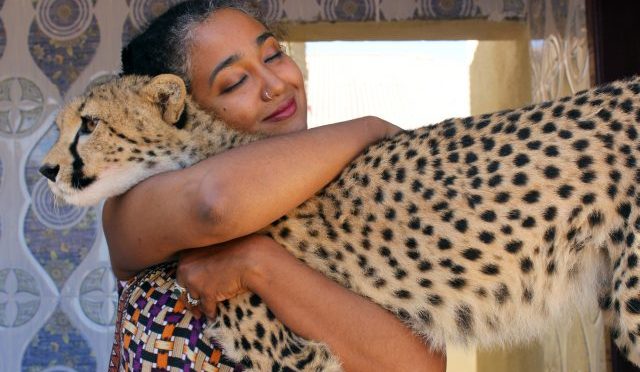
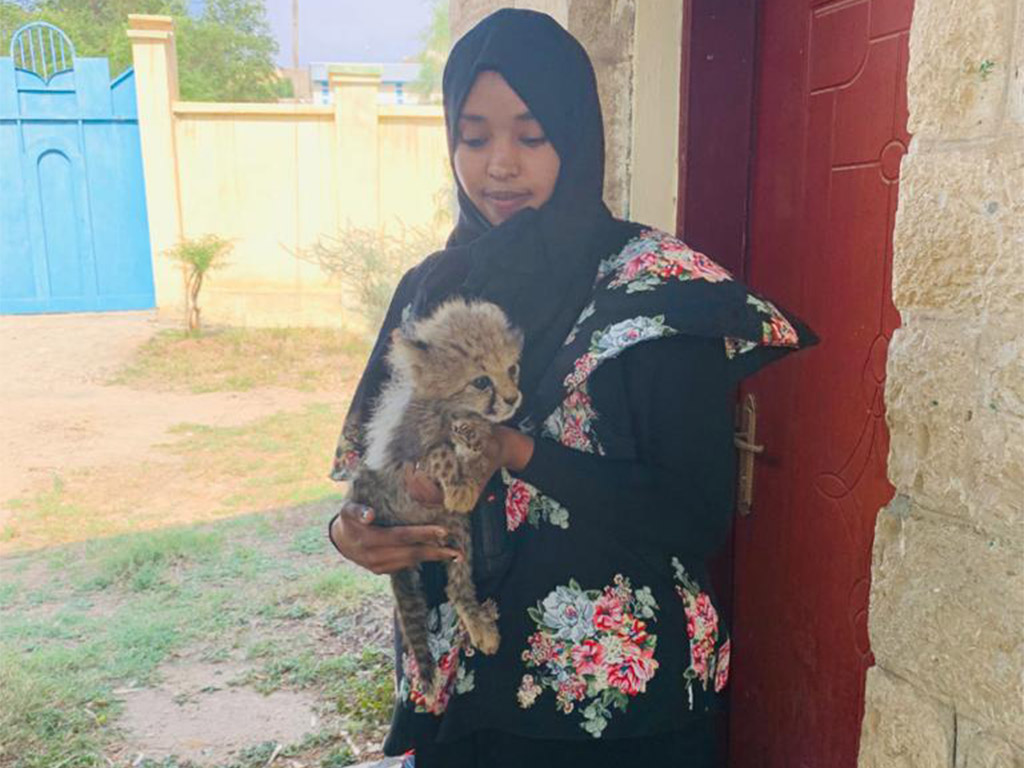
A cheetah cub receives care from representatives of Somaliland’s Ministry of Environment and Rural Development, in a village near Erigavo, Sanaag, in August 2020.
According to reports, the cubs were being held by local farmers who surrendered them to the authorities, as the result of conflict with the mother cheetah near their livestock. (Photo: Twitter / Ministry of Environment and Rural Development)
A recent spate of cheetahs being seized in Somaliland has shown that the illicit demand for these animals remains strong. Cheetahs are highly prized as exotic pets in the Gulf states, and in supplying this market, traffickers have heavily impacted local cheetah populations in Africa, a situation compounded by the fact that many animals die en route.
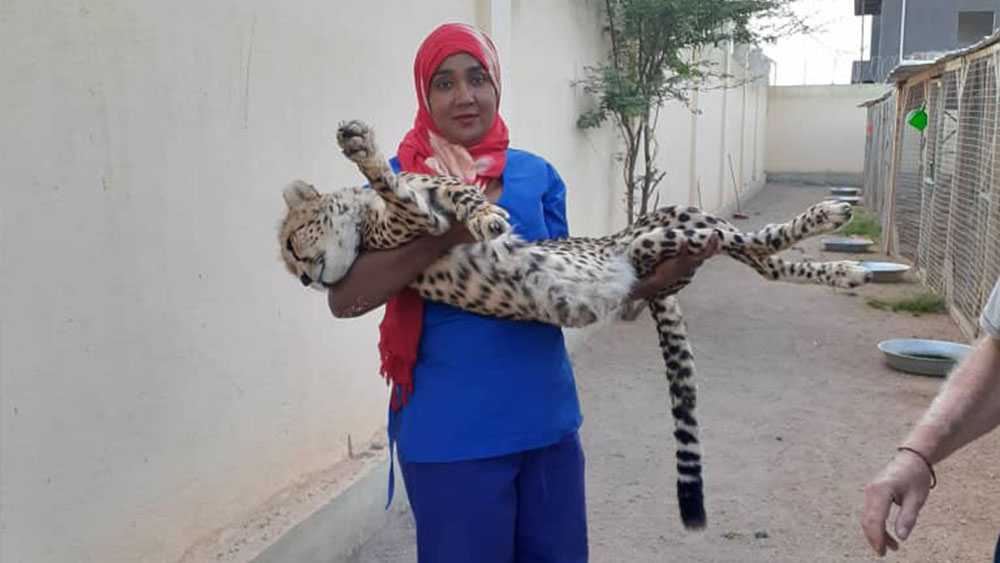
In late July, two cheetah cubs were rescued from a 25-day ordeal at the hands of wildlife traffickers by the Awdal region police in Borama, a city in Somaliland not far from the Ethiopian border. Members of the local community helped look after the dehydrated and underweight cubs until the rescue team arrived. The cubs were then given care by Cheetah Conservation Fund (CCF) staff before being transported to a CCF safe house.
Two cubs rescued near Borama, 24 July 2020. The cubs had reportedly been in the hands of traffickers for 25 days before their rescue. (Photo: CCF)
These cubs were part of a series of recent seizures of cheetahs in Somaliland. Through July and August, 20 cheetah cubs were rescued over five missions jointly conducted by the ministry of environment and rural development, the Selel regional administration and the Somaliland police, with support from the CCF and Torrid Analytics.
On 14 September, two cheetah cubs were seized in the Sool region in the south-east: the youngest was only two weeks old. In total, 25 cubs have been reported as seized or rescued in Somaliland so far this year.
A six-month-old cheetah cub, in the care of Somaliland’s Ministry of Environment and Rural Development and the Cheetah Conservation Fund, en route to Hargeisa, 29 July 2020. The cub was one of eight rescued over three missions in Somaliland in late July. (Photo: Cheetah Conservation Fund)
Cheetah trafficking in Somaliland is not a new issue. Since 2010, when reporting became more consistent, there have been 193 rescued or surrendered cheetahs. Nearly a third of these occurred after the country ratified its Forestry and Wildlife Conservation Law in August 2018, which has reportedly led to increased awareness and better coordination between wildlife officials, police and the army.
Many of the cheetahs seized in Somaliland are believed to originate in Ethiopia, which shares an 800km border with the self-declared state. At least 25% of seized cheetahs in Somaliland have been found at or near the Ethiopian border – the two cubs intercepted near Borama in August, for example, were less than 15km from the border.
As known cheetah populations in Ethiopia total no more than 300 adolescent and adult specimens, it is clear that the trafficking of cubs is taking a significant toll on cheetah populations. Ethiopia and South Sudan, along with Somalia/Somaliland where cheetah populations are unknown, are also the last remaining stronghold of the North East African cheetah subspecies, Acinonyx jubatus soemmeringii.
Cheetah cubs are mostly taken from the wild when the mother hides them to go hunting, either opportunistically by nomadic herders or by poachers. A cub can sell for between $200 and $300 in Somaliland, although prices vary greatly: an unhealthy cub can be bought for as little as $80, while a healthy, older cub can cost up to $1,000. The same cheetah can be sold for up to $15,000 in the Gulf states.
Mortality is high, as most cubs are removed from the wild at only two to eight weeks from birth and are subjected to maltreatment and poor nutrition in the hands of poachers and dealers, compounded with the rigours of the trip across the Gulf of Aden. While difficult to estimate, it is thought that more than 60% of cheetah cubs die before they reach the market to be sold.
Somaliland is vulnerable as a conduit for the illegal wildlife trade not only due to its proximity to the Arabian Peninsula’s wealthy consumer markets for exotic wildlife, but also due to the country’s rampant poverty, weak legal frameworks and a lack of environmental awareness.
Corruption also drives the cheetah trade. There are instances of illegally obtained cheetah cubs being sold back to smugglers by corrupt officials after a confiscation has been reported. That being said, Somaliland’s cheetah trade has been more extensively researched than other countries and regions of Somalia. Its relative importance as the main cheetah trafficking route into the Middle East might be in part connected to underreporting from other countries.
Across the Gulf of Aden
From Somaliland, cheetahs are transported by boat – hidden in hampers, crates or cardboard boxes – from the northern coastline across the Gulf of Aden to Yemen at an estimated rate of 300 cubs per year. The 140 nautical miles between the ports of Berbera in Somaliland and Aden in Yemen can be covered in just over seven hours at a dhow’s average speed of 20 knots.
Once in Yemen, cheetahs are reportedly transported by boat or road across the Saudi border to animal markets such as Al-Jazan or Al-Khouba, or delivered to Saudi traders, who will then offer them throughout the Gulf states to known buyers on ecommerce and social media platforms such as Instagram and Snapchat, or, more recently, through private chat groups.
Research carried out by CCF researchers found that at least 2,000 cheetahs had been advertised online between 2010 and 2019. Most were found on Instagram, with sellers offering cheetahs in Saudi Arabia, the UAE and Kuwait.
“It is enough to mention that they are ‘cats’ on the box and to pay certain people I know. It is easy for me because I work there and I know who will take the money. I give them between KWD500 and KWD1000 ($1,600–$3,200 to allow illegal animals (through the country).”
There have also been isolated reports of cheetahs arriving in Oman from Yemen, as well as being transported from Oman into the UAE via the Hatta border crossing.
An illegal status symbol
Cheetahs have long been popular household pets or hunting companions in the Gulf states, where they are viewed as status symbols. This popularity has been boosted in recent years by wealthy or famous individuals posing with their exotic pets on social media.
However, few cheetah owners know how to provide the proper care for these animals, with some social media posts advertising cheetahs that have been declawed – an extremely painful process for the animals.
Many pet cheetahs in the Gulf states do not live beyond the first year, and few live longer than five years, according to information collected by CCF.
Trade in wild cheetahs for commercial purposes is illegal in all the Gulf states, either through the states being party to the Convention on International Trade in Endangered Species (CITES) or through domestic legislation.
In December 2016, the UAE enacted a law banning the private possession of exotic and dangerous pets, although only one seizure (of four cheetahs) has been made since 2015, suggesting that the ban is seldom enforced.
Under CITES regulations, however, captive-bred cheetahs can be traded commercially by registered facilities. The CITES trade database reports that 16 “captive-bred” cheetahs were exported into Armenia from Bahrain and the UAE between 2009 and 2015.
However, the probability that cheetahs in the Gulf (both those kept as pets and those exported) are truly bred in captivity or traded in compliance with national laws or CITES regulations is low.
First, only two such registered breeding facilities exist worldwide – both are in South Africa.
Second, cheetahs do not breed well in captivity. Based on information from the International Cheetah Studbook, a voluntary register of captive cheetahs worldwide, the first report of captive-bred cheetahs in the Gulf states was in 1994. Since then, six facilities have reported a total of 304 cheetah births in captivity, with a 31% mortality rate for cubs under six months.
It is therefore more likely that purportedly “captive-bred” cheetahs in the Gulf come from elsewhere, as suggested by the “captive-bred” cheetahs exported from Bahrain to Armenia. There are no known cheetah breeding facilities in Bahrain, suggesting that the cheetahs’ real origins were masked.
A contentious issue
The issue of the illegal cheetah trade has been on the CITES agenda since 2013, when it commissioned a study that led to decisions and recommendations aimed at reducing demand and encouraging international collaboration. However, the 18th Conference of the Parties (CoP), held in August 2019, voted to delete these decisions based on a report from the standing committee to the secretariat.
The report concluded that the illegal cheetah trade was limited, based on official seizure reports from nine countries that cited 32 specimens (13 live, 19 parts or products) between 2015 and mid-2018. Based on this, the CoP agreed that matters related to the illegal cheetah trade could be addressed by a Big Cat Task Force, jointly run by CITES and the Convention for Migratory Species, which is currently in the process of being implemented.
However, Kenya and Ethiopia – two cheetah-range countries – argued that the numbers reported by CITES “underestimate the full extent of the trade, since they only include confiscated animals appearing in official records and omit data from many countries, including key primary source countries for trafficked cheetah”. They cited information showing 393 cheetah specimens (274 live animals and 119 parts), including the 32 seized specimens reported to CITES, during the same period.
The countries’ joint statement – submitted to the CITES CoP – went on to add: “Given the perilous state of [East African] cheetah populations that are the source of illegal trade, any ongoing trade in wild cheetah is alarming.”
The recent spate of seizures in Somaliland seems to confirm those fears. The illegal trade in wild cheetahs appears to be continuing apace, with potentially grave consequences for East African cheetah populations. DM
This article appears in the Global Initiative Against Transnational Organised Crime’s monthly East and Southern Africa Risk Bulletin. The Global Initiative is a network of more than 500 experts on organised crime drawn from law enforcement, academia, conservation, technology, media, the private sector and development agencies. It publishes research and analysis on emerging criminal threats and works to develop innovative strategies to counter organised crime globally. To receive monthly Risk Bulletin updates, please sign uphere.
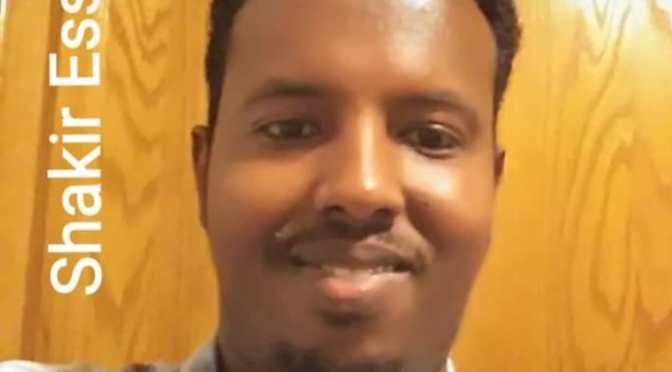
Shakir Essa
Shakir Essa served as manager at Somali Journalist Association and PR consultant at allafrica.com
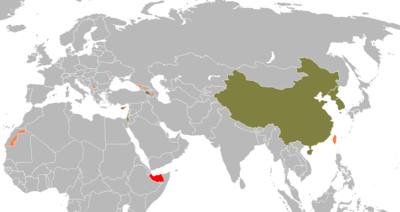
UN member states which at least one other UN member state does not recognise Non-UN member states and observer states recognised by at least one UN member state Non-UN member states recognised by other non-UN member states only Non-UN member state not recognised by any state
There are two traditional doctrines that provide indicia of how a de jure sovereign state comes into being. The declarative theorydefines a state as a person in international law if it meets the following criteria:
a defined territory
a permanent population
a government, and
a capacity to enter into relations with other states.
According to the declarative theory, an entity’s statehood is independent of its recognition by other states. By contrast, the constitutive theory defines a state as a person of international law only if it is recognised as such by other states that are already a member of the international community.[1]
Proto-states often reference either or both doctrines in order to legitimise their claims to statehood. There are, for example, entities which meet the declarative criteria (with de facto partial or complete control over their claimed territory, a government and a permanent population), but whose statehood is not recognised by any other states. Non-recognition is often a result of conflicts with other countries that claim those entities as integral parts of their territory. In other cases, two or more partially recognised states may claim the same territorial area, with each of them de facto in control of a portion of it (as have been the cases of the Republic of China (Taiwan) and the People’s Republic of China (PRC), and North and South Korea). Entities that are recognised by only a minority of the world’s states usually reference the declarative doctrine to legitimise their claims.
In many situations, international non-recognition is influenced by the presence of a foreign military force in the territory of the contested entity, making the description of the country’s de facto status problematic. The international community can judge this military presence too intrusive, reducing the entity to a puppet state where effective sovereignty is retained by the foreign power. Historical cases in this sense can be seen in Japanese-led Manchukuo or the German-created Slovak Republic and Independent State of Croatia before and during World War II. In the 1996 case Loizidou v. Turkey, the European Court of Human Rights judged Turkey for having exercised authority in the territory of Northern Cyprus.
There are also entities which do not have control over any territory or do not unequivocally meet the declarative criteria for statehood but have been recognised to exist de jure as sovereign entities by at least one other state. Historically this has happened in the case of the Holy See (1870–1929), Estonia, Latvia and Lithuania (during Soviet annexation), and more recently the State of Palestine at the time of its declaration of independence in 1988. The Sovereign Military Order of Malta is currently in this position. See list of governments in exile for unrecognised governments without control over the territory claimed.
There are 193 United Nations (UN) member states, while both the Holy See and the State of Palestine have observer state status in the United Nations.[2] However, some countries fulfill the declarative criteria, are recognised by the large majority of other states and are members of the United Nations, but are still included in the list here because one or more other states do not recognise their statehood, due to territorial claims or other conflicts.
Armenia, independent since 1991, is not recognised by one UN member, Pakistan, as Pakistan has a position of supporting Azerbaijansince the Nagorno-Karabakh War.
The Republic of Cyprus, independent since 1960, is not recognised by one UN member (Turkey) and one UN non-member (Northern Cyprus), due to the ongoing civil dispute over the island.
The People’s Republic of China (PRC), proclaimed in 1949, is the more widely recognised of the two claimant governments of “China”, the other being the Republic of China (ROC, also known as Taiwan). The PRC does not accept diplomatic relations with states that recognise the ROC (16 UN members and the Holy See as of 21 August 2018). Most of these states do not officially recognise the PRC as a state, though some states have established relations with the ROC while stating they do not intend to stop recognising the PRC (Kiribati, Nauru).[29][30] Some states which currently recognise only the PRC have attempted simultaneous recognition and relations with the ROC and the PRC in the past (Liberia, Vanuatu).[31][32][33] According to United Nations General Assembly Resolution 2758, the PRC is the only legitimate representative of China to the United Nations.[a]
Shakir Essa served as manager at Somali Journalist Association and Allafrica news editor
The winner represent the power of fearless reporting across Somalia, Ethiopia Djibouti and Kenta , Shakir is a digital media creator, news broadcaster, author and political analyser. He is the presenter of both africa times news (sub saharan africa) and Somali Journalist Association
Watch Latest Updates, News, Videos, Somalia and Somaliland Talk shows Special Reports & Packages from Shakir Essa








 All Africa