Tag Archives: africa

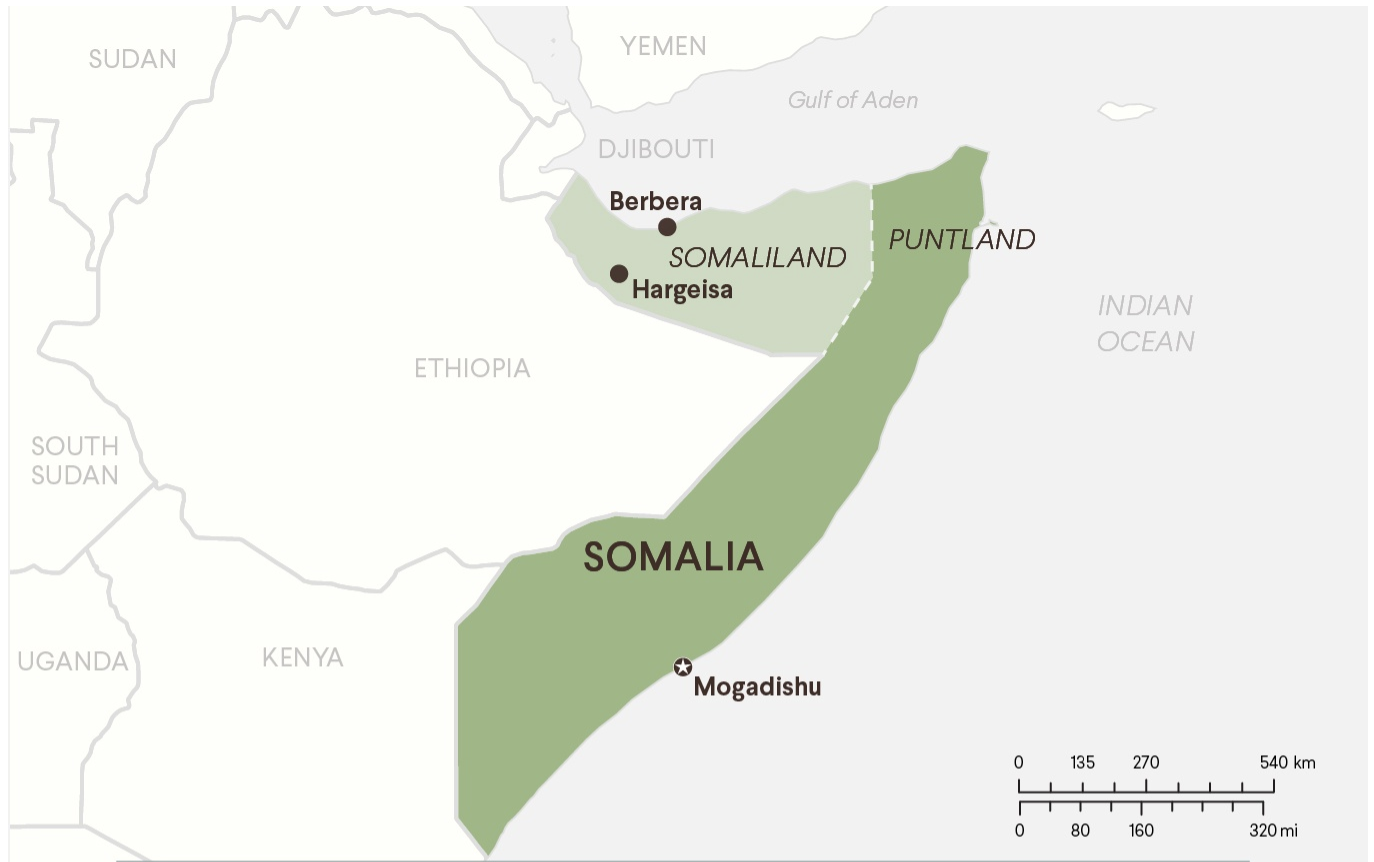
Somaliland is the newest country in Africa,

  • Recognize Somaliland as an independent nation in Africa

Somaliland, historically, the area now comprising Somalia and Djibouti. The name is also used to refer to the Republic of Somaliland, a self-declared independent country in the Horn of Africa

Rep. Ilhan Omar stated in a speech on Jan. 27 in Minneapolis that she would leverage her influence to block a potential agreement between Ethiopia and the breakaway Republic of Somaliland regarding access to the sea. In a corrected translation, Omar declared in Somali that “The U.S. government will do what we tell the U.S. government to do.”

That is the confidence we need to have as Somalis … As long as I’m in Congress, no one will take over the seas belonging to the nation of Somalia.”

The United States should carefully examine the prospect of recognizing Somaliland. 80 percent of the population is made up of the Isaaq clan, making it ethnically distinct from Somalia. Despite lack of international recognition, it has created a reasonably free and democratic society over the past 30 years, with presidential elections in 2003, 2010 and 2017, and is due to go to the polls again this November. International observers in 2017 noted that “Somaliland’s success in establishing a viable political system that combines customary structures with the representative electoral mechanisms of the nation-state has been impressive.”

Somaliland still faces challenges of corruption, economic and political marginalization, and violence against women. But over the same 33-year period, Somalia, which asserts its sovereignty, has been in freefall, beset by internal violence and weak political institutions.
Freedom House, which produces an annual assessment of political freedoms and civil liberties, last year rated Somaliland as “partly free” with a score of 44 out of 100. Somalia was declared “unfree” with just 8 of 100. For context, the United States only managed 76 of 100.

President Joe Biden should take advantage of a diplomatic opportunity for security and stability in the Horn of Africa, despite concerns about Islamic sentiment. Somalia is often associated with the 1993 Battle of Mogadishu depicted in the film “Black Hawk Down,” and American forces have been intermittently present in the country for over 30 years. The official American policy supports Somalia’s sovereignty and territorial integrity within its 1960 borders, but there is potential for policy change. The Republic of Somaliland declared independence from the central government in 1991, and even though the territory seeking autonomy has a complex colonial history, there is an opportunity for reconsideration of its status.

determined group of legislators campaigning for recognition of Somaliland. Britain’s support for Operation Prosperity Guardian and military action against the Houthis suggests an obvious partnership: change tack, support indigenous economic development and show the region a new model of stepping up to self-sufficiency and the West’s enthusiasm to embrace vibrant nations as part of the security architecture. Success is by no means guaranteed — but the approach of the past 30 years has shown itself exhaustively to be a failure.Eliot Wilson is a freelance writer on politics and international affairs. He was senior official in the U.K. House of Commons from 2005 to 2016, including serving as a clerk of the Defence Committee and secretary of the U.K. delegation to the NATO Parliamentary Assembly.
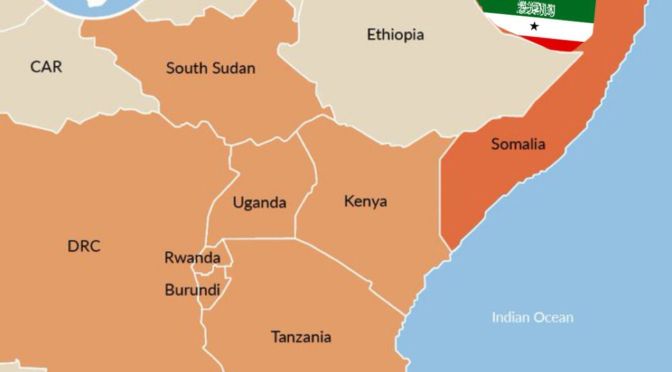
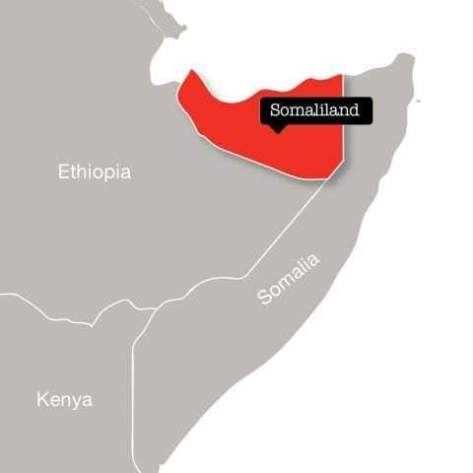
Ethiopia is the first African nation to recognize the sovereignty of the Republic of Somaliland

Ethiopia to recognize Republic of Somaliland for sea accessThe federal government is reportedly willing to become the first African nation to recognize the sovereignty of the Republic of Somaliland, a breakaway Somali territory, in exchange for a lease on a 20 kilometer stretch of the Somaliland coast and access to Berbera Port.Stakes in state-owned Ethiopian Airlines and Ethio telecom are also on the table in the Somaliland deal, according to Ambassador Redwan Hussein, security advisor to the Prime Minister.An MoU signed with Somaliland President Muse Bihi will also enable Ethiopia to operate a military base and commercial port in Somaliland, according to Redwan.

America's Immigration Policy Needs an Overhaul Somaliland is resisting China’s rapid expansion in Africa through the Belt-and-Road initiative. After months of pressure, the Somaliland government cut out Beijing and invited Taiwan to open an embassy in the capital, Hargeisa. by Robert C. O’Brien Hearing Aid Advice The Most Powerful Hearing Aids of 2021 (See Why) Sponsored by Hearing Aid Advice See More As America confronts an assertive China across the Indo-Pacific region, it is important to understand the centrality of Africa to this effort. Recognizing a stable and democratic Somaliland in the Horn of Africa as an independent country is a key step in stemming the Chinese Communist Party’s rising tide on the continent, which brackets the western border of the region. Almost unnoticed during the pandemic, Somaliland is resisting China’s rapid expansion in Africa through the Belt-and-Road initiative. After months of Chinese pressure, the Somaliland government cut out Beijing and invited Taiwan to open an embassy in the capital, Hargeisa. Taiwan now has a scholarship program for Somaliland students to study in Taipei and Taiwanese aid is flowing into the country to assist with energy, agriculture, and human-capital projects. It is often difficult for developing nations, including those in Africa, to resist the economic allure of Chinese loans and investment. China’s government is pouring money into Africa in a bid to secure energy and raw materials long into the future. Governments often set aside concerns over China’s predatory lending, corruption, human-rights abuses and its high-handed “wolf warrior diplomacy” to provide for their desperate populations. When a developing nation stands up to China and rejects its tainted aid, the United States should make every effort to help it succeed, particularly in strategically vital geography. Somaliland is one such country and deserves U.S. assistance. Unlike the virtually failed state of Somalia to its south, Somaliland is thriving. It has been peaceful for the thirty years since it declared independence, has a functioning democratic system, manages its own police force, and even issues its own currency and passports. An American-backed independent Somaliland would show other nations that there is an alternative to China’s Belt-and-Road initiative in East Africa. This step could be key as China has marked the area for great power competition by establishing its first overseas military base in neighboring Djibouti. Somaliland’s location, just south of Djibouti, on a major artery of maritime trade—the Bab-el-Mandeb Strait—is thus of geopolitical significance to the United States and its allies. Somaliland would also be an important partner in the fight against Islamist terrorists in the region. The legal and diplomatic grounds for recognizing Somaliland are strong. In many ways, what we today recognize as modern Somalia is an artificial construct, even by the standards of post-colonial Africa. During the late-nineteenth century through the mid-twentieth century, Somaliland was controlled by the British, eventually becoming a formal British colony. After its independence from the UK in 1960, thirty-five nations recognized the new Republic of Somaliland. The country was one of the first fifteen nations on the continent to gain their freedom during that famous “Year of Africa.” As a matter of international law, Somaliland had been and, upon independence, was entirely separate from the Italian colony Somalia Italiana, later Somalia. The two neighboring former colonies were joined together into one nation only after both received their respective independence from different colonial powers. The election that ratified the union creating Somalia was, however, fraught with irregularities. For example, it was discovered shortly after voting that the documents each newly independent state had voted on were different, thus, making the union technically void. The government in Mogadishu attempted to remedy this problem by announcing a second referendum on an act of union. But due to significant discrimination against Somaliland, its citizens boycotted the vote. In 1961, a Somali court ruled that the legal mechanisms used to join the two nations were flawed. Over the years, the regime in Mogadishu massively abused human rights in Somaliland. Somalia’s decades of discrimination, repression, and genocide against Somaliland have been ongoing since the colony’s independence. Somaliland fought a war against Somalia for its freedom. This decades-long conflict was one of the most brutal wars in post-colonial Africa and included Mogadishu’s genocide against the north’s major clan. At the conclusion of the conflict, after securing its territory, Somaliland declared its independence anew. If the United States leads on diplomatic recognition, then other nations will certainly follow. The United Kingdom, the United Arab Emirates, Turkey, and other states already have offices in Hargeisa, though only Taiwan maintains an embassy. Even continental power South Africa has flirted with recognition. The time is now for the United States to take the first step—or more accurately, thanks to Taipei, the second step—to bring Somaliland fully into the community of nations. Robert C. O’Brien was the twenty-eighth U.S. National Security Advisor, serving from 2019-2021. He is the Chairman of the Global Taiwan Institute’s U.S.-Taiwan Task Force. Image: Reuters

The agreement would include Ethiopia’s eventual recognition of Somaliland as an independent nation. Somalia considers

Monday’s surprise pact has triggered fury in Mogadishu, which considers it a violation of its sovereignty.It was announced only days after Somalia’s central government had agreed to resume dialogue with the separatist northern region after years of stalemate.

Somaliland has been seeking full statehood since claiming independence from Somalia in 1991, a move fiercely opposed by Mogadishu and not recognised internationally. The Addis Ababa agreement gives landlocked Ethiopia long-desired access to the Red Sea, a key waterway for global trade.”This historic agreement ensures Ethiopia’s access to the Red Sea for their naval forces, reciprocated by formal recognition of the Republic of Somaliland, marking this as a significant diplomatic milestone for our country,” Somaliland’s foreign ministry said in a statement.Somali National Television said on X, formerly Twitter, that there would an emergency cabinet meeting on Tuesday to discuss the agreement.

There has been no immediate reaction from President Hassan Sheikh Mohamud’s office, but his predecessor Mohamed Abdullahi Mohamed, better known as Farmajo, said on X it was a “serious concern for Somalia and the whole of Africa